
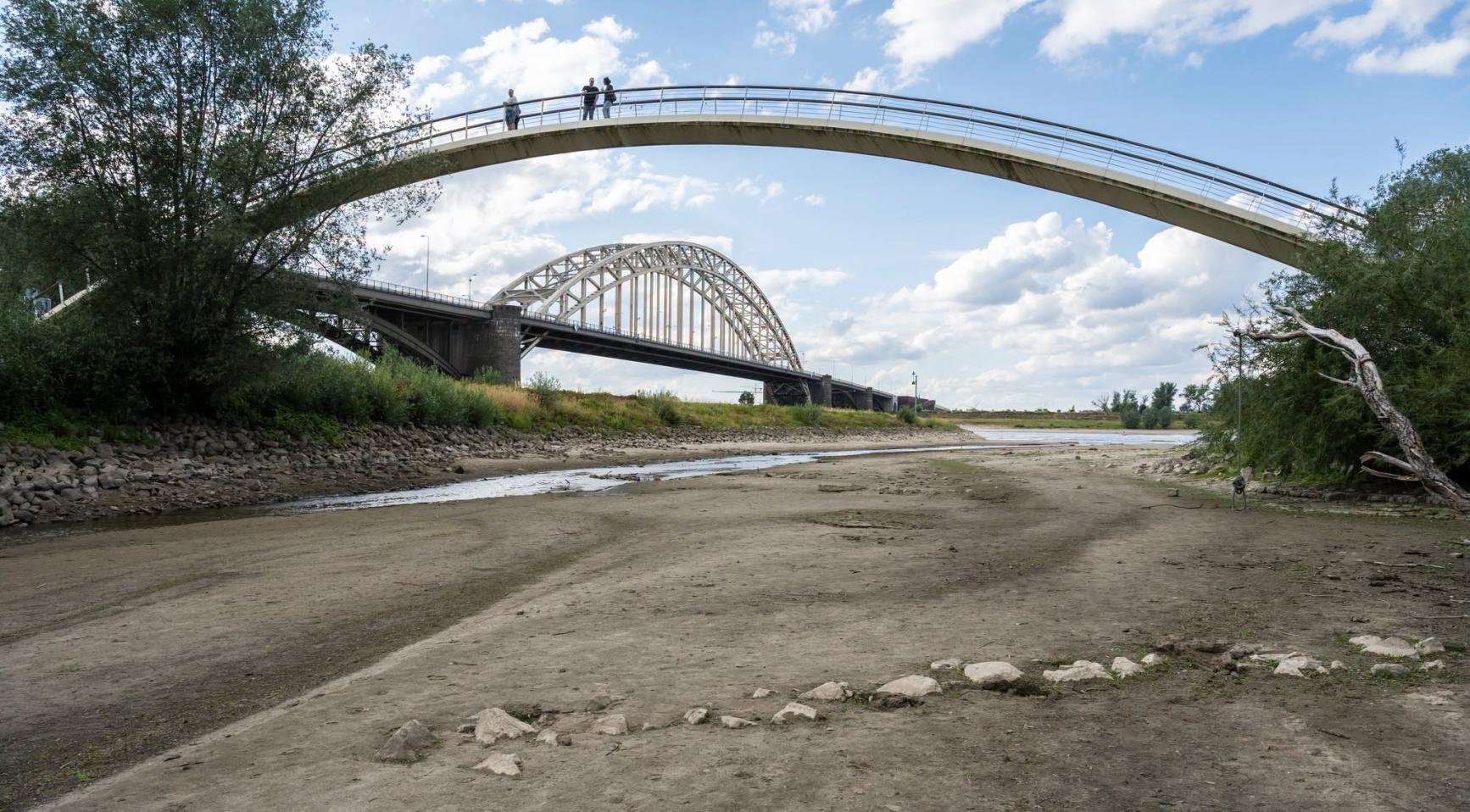
Rijn river's water level rose slightly, Maas still decreasing steadily
The discharge of the Rijn river at the border with Germany has increased slightly, Rijkswaterstaat reported in its latest drought monitor. This provides “a bit more room” in water distribution, the infrastructure agency said. However, the increase in the Rijn level is offset by the fact that the discharge of the Maas continues to drop slowly.
The Rijn’s water level is still low for the time of year, Rijkswaterstaat reported. Over the weekend, the water discharge at Lobith dropped to 715 cubic meters per second - the lowest level ever recorded in the month of July. In the coming days, the discharge will rise towards 900 cubic meters, but it will decrease again next week.
The Maas discharge at the Belgian border was 27 cubic meters per second on Monday. Rijkswaterstaat is trying to retain as much water as possible, but says it is becoming increasingly difficult to supply sufficient water everywhere around the Maas. The measures taken by water boards to avoid using water from ditches, among other sources, are being tightened further, Rijkswaterstaat said. The agency previously said that if the discharge drops below 25 cubic meters, additional measures will be considered.
Waiting times at the locks in the Maas can increase to a maximum of two hours because they are being used less frequently, Rijkswaterstaat said. “Furthermore, the fish ladders on the Maas are receiving less water, and some fish ladders in streams are temporarily closed.”
Rijkswaterstaat also reported that salinity is increasing, particularly in the west where the Rijn and Maas flow into the sea. Salinization is occurring in the Lek and the Hollandse IJssel, among other places.
Showers are expected this weekend, but they will not be enough to reduce the precipitation deficit, Rijkswaterstaat said. A precipitation deficit exists when more water evaporates than falls as precipitation.
Reporting by ANP


