
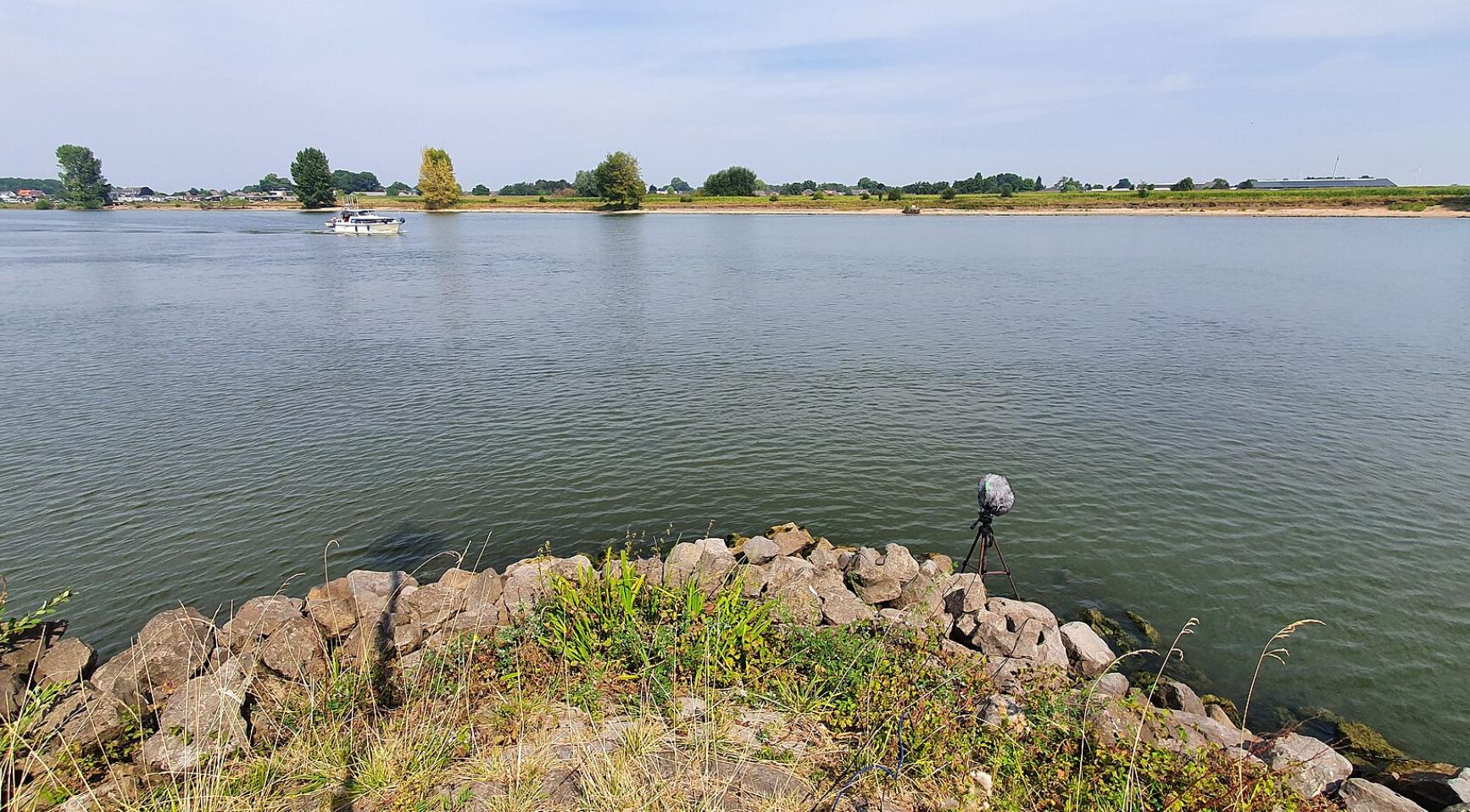
Water levels in Dutch rivers exceptionally low for the time of year
The water levels in the Dutch rivers are exceptionally low for the time of year. You’d expect the current situation at the end of August, or even later, the Rijkswaterstaat told NOS. And it is only mid-July.
The summer so far has been extremely hot and very dry. Both the Rijn and the Maas rivers are struggling with low water levels. At Lobbith, near where the Rijn enters the country, the water levels are even exceptionally low.
“This is really very low. Especially so early in the summer, we are not used to seeing this. We see that there is very little water in the entire Rijn catchment area. It is very low in the Alps. That water simply isn’t coming here,” Daniel van Putten, a river engineer advisor at Rijkswaterstaat, told NOS.
This is causing problems for shipping, which finds it harder ot manuever and can’t load ships as heavily. Industry is also experiencing problems. Because the water level is low, the rivers heat up faster, which means that factories and power plants can’t always discharge their cooling water or they risk damaging river life. That comes at the expense of productivity.
The situation is set to continue for some time yet. “River levels are dropping very rapidly this week,” Van Putten said. “We have seen this coming for quite some time, because we can look ahead bout two weeks. But this low, it shocks me every time.”
Some rain is expected in the coming days, but it will be nowhere near enough, hydrometeorologist Jan Verkade of Deltares and Rijkswaterstaat told the broadcaster. “I think that of the effective rain - precipitation corrected for evaporation - nothing will actually remain. Then the rivers will continue to drain for at least another week.”
Although exceptional, the low water levels this summer fall into a pattern of climate change, Van Putten said. “The buffer the river has in the Alps is shrinking,” Van Putten said, referring to the glaciers in the Alps disappearing due to global warming. “That is actually the largest source of fresh water for the Rijn in the summer. If that shrinks, we simply have less water here.”
There’s no quick solution for this problem, hydrometeorologist Verkade said. Redesigning the rivers is a long-term endeavor, and even then, extremes will still occur. The only thing to do is tackle the CO2 emissions behind global warming. “Otherwise, you are only making the problem bigger.”
On Monday, the National Water Distribution Coordination Committee (LCW) warned that the Netherlands may soon have to escalate its water situation from level 1, impending water shortage, to level 2, an actual water shortage. Level 3 is a water crisis.
The water boards stressed that the Netherlands still has enough drinking water, but urged consumers to use water sparingly.


