
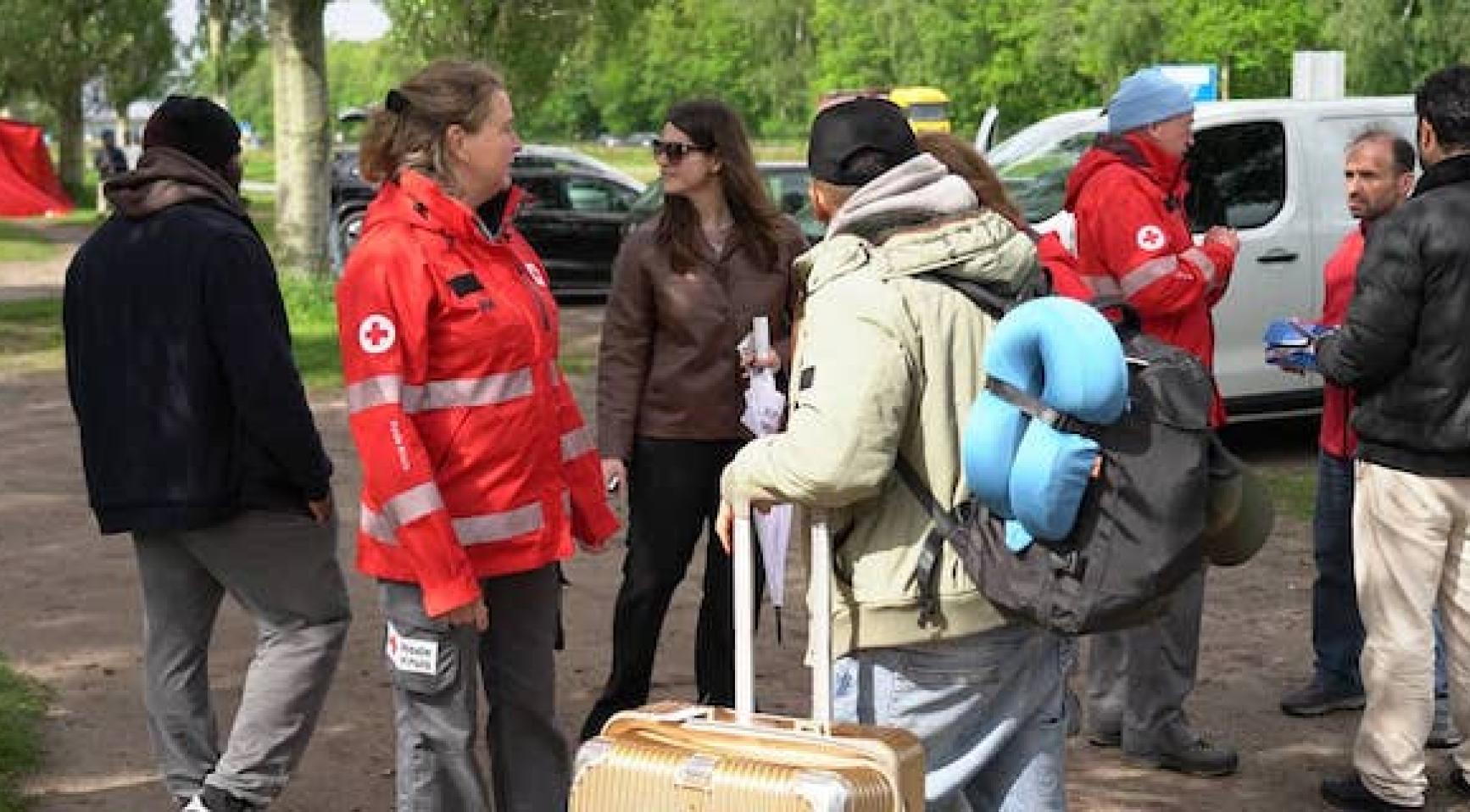
Ter Apel asylum center area declared safety risk zone after recent stabbings, fights
The area around the asylum registration center in Ter Apel will become a safety risk zone where preventive searches can be conducted, Dutch asylum and migration Minister Van den Brink announced in a letter to parliament.
On the center's grounds, a day shelter will also open so asylum seekers no longer have to wait on the grass. Extra cameras will be installed on and around the site, along with four additional security guards and two extra special enforcement officers, known as BOAs.
The measures aim to address growing safety concerns and unrest at the overcrowded facility. As a direct result, the Red Cross has decided to resume its work in Ter Apel, the organization reported.
Starting Wednesday, a nearby existing office building will be used for registering new asylum applicants. It will also house the day shelter, where strict rules will be enforced to prevent violence and nuisance.
Last week, the Red Cross and Vluchtelingenwerk stopped their work at Ter Apel after safety for aid workers was compromised by fights and stabbing incidents on the front grounds of the center.
Since May 20, the Central Agency for the Reception of Asylum Seekers (COA) has operated with restricted access. Only clearly vulnerable asylum seekers, such as women and children, are allowed inside. Others must wait outside until a bed becomes available.
The new day shelter is intended to create a clear separation between regular asylum seekers and those causing nuisance. Minister Van den Brink held consultations on the situation with the COA, police, the Red Cross, and the municipality of Westerwolde, which includes Ter Apel.
Under the plan, new asylum seekers awaiting placement will receive day shelter on the grounds. In the evenings, they will be bused to emergency night shelters in the region to prevent them from wandering.
Strict house rules will apply in the day shelter. Anyone who violates them and causes nuisance will be denied access and may face criminal prosecution, Van den Brink stated.
The Red Cross will once again provide food and drinks and offer a listening ear in the office building. The organization welcomed the changes.
"For us, an important condition has now been met: a safe place where we can offer help to people who need it so badly. Where a handful of people cannot ruin things for a larger group," said Red Cross director Harm Goossens.
Goossens described the office building as a much more humane environment than a large field where people sit outside all day. However, he called the solution temporary. "We must not forget that this does not create new reception places."
Minister Van den Brink acknowledged the measures as temporary and stressed the need for broader solutions. He said those causing nuisance are putting public support for asylum reception under pressure and must be dealt with firmly.
"These measures do not solve the underlying problems. Therefore, I want to emphasize once again that the situation in Ter Apel is urgent and critical, and I call on all municipalities once more to offer locations for emergency reception," Van den Brink wrote.


