
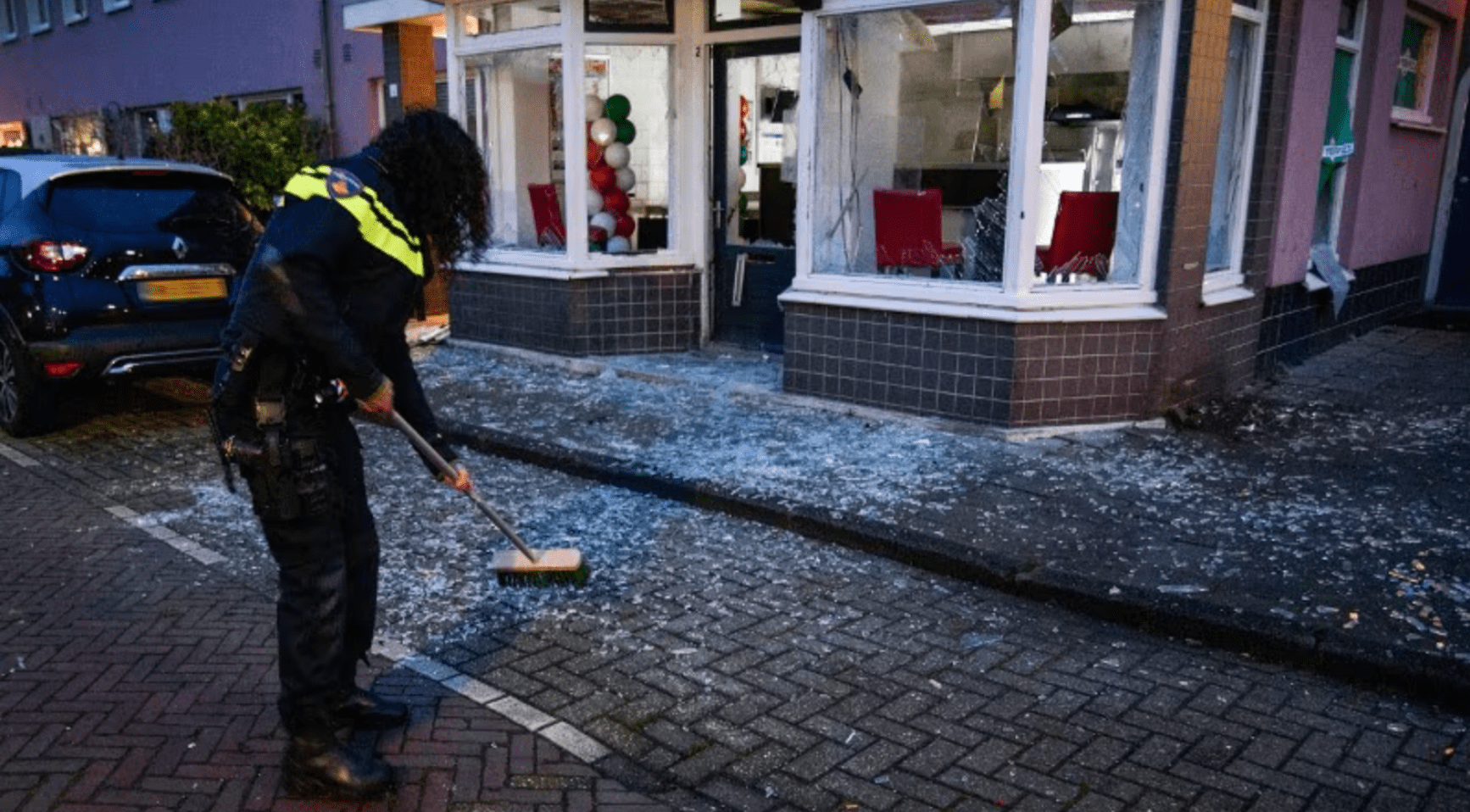
Fewer explosive attacks in first half of 2026 after years of increase
In the first six months of this year, there were 581 attacks or attempted attacks using explosives in the Netherlands, the Offensive against Explosive Attacks task force reported on Wednesday. That is 124 fewer than in the first half of 2025, the first decrease since the task force was established in 2024. The task force thinks it is on track to achieve a 10 percent reduction in these attacks in 2026.
“Every attack is one too many. But it is good to see that the number of attacks is starting to decrease nationwide,” said Carola Schouten, mayor of Rotterdam and Chair of the Offensive. “Explosions endanger safety and livability in our streets and neighborhoods and have major consequences for victims and local residents. This requires continued attention and joint efforts on all fronts.”
Last week, ANP analyzed police figures and reported that explosive attacks were decreasing in the Randstad and Oost-Brabant regions, but increasing everywhere else.
The task force is currently focusing on three priorities in its efforts to reduce the number of explosive attacks: reducing the number of young perpetrators, identifying and prosecuting the people who order attacks and intermediaries, and limiting the availability of explosive materials.
Many of the perpetrators of explosive attacks are younger than 25. The task force is taking a preventive approach with this group. It has launched a conflict mediation pilot focused on de-escalating conflicts and tensions before they turn explosive.
It is also offering support to youth care workers, parents, and caregivers to help young people become more resilient against the temptation to commit crime. This includes a campaign encouraging grown-ups to talk to the teenagers in their lives about the risks of explosions.
The police are also investigating perpetrators’ phones and laptops, among other things, to gain more insight into the role of intermediaries and the people paying young people to commit attacks.
“To ensure greater coherence and overview in our approach, we have established the national coordination table for explosives issues. All efforts are bundled here,” said Corry van Breda of the Zeeland-West-Brabant police and member of the Offensive. “In various investigations, we have succeeded in arresting perpetrators, accomplices, intermediaries, and principals in connection with a series of explosions.
Most explosive attacks are committed with illegal fireworks. The task force is, therefore, working nationally and internationally to reduce their availability. The task force is working with postal and parcel companies to combat the illegal fireworks trade.
The Dutch authorities are also part of a Europol task force with Sweden and Germany to improve cross-border investigations on this front. And the Dutch government continues to advocate in Europe for stricter regulations and legislation on the production of heavy fireworks.


