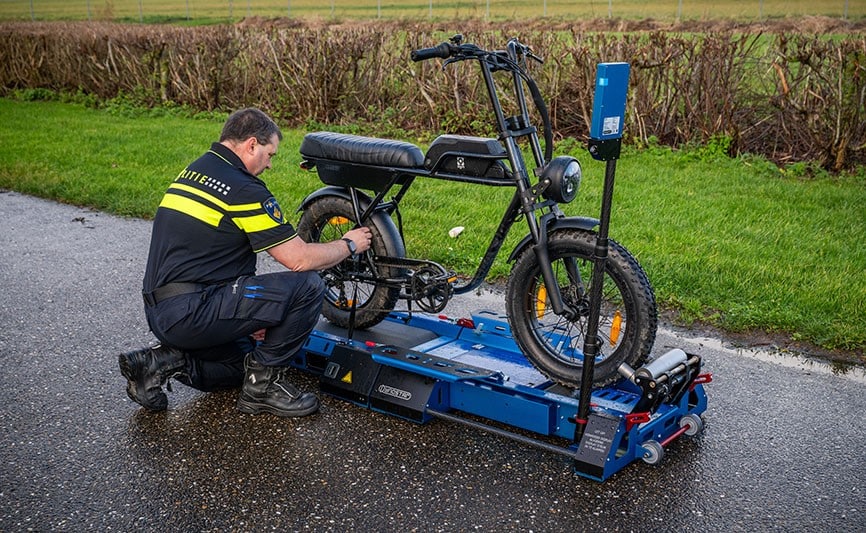
Netherlands set to ban using performance modifications that boost e-bike speeds
The Dutch Cabinet is set to announce plans to ban the use of performance modification kits on electric bicycles brought onto public roads. If it passes Parliament, the ban will affect all e-bikes, including fatbikes, according to RTL Nieuws. Authorities will also be able to fine, and eventually confiscate, anyone operating an electric bicycle with an installed booster kit, even if it is not in use at the time the bicyclist is stopped.
The proposal to adjust the existing law governing electric bikes can count on broad support in both houses of Parliament. There is already majority support from members of the Tweede Kamer, the lower house, with the backing of GroenLinks-PvdA, VVD, NSC and BBB. Together, they account for 76 seats out of 150. Should those parties' senators in the Eerste Kamer also agree, the Cabinet can count on 40 of the 75 seats voting in favor.
Currently, anyone caught riding an e-bike modified to travel faster than 25 kilometers per hour can be fined 290 euros. Those using the illegally-modified vehicles are considered uninsured when an incident takes place. Legally, a bicycle tuned to operate faster than 25 km/h is considered to be an unauthorized speed pedelec, moped or scooter. The same is true when its speed restricter has been tampered with, or if a throttle controlled motor provides the user with assistance above 6 km/h. Police can confiscate and destroy such vehicles when someone riding them has been fined repeatedly, according to the Ministry of Infrastructure.
Those rules are frequently violated, said Amsterdam's alderman for traffic policy, Melanie van der Horst. "More than half of all electric cyclists ride faster than the permitted 25 kilometers per hour," she said earlier this month. "Nowadays, electric bicycles are much more than a bicycle that rides a little faster. They are sometimes heavy beasts that cause serious injuries in the event of an accident."
Several dozen municipalities, including the capital, joined a call late last year telling the Cabinet to quickly tackle the issue. Sales of the pedal-assisted fatbikes, which take their name from their thick tires, soared after the national government passed a measure requiring scooter and moped users to wear helmets.
E-bikes accounted for 486,000 of the 855,000 new bicycles sold in the Netherlands in 2022. That same year, 70 percent of the 8,300 people severely injured in incidents on Dutch roadways were riding a bicycle. About 100 of the 745 traffic fatalities that year involved an e-bike. Electric bicycle sales skyrocketed during and after the pandemic, though there were recent signs to suggest the market was slowing down.
A consultancy report commissioned by the ministry determined that amending the law to ban both the possession and use of hardware or software to boost an e-bike's performance would be the easiest way to tackle the problems the souped-up vehicles pose, RTL Nieuws reported. That change will also give police the authority to punish an individual who quickly shuts off their vehicle's modification kit so that it operates normally when screened during a traffic stop.
The ready availability of boosting kits make it easy to skirt the current law, which does not ban the installation of such modifications. Amsterdam plans to test out a system that will make it possible to remotely slow down speeding e-bikes. Some bike manufacturers recently said they planned to fight back against unscrupulous retailers for sullying their reputation by selling vehicles they know will be used illegally.
The consultancy firm also told the Ministry of Infrastructure they should consider running informative advertising campaigns to notify people they are uninsured when they used the souped-up electric bicycles and fatbikes, and will be on the hook for any material damage or injury caused. The campaign should also draw attention to the risks involved when riding the bikes.