
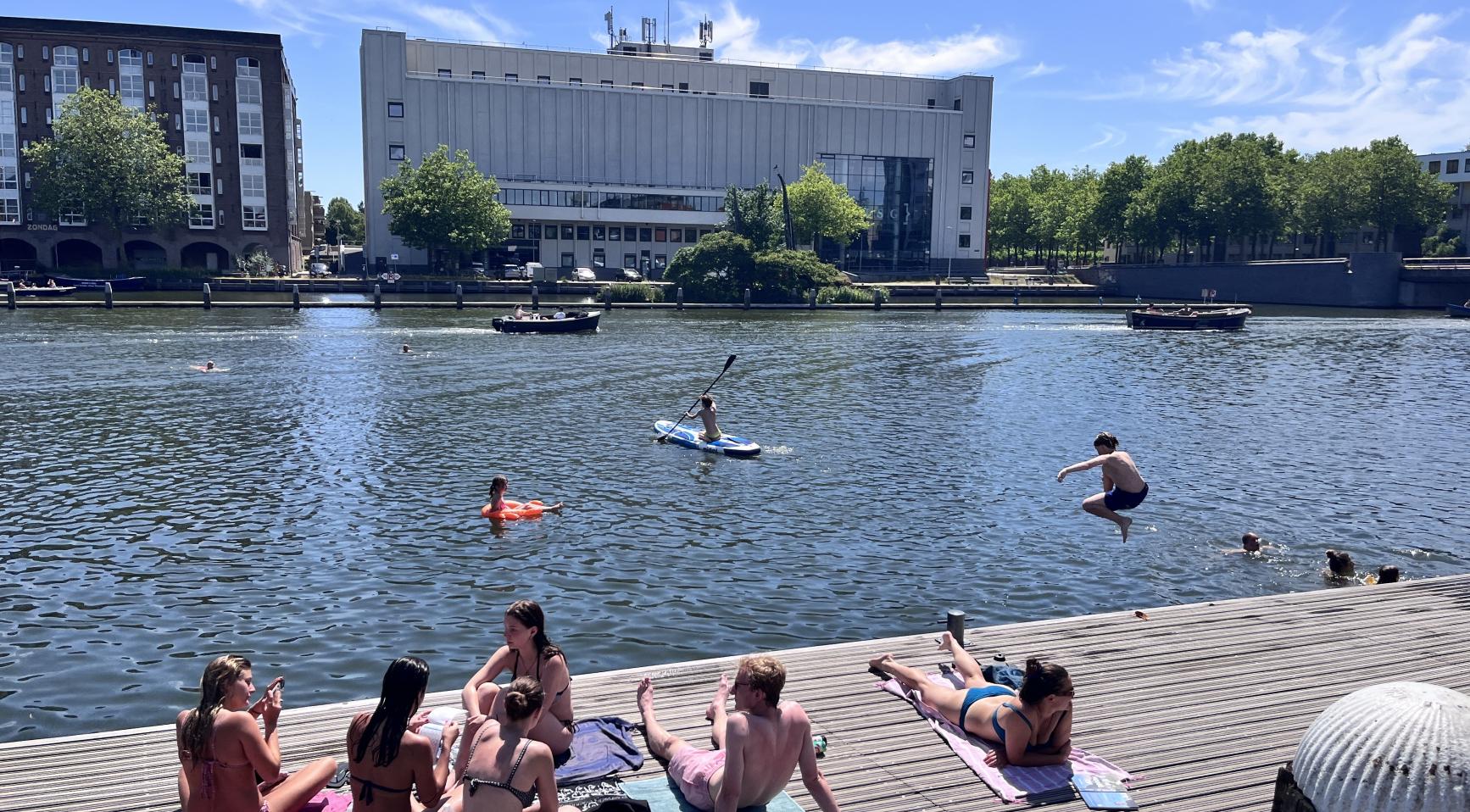
Swimming advisory issued after heavy rain overflows sewers in Amsterdam region
Severe thunderstorms overnight from Saturday into Sunday caused sewage systems to overflow into open water across large parts of the Netherlands. The contamination has led authorities to advise against swimming in lakes, canals, and recreational waters through Wednesday, July 1.
The main impact is reported in and around Amsterdam, where intense rainfall exceeded sewer capacity. This resulted in sewage discharge into surface waters.
Officials warn that contact with the water increases the risk of illness, including stomach and intestinal problems. Water quality is expected to remain poor for several days after the overflow events.
In Noord-Holland, nearly 20 swimming locations have been flagged as unsafe according to Zwemwater.nl. Additional warnings apply in other provinces, where recreational waters have also been downgraded due to poor water quality following the storms.
The Waterschap Amstel, Gooi en Vecht has issued a broad advisory against swimming in open water across multiple municipalities. These include Amsterdam, Diemen, Amstelveen, Ouder-Amstel, Aalsmeer, Uithoorn, Nieuwkoop, De Ronde Venen, Weesp, Wijdemeren, Gooise Meren. The advisory also applies to Huizen, Blaricum, Laren, Hilversum, Stichtse Vecht, De Bilt, parts of Utrecht, and Haarlemmerliede-Spaarnwoude.
The warning also extends to parts of Utrecht, where the Veiligheidsregio Utrecht identified risks in waterways, including the Vecht, Schepperlandboezem, and urban water systems. Residents are advised to avoid swimming in ditches, canals, and ponds.
Authorities explain that during extremely heavy rainfall, sewer systems can become overloaded. When this happens, overflow discharges occur and contaminated water enters surface waterways. Officials stress that water quality typically remains reduced for three to five days afterward.
In addition to sewage contamination, some locations are affected by blue-green algae. The algae can cause skin irritation and gastrointestinal symptoms, adding further health risks in already affected waters.
Reporting by ANP and NL Times


