
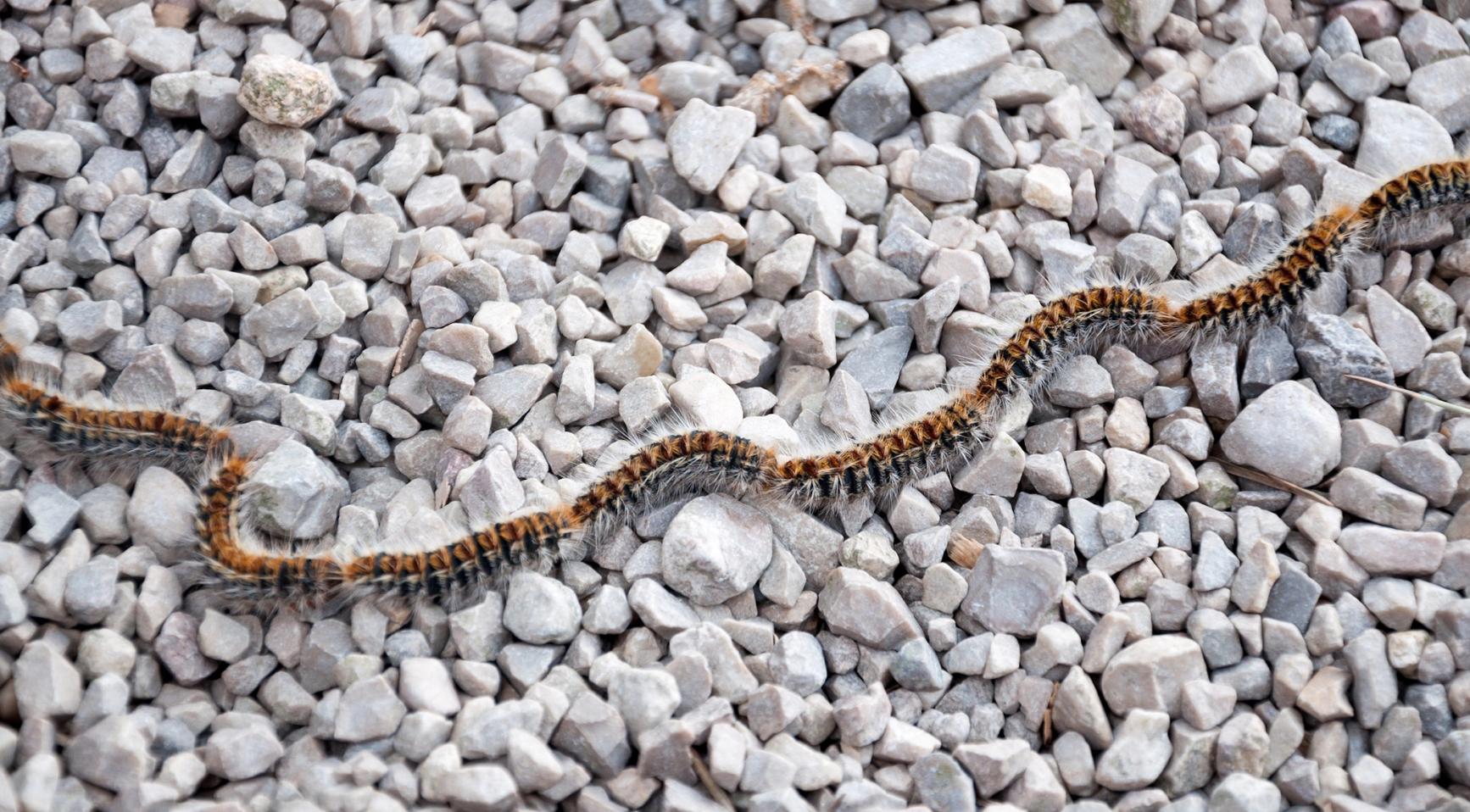
Years after itchy epidemic, new type of processionary caterpillar appears in Netherlands
Years after the oak processionary caterpillar caused an epidemic of itchy skin issues throughout the Netherlands, its even more annoying cousin - the pine processionary caterpillar - is now also establishing itself in the country. Two pine processionary moths were recently found in traps in Limburg, and one in Gelderland, L1 Nieuws reported.
It was only a matter of time for the pine processionary caterpillar to arrive in the Netherlands. The caterpillar typically resides in Southern Europe and North Africa, but has been coming closer and closer due to climate change, and was already sighted in Belgium, close to the Dutch border, last year.
“The moths can fly quite a distance, so it was bound to happen at some point,” Arnold van Vliet, a biologist at Wageningen University & Research, told L1. “For that reason, traps were placed this year in the Netherlands in Wittem and Venray, and one in Gelderland. It’s quite unique that we had a hit so quickly and that the moths were observed immediately.”
According to the Red Cross, the pine processionary caterpillar has even more stinging hairs than its oak cousin. Every pine processionary caterpillar can have up to a million stinging hairs, which cause itching, irritation, and rashes on human skin. The hairs can also cause respiratory problems.
Extra annoying is that the pine processionary caterpillar’s life cycle is slightly faster than its oak cousins’. The pine processionary caterpillars leave their nests to pupate in March and April, marching in a procession to find a suitable spot and releasing their urticating hairs. Oak processionary caterpillars usually release their urticating hairs during May or June.
So the pine processionary caterpillars’ arrival may extend the itchy season in the Netherlands by up to two months.
In June, experts reported that the oak processionary caterpillar was making a comeback in the Netherlands after years of its numbers decreasing.


