Netherlands News in English

Main navigation

  • Top stories
  • Health
  • Crime
  • Politics
  • Business
  • Tech
  • Culture
  • Sports
  • Weird
  • 1-1-2
Image
Bikes pared on an Amsterdam bridge
Bikes pared on an Amsterdam bridge - Credit: Photo: olgacov/DepositPhotos
Business
Statistics Netherlands
wealth inequality
income inequality
housing market
house prices
financial crisis
Tuesday, 7 May 2019 - 13:40

Share this article:

Wealth inequality decreasing thanks to improving housing market

The wealth inequality between Dutch households decreased since 2015. That has to do with the improving housing market, Statistics Netherlands reported on Tuesday based on data from 2011 to 2017. Income inequality remained at basically the same level in that period.

Almost six in ten Dutch households own their own home. For less wealthy households, home ownership is the most important part of their wealth. This means that fluctuating house prices have a big impact on their wealth. Wealth inequality increased between 2011 and 2014. In that period house prices fell due to the financial crisis. House prices started climbing again from 2015, which decreased the wealth inequality.

If owner-occupied homes are not taken into account, the wealth inequality remained almost the same in the period 2011 to 2017, according to the stats office.

Wealth inequality is considerably greater in the large Dutch cities than the national average. According to Statistics Netherlands, this is because a relatively large number of young people, benefit recipients and people with a non-western immigration background live in the cities. These groups tend to have considerably less wealth. Municipalities with higher average wealth tend to have lower wealth inequalities. This also applies to municipalities with relatively many older residents, who built up wealth throughout their lives.

Income inequality remained relatively stable between 2011 and 2017. It peaked in 2014, due to incidental tax measures which made it attractive for major shareholders to pay out dividends, according to the stats office. Income inequality is greatest in municipalities with an average high disposable income, such as Laren, Wassenaar and Blaricum. The differences are also large in student cities, including the Netherlands' four large cities.
More like this

Image
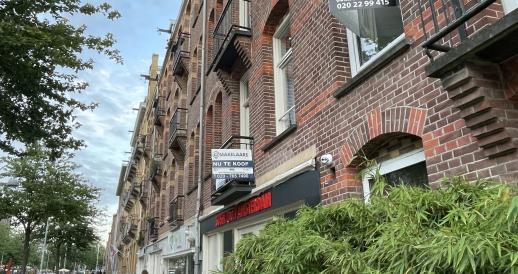
A woman walks by two homes for sale on the Javastraat in Amsterdam-Oost in July 2023.
Home prices rise 4.3% in April; Increases slowing down
Image
A woman walks by two homes for sale on the Javastraat in Amsterdam-Oost in July 2023.
More young adults forced to live with parents amid housing shortage
Image
A woman walks by two homes for sale on the Javastraat in Amsterdam-Oost in July 2023.
Home prices climbed 5% in March; Price increases still levelling off
Image
Student apartments in The Hague
Private sector rents rising faster than owner-occupied home prices
Make NL Times your top Google source

Follow us:

Latest stories

  • Thousands of Dutch face up to three years’ delays for higher-capacity grid connections
  • Cop claims he was unaware woman he pushed down at asylum shelter was pregnant
  • Highest Dutch business court overturns Volkswagen diesel emissions scandal fine
  • BBB Senate faction opposes conversion therapy ban despite earlier support
  • KLM cancels Uganda flights amid Ebola-related travel restrictions

Top stories

  • Football coach jailed for secretly filming over 500 boys in changing rooms
  • U.S. Embassy: Dutch World Cup fans can face long passport lines, social media checks
  • Tata Steel drops new Sustainability Chief Pols over pro-apartheid past in South Africa
  • Waiting times of a year or longer at some Dutch hospitals as doctor shortage grows
  • Video: One killed, two hurt in stabbing at Heerhugowaard business

© 2012-2026, NL Times, All rights reserved.

Footer menu

  • Change Privacy Settings
  • Privacy Policy
  • Contact
  • Partner Content