
Netherlands formally apologizes for history of slavery, and its impact on descendants
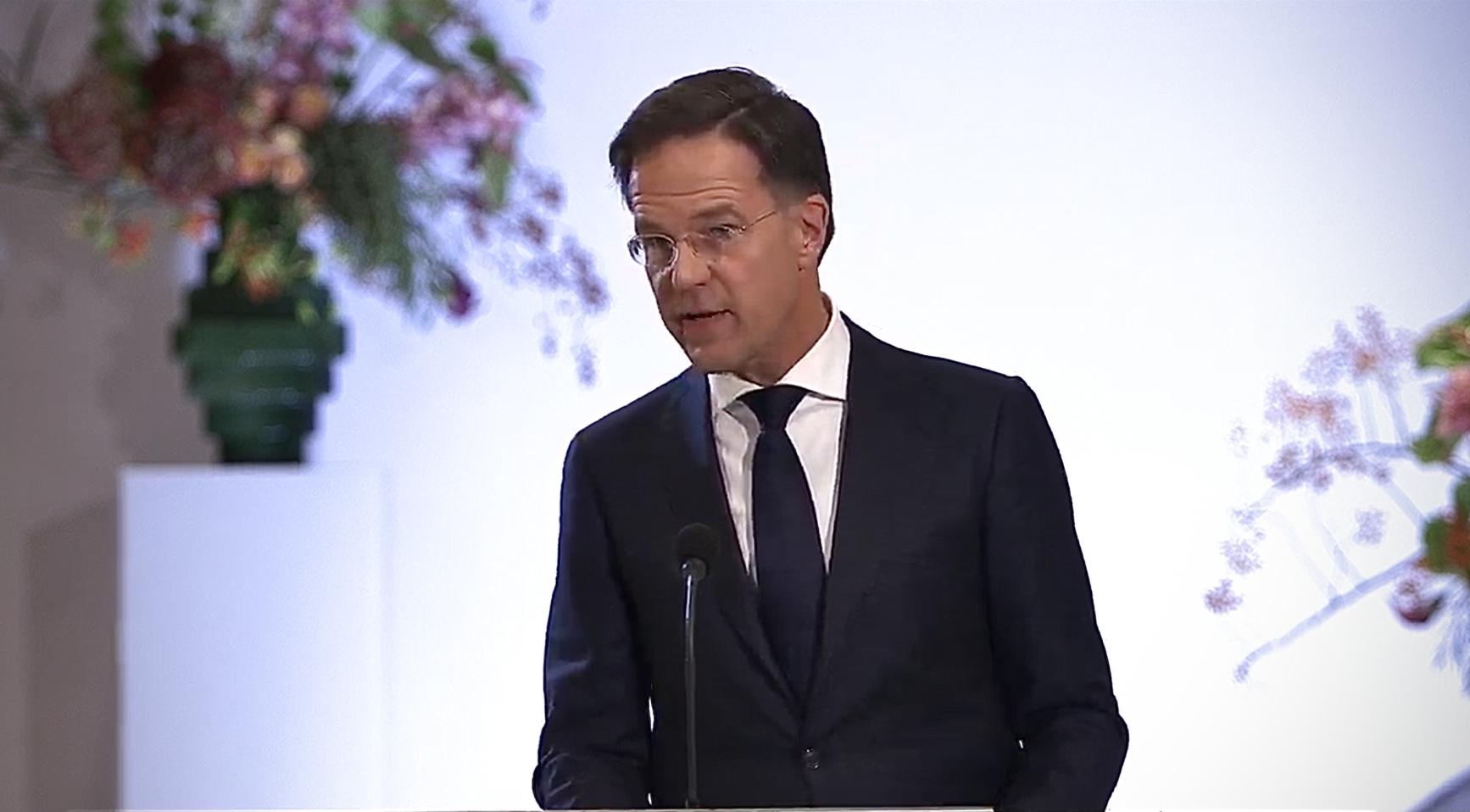
NL Times also published a complete English-language transcript and English-subtitled video of Prime Minister Mark Rutte’s speech at the National Archives in The Hague in which he formally apologized on behalf of the Dutch State for its role in enslaving people and supporting the slave trade, and its impact on their descendants, including past, present and future generations.
Dutch Prime Minister Mark Rutte formally apologized on behalf of the Dutch State for the country’s involvement in enslaving people during the colonial era. Additionally, King Willem-Alexander will take part in the ceremony in Amsterdam next year marking the 150th anniversary commemoration of the end of slavery.
Rutte said that “for centuries” the Dutch State and its representatives “facilitated, stimulated, preserved and profited from slavery,” and that “human beings were made into commodities, exploited and abused.” During that time, “human dignity was violated in the most horrific way possible, And successive Dutch governments after 1863 failed to adequately see and acknowledge that our slavery past continued to have negative effects and still does,” he stated.
“For that I offer the apologies of the Dutch government. Today I apologize. Awe mi ta pidi diskulpa. Tide mi wani taki pardon,” he added, speaking in different languages.
“We are doing this, not to wipe the slate clean. Not to close the book on the past and leave it behind us. We are doing this – and doing it now – so that, standing on the cusp of an important commemorative year, we can find a way forward together. We not only share a past; we share a future too.
The prime minister specifically referenced slavery as being a “crime against humanity,” and said that Dutch people must develop their way of thinking about the country’s history, just as he has done. "I want to be open about that," Rutte said during a highly anticipated address at the National Archives on Monday. He said that he believed that there was no legitimate way that the Cabinet could somehow take responsibility for something that happened “so long ago,” but he has since changed his mind on the issue.
"I thought it was behind us, but I was wrong. It affects the here and now."
For years, Rutte and his Cabinets were against apologizing for the Netherlands' history of slavery, calling formal excuses polarizing and controversial. But after the advisory board established to investigate the slavery past urged the Cabinet to apologize in a report titled Chains of the Past and parliamentary pressure to do the same, The Rutte IV Cabinet decided to do so.
“It is true that no one alive now is personally to blame for slavery. But it is also true that the Dutch State, in all its manifestations through history, bears responsibility for the terrible suffering inflicted on enslaved people and their descendants,” Rutte said.
Advocates and advisors have also called for King Willem-Alexander to be the one to apologize. Rutte previously insisted that the matter was too controversial for the king. However, Rutte’s stance on the matter seemed to be more acknowledging of the role the king can take moving forward, particularly as July 1 marks the 150th anniversary of the complete abolition of slavery everywhere in the Kingdom of the Netherlands.
“During the commemoration year, all facets of the history of slavery and its impact in our time will be in the spotlight,” Rutte said. “The king feels personally very involved in the subject and will be present at the commemoration and celebration in Amsterdam on July 1. And we are looking beyond 2023.”
The Rutte IV Cabinet decision to apologize on December 19 was leaked to the press in November, including plans for Rutte to make the apology from the National Archive in The Hague while, and seven members of the Cabinet traveled to Suriname and the Caribbean parts of the Netherlands to discuss the apology after watching a live stream of Rutte's speech.
The planned apology almost immediately sparked criticism. Several Surinamese groups called the apology rushed and filed a lawsuit to postpone it to July 1 next year, the 160th anniversary of the process to officially abolish of slavery. According to the involved groups, that date holds historical significance to many, while December 19 is just a random date. The court ruled against them on December 15.
On Monday, Rutte also said during his address that he regretted how the situation was handled over the last few weeks.
Suriname was also critical of the Cabinet's plans to send Minister Franc Weerwind (Legal Protection), himself a descendant of enslaved people, to the country for the apology. Some felt it was inappropriate for a descendant of the enslaved to have to apologize for the Netherlands' history of slavery. Johan Roozer of the Surinamese National Committee of Slavery Commemoration, for example, said that he would only accept the apologies if they came from a "white person." The Cabinet sent Deputy Prime Minister Sigrid Kaag to Suriname to explain the government's plans in person and reduce the irritation.
The Cabinet's formal excuses follow apologies from the Netherlands' four largest cities - Amsterdam, Rotterdam, Utrecht, and The Hague - for the role they played in the country's history of slavery. The Dutch central bank DNB and ABN Amro also already apologized for their part therein.


