
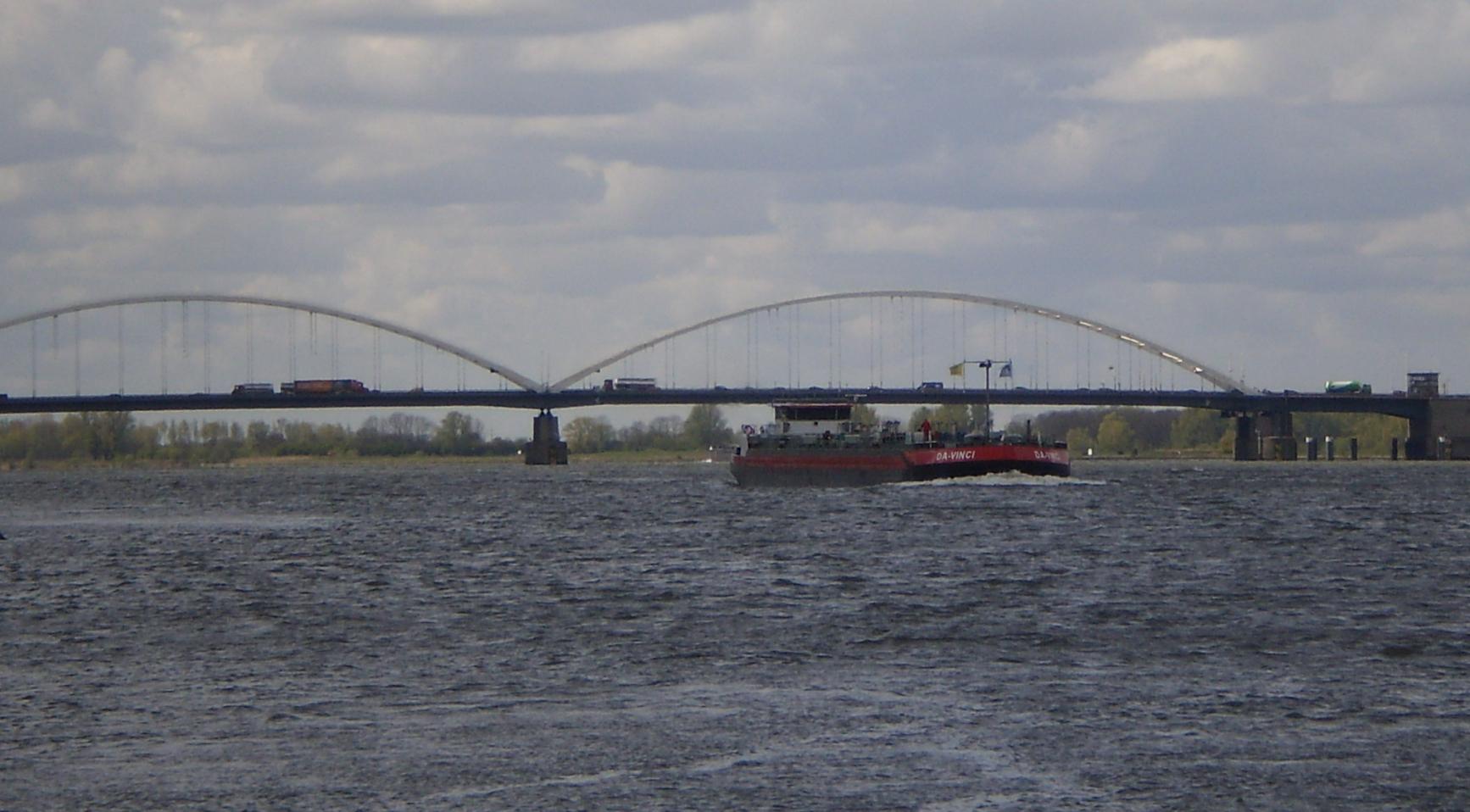
Merwedebrug truck ban won’t be the last as Dutch bridges, tunnels age
A sudden truck ban on the Merwedebrug has forced about 18,000 trucks a day to detour at an estimated cost of 1.5 million euros to the transport sector. Experts say similar restrictions on other aging bridges, tunnels, and viaducts are likely in the coming years as decades of deferred maintenance collide with heavier traffic loads.
The ban came as a surprise to many, but ING economist Jan van der Doelen told NU.nl it is not isolated. “The Merwedebrug is certainly not the first and the only bridge that is due for maintenance,” he said. “Many bridges, viaducts, and tunnels are due for a thorough maintenance service, or even more than that.”
Most of the Netherlands’ bridges and tunnels were built shortly after World War II, largely in the late 1950s and early 1960s. “Those constructions are not only starting to wear out, but also turn out not to fit entirely with the way they are now being used,” Van der Doelen said. Traffic has changed dramatically since then. “It was thought that for example bridges that were built then would last a hundred years. But the infrastructure is much more and much more heavily loaded than was thought then. Trucks are heavier, cars too.”
Hans Drolenga of engineering firm Sweco expects the problems to recur. “The task of all bridges is currently so large that if you want to solve that in the short term, you need much more money than is currently available. That means that something like the Merwedebrug is not an incident.”
Maintenance has received insufficient attention for years at Rijkswaterstaat, provinces and municipalities, Drolenga said. “Rather lay a new road or tunnel than perform maintenance. Those have been choices.” The Merwedebrug bridge is an example. “It has been left alone for too long.”
The consequences of that delay are growing, according to Van der Doelen. “If you let it last even longer, it will ultimately not only be a matter of a bit of maintenance, but complete renovation will have to be done. Then you spend more money and it takes longer.”
Extra funding alone will not solve the backlog. Planned work is stalled by a shortage of skilled labor. The renovation of the Brienenoordbrug in Rotterdam has been delayed even though “that bridge has long been due,” Van der Doelen said. “But it is not easy to find a good party for that. There are too few skilled workers available. They are now bringing people from abroad.”
For transport companies, an unexpected bridge or tunnel closure brings immediate financial pain, said ING mobility specialist Erik Slaaf. The roughly 18,000 daily truck detours around the Merwedebrug are costing the sector an estimated 1.5 million euros a day.
“A small calculation: if due to the closure of a bridge you have to detour 30 kilometers, you already pay about 18 euro extra through the truck levy. And then we haven’t even talked about the driver costs,” Slaaf told the newspaper. Margins are tight. “A good transport company makes a maximum of 20 euro profit per truck per day. Your truck is thus quickly loss-making if a bridge is closed.”
Companies cannot absorb the extra expense themselves, he said. “Those costs will also have to be passed on to the consumer.” That pattern is already visible since the truck levy took effect July 1. “Those costs have also been passed on almost one-to-one.”


