
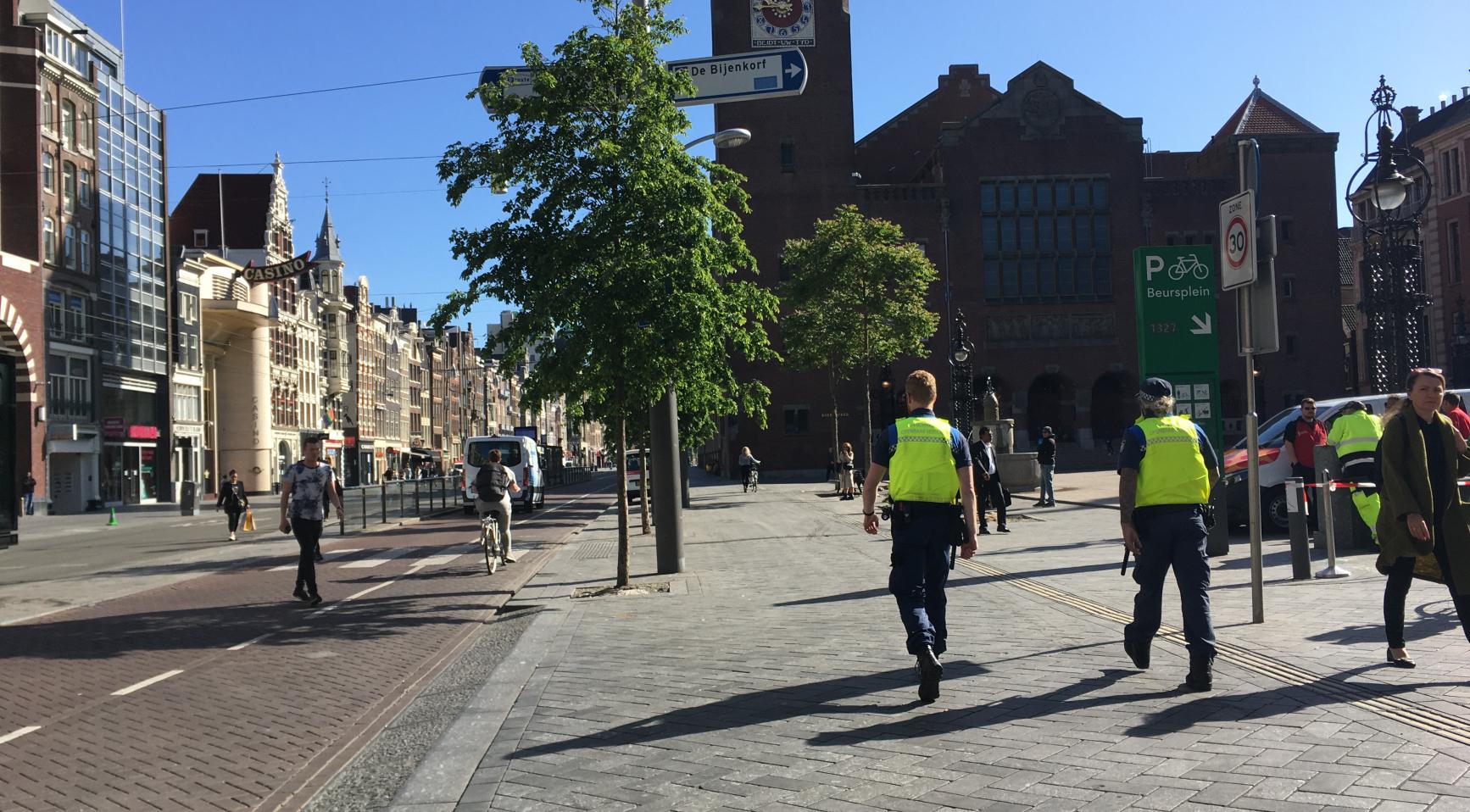
Dutch enforcement officers risk losing batons and pepper spray due to training shortages
Dutch special law enforcement officers known as BOAs face losing their authorization to carry batons or pepper spray because they cannot complete required annual training and exams on time due to examiner shortages at the Police Academy.
The academy has barely tested BOAs for a year, prioritizing its own police officers who also need annual certification, according to Richard Gerrits, chairman of the BOA ACP union. “The police gives preference to its own people,” Gerrits said. “BOAs are at the bottom of the pile.”
This situation forces employers such as municipalities and public transport companies to arrange exams themselves, often by hiring examiners from commercial providers. Gerrits described it as a “cowboy situation,” with companies aggressively approaching municipalities and claiming mandates from the Police Academy that they do not actually have.
Employers are applying temporary fixes, sometimes improperly, such as appointing examiners on zero-hours contracts, which is not allowed. Gerrits said the task belongs at the Police Academy and called on the Ministry of Justice and Security to enforce that or approve the union’s proposal for the BOA Academy to hire six examiners to test everyone annually. The ministry has not responded to that proposal, he said.
The Association of Netherlands Municipalities and the Institute for Safety have also expressed dissatisfaction, according to the union. The ministry has received letters about the issue but has not replied.
A ministry spokesperson acknowledged the problem and said solutions are in progress. This year, BOA employers are expected to use one another’s certified examiners. Longer-term options for a sustainable recertification process are under review.
The ministry in The Hague also decides which BOAs may carry batons or pepper spray based on employer applications. Approvals are often denied. “You have to, so to speak, be assaulted a few times first to get a baton,” Gerrits said. “But a BOA to whom that happens goes looking for other work. Numerous studies show that weapons have a preventive effect.”
The union wants employers to decide in the future which of their BOAs may carry such tools, arguing that they know the people and the local situation best.
BOAs have taken on significantly more responsibilities in recent years as police shortages have shifted tasks to them, including addressing street intimidation, monitoring livability and handling minor traffic violations. Yet they often lack the tools police officers have when performing similar duties.
Of the 23,000 BOAs nationwide, only a small portion have access to batons or pepper spray. The union does not advocate arming everyone; roles such as truancy officers or social investigators do not always require such tools.
Gerrits highlighted body cameras as a proven aid that should be standard equipment. At least 25 trials have shown they reduce incidents through their preventive effect, increase officers’ sense of safety and serve as a learning tool for reviewing actions. However, municipalities often lack funding and instead run repeated pilots to buy time. “It is a bureaucratic game,” he said.
Funding and support also depend on local politics. Left-leaning councils tend to invest less in enforcement than right-leaning ones, and many council members have limited understanding of BOA duties, Gerrits said. Employers should better support street-based work, he added, comparing it to readily providing ergonomic office chairs.
Gerrits described a lack of recognition despite growing societal disobedience that requires more BOAs. “In terms of recognition we have descended to the third division,” he said. The Netherlands faces a 10% shortage of BOAs. Training programs have sufficient applicants but lack enough instructors.
Relations with regular police remain strained. Many BOAs cannot access the C2000 communication system, camera surveillance feeds, police stations or systems for reporting violent incidents. Gerrits said closer cooperation is needed.
He criticized national politics in The Hague for a culture of “muddling through” amid shifting ministers and coalitions, with too much focus on populist politics and too little on solutions. As an example, he cited an upcoming VVD proposal to ban religious symbols such as headscarves with the BOA uniform, noting it should have come two years earlier.
Gerrits, who has led the union for a decade, said public perception of BOAs improved during the coronavirus period when their roles became clearer and the length of their training — two or three years longer than police academy training — was highlighted. Yet politically, their standing has declined.


