
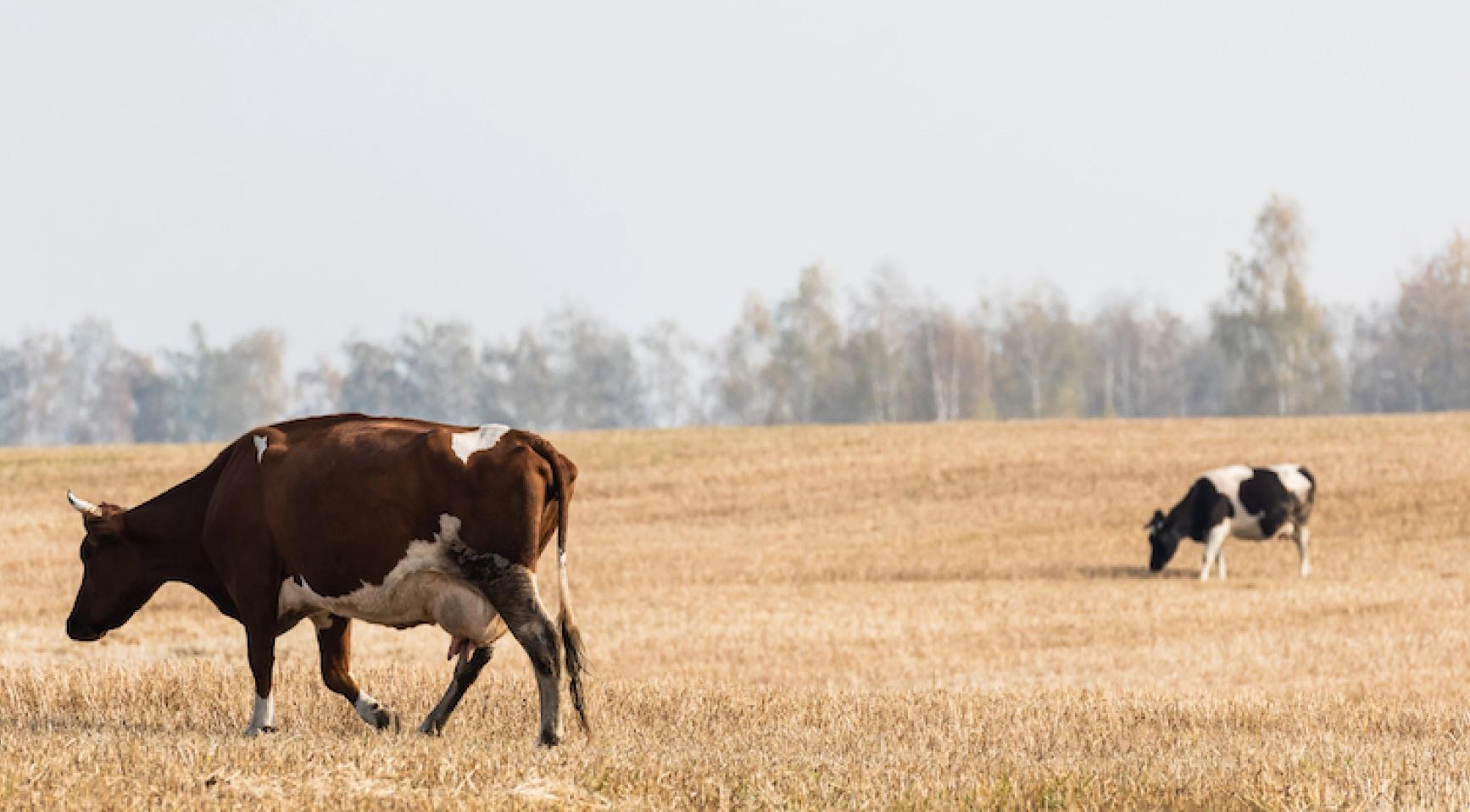
GPS collars test “virtual fences” for cows in Netherlands, raising welfare questions
The Netherlands is testing a system of GPS-enabled “virtual fences” for grazing cattle that removes the need for physical barriers while keeping cows within designated pasture areas, RTL reported. The experiment uses electronic collars that guide cattle with sound signals and, if needed, electric shocks when they cross a virtual boundary. Researchers are now testing whether these sound warnings and shocks have any impact on animal welfare, as well as how the system affects the overall environmental management.
The collars contain GPS technology that allows farmers to set digital boundaries through an app. When a cow approaches a virtual boundary, the device first emits a sound. If the animal continues forward, it receives an electric shock.
Project leader Youri Egas said the technology is designed to address multiple pressures facing Dutch agriculture, including land subsidence, greenhouse gas emissions, biodiversity loss, and water quality concerns. “At the same time we want cows outside. That is why we started investigating whether virtual fences could help with that,” Egas told RTL.
To evaluate animal welfare impacts, researchers monitored cows using the system and compared them with cattle not using virtual fencing. They analyzed stress hormones in milk and hair samples and conducted behavioral observations over a two-year period.
“We did that for two years and also conducted behavioral observations,” Egas said. “So far we have measured no negative effects on animal welfare.”
Bas Rodenburg, a professor of animal welfare, also said there are currently no indications that the system is harmful. He said cows typically learn to understand the system quickly, similar to how they learn about traditional electric fencing. Rodenburg emphasized, however, that farmers must closely monitor how individual animals respond. He warned that some cows might not understand the system and could be repeatedly shocked.
He added that the main risks lie not in the technology itself, but in how it is used. “You have to be consistent with those boundaries so that animals know where they stand,” Rodenburg said.
Egas said the system could also benefit biodiversity by allowing farmers to temporarily exclude cattle from specific areas. This would let plants flower and support insects such as butterflies.
“If cows can go everywhere, they eat everything,” Egas told the newspaper. “With a virtual fence you can temporarily close off an area. That way flowers appear in different places over time.” He added that the system could also protect sensitive ditch edges and breeding areas for meadow birds.
Egas said, “We have mainly looked at negative effects. But maybe it actually provides some cows with something positive. There are animals that constantly explore and like to test boundaries. It could be that such a system offers them extra enrichment. We do not yet know.”


