Skinnybikes circumventing the first fatbike bans
As the first cities are implementing local bans on fatbikes, skinnybike variants are already circumventing the rules. Skinnybike sales are increasing rapidly this year, sellers told NU.nl.
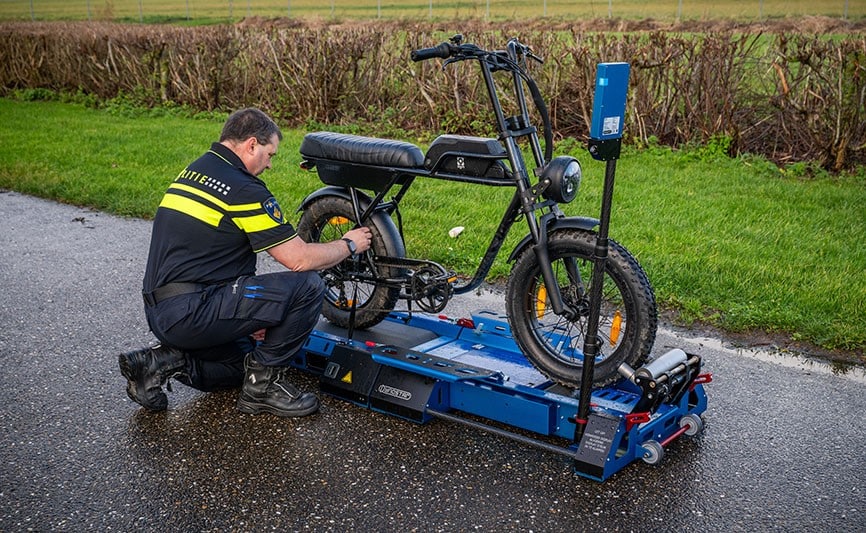
Enschede and Amsterdam are the first municipalities to ban fatbikes in parts of the city. The bans stipulate that electric bikes with tires thicker than seven centimeters may not enter certain areas. Anticipating such bans, manufacturers launched skinnybikes two years ago - basically a fatbike with thinner tires.
The sale of skinnybikes is really taking off this year, fatbike sellers Armando Muis of La Souris and Samir Bahida of Sache Bikes told the newspaper. “The first two containers arrived in February. It could have been six. They sold out immediately,” Muis said. Bahida said: “A year ago, I sold 50 fatbikes for every one skinnybike. That ratio is now almost two to one.”
Traffic safety organization VVN and cyclists’ union Fietserbond are not surprised by this development. “We saw this coming, of course,” they told the newspaper.
According to both sellers and experts, fatbike bans based on tire width, as in Amsterdam and Enschede, are not the way to increase safety and combat nuisance on bike paths. “They adjust the tires just like that. If you specify how big the frame is, they make that smaller too,” said Esther van Garderen of the Fietserbond. “It’s about the motors in the bike, not what the bike looks like.”
The problems lie in a lack of proper regulations and enforcement, and the trade in illegal bicycles that can go much too fast, they told the newspaper. Regulation is currently complicated because there is no distinction between fatbikes and other e-bikes in the law. The Fietserbond advocates for European Union guidelines that make a distinction.
In August 2025, the Ministry of Infrastructure and Water Management also concluded that it was impossible to regulate fatbikes separately from other e-bikes, so it opted for rules for all e-bikes. In 2027, the Cabinet wants to implement mandatory helmets for all e-bike riders up to the age of 18. “That should be a deterrent, because it is easy to enforce,” said Willemijn Pomper of the VVN.
The VVN and Fietserbond also advocate for an age limit of 12 years on e-bikes. According to the organizations, young children are not yet able to properly assess risks and push back against rules. It is precisely this age group that often owns an illegal or souped-up bicycle, the organizations said.
In addition to stricter rules, the organizations want the Dutch authorities to act more against illegal fatbikes that go too fast. These fatbikes are offered online for as little as €500, while a regular fatbike costs well over €1,000. Fatbike sellers are also in favor of a crackdown, warning that kids with bikes going up to 70 km per hour are in serious danger on the roads.