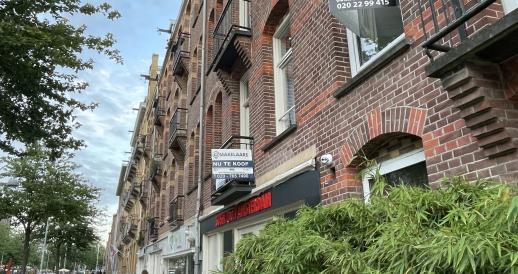
First quarter home sales closed on average at €485,000, up 2.1% since Q1 2025
The Dutch housing market is slowly becoming more balanced, the realtors’ association NVM reported with its Q1 results on Thursday. The supply of homes increased, though mainly because people are waiting longer to buy, resulting in the average purchasing price dropping to €485,000. That is 2.7 percent lower than the previous quarter, but still about €10,000 higher than in the first quarter of last year (+2.1%).
“The increased supply is creating more balance in the housing market,” said Lana Goutsmits-Gerrsenn, a realtor and chair of NVM Wonen. On average, there are fewer viewings per home, and overbidding also decreased somewhat. “Buyers are getting more choice and more time to make a decision, which seems to be causing the hectic pace of recent years to subside somewhat.”
A quarterly decline in home prices in the first quarter is quite common. But this year’s decline was significantly steeper than average. Over the past five years, home prices fell around 1.2 percent in Q1 compared to Q4.
According to the realtors, the price development is influenced by several factors. Fewer large and expensive homes were for sale in the first quarter. Supply increased, largely because many cheaper apartments were put up for sale by landlords. And consumer confidence fell, leading to uncertainty. “Annually, the average selling price is still higher than a year ago, but the price increase is clearly slowing down,” the realtors said.
At 34,579 existing home closings in total, sales volumes were well below the high mark set during the last three months of 2025, when 47,184 homes changed hands. The first quarter of the year typically shows a decrease in transactions compared to the preceding quarter, and the first quarter is often the weakest time of the year.
The supply of existing homes for sale rose to nearly 30,000 in the first quarter, over 20 percent higher than a year ago. “The increase in supply is mainly due to homes selling less quickly.” The tightness in the housing market is decreasing, but the housing shortage remains significant, the NVM said.
Even though prices are stabilizing, about two-thirds of homes were sold above asking price, according to NVM data. Homes are now selling for about 3.7 percent above asking on average.
“The cooling of the market translates into slightly fewer sales above the asking price and more room for negotiation. As a result, buyers are taking slightly longer to reach a purchase decision,” the NVM stated.
The realtor association said viewings are decreasing, as is the volume of bids per home. On top of that, residential properties tended to stay on the market for 32 days. “Homes with a less favorable energy label, in a higher price range, or in a less popular location are those most notably receiving less interest, and which are remaining on the market longer.”
In the newly constructed market, the average selling price was €488,000 in the first quarter, remaining relatively stable. Approximately 5,600 newly built homes were sold in the first quarter, over 1,000 fewer than a year earlier. Supply grew strongly to approximately 18,200 homes, the highest level since 2016.
While the average selling price remained stable for new construction, the price per square meter continues to rise. This shrinkflation ensures that homes appear affordable, but buyers get fewer square meters of living space for their money, the NVM said. The supply is also not in balance with the demand.
“New construction remains essential for housing mobility, but it does not yet sufficiently align with demand. Affordability, housing type, and lead time need to be better balanced to get the market moving again,” Goutsmits-Gerssen said.