
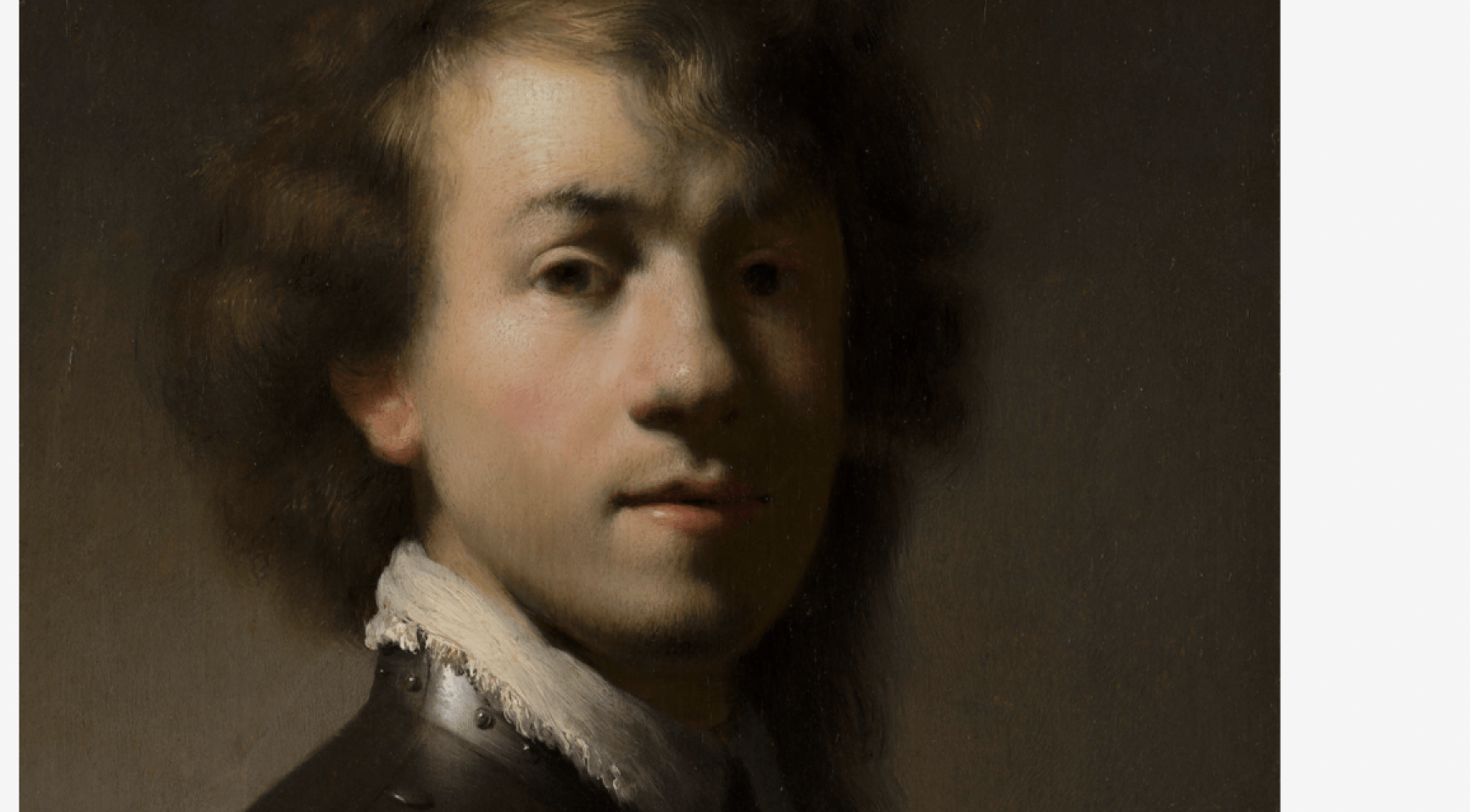
Two paintings in Mauritshuis proven not to be Rembrandts; uncertainty over third work
The Mauritshuis museum in The Hague has confirmed that two paintings previously attributed to Rembrandt are not his work. The museum, which boasts one of the largest collections of Rembrandt paintings in the world, clarified that while eleven works are undoubtedly by the Dutch master, the authenticity of seven others has been questioned, NOS reports.
Three of these paintings, Portret van Rembrandt met ringkraag (Portrait of Rembrandt with a Lace Collar), Studie van een oude man (Study of an Old Man), and Tronie van een oude man (Tronie of an Old Man), were re-examined using advanced research techniques, leading to new insights. Researchers confirmed that the first two paintings are not by Rembrandt, while the authenticity of the third piece remains unresolved.
The Mauritshuis undertook thorough investigations into these works, utilizing cutting-edge methods such as analyzing the type of wood used for painting. Carol Pottasch, a researcher and conservator at the museum, explained the significance of these tests to NOS, noting, "By examining the rings on the sides of the wood, we can observe a unique pattern, like a fingerprint. This matches works that are undeniably attributed to Rembrandt."
While the paintings may not have been created by Rembrandt himself, it is possible they were produced by his workshop or one of his students. "This gives us a valuable glimpse into how his studio functioned and how he taught his apprentices," Pottasch added. Specifically, Studie van een oude man reveals a correction line along the chin that mirrors Rembrandt's characteristic angular hand, suggesting that the artist might have instructed a pupil on how to adjust the work.
Portret van Rembrandt met ringkraag had already raised doubts around the turn of the century, as a matching piece was found in a museum in Nuremberg. Infrared techniques revealed pencil sketches on the Mauritshuis version, something Rembrandt was unlikely to have done, confirming it as a copy by one of his students. The painting was also restored as part of the investigation.
While restoration was successfully completed on Studie van een oude man, the situation was more complicated with Tronie van een oude man. This painting, which was too fragile to restore, showed signs of potential woodworm damage that may have been covered up with additional paint over the years. Despite extensive efforts, including the use of modern techniques, the painting could not be returned to its original form.
"The rough painting of the collar and the intense red highlights around the left ear and eye do not fit Rembrandt's usual style," Pottasch said. "However, the face is unmistakably Rembrandt-like. It's possible that two hands worked on it—perhaps Rembrandt painted the face while a pupil finished the rest."
The two questionable works were acquired by Abraham Bredius, the director of the Mauritshuis and a prominent Rembrandt expert, in the late 19th century. Bredius purchased these and other Rembrandt pieces with his personal funds, leaving them to the museum upon his death, with the stipulation that they must always be on display. However, his heirs have since discovered that the museum has not complied with this condition and are now seeking to reclaim the artworks.
While the ongoing legal case related to Bredius' will is still in progress, the Mauritshuis has emphasized that the current research into the authenticity of these paintings is separate from this dispute. The museum has also stressed that, regardless of authorship, the three works are considered to be of exceptional quality.
"Whoever painted them, they come out beautifully, especially now that they have been restored," said the Mauritshuis, adding that these paintings will be on display until mid-July.


