
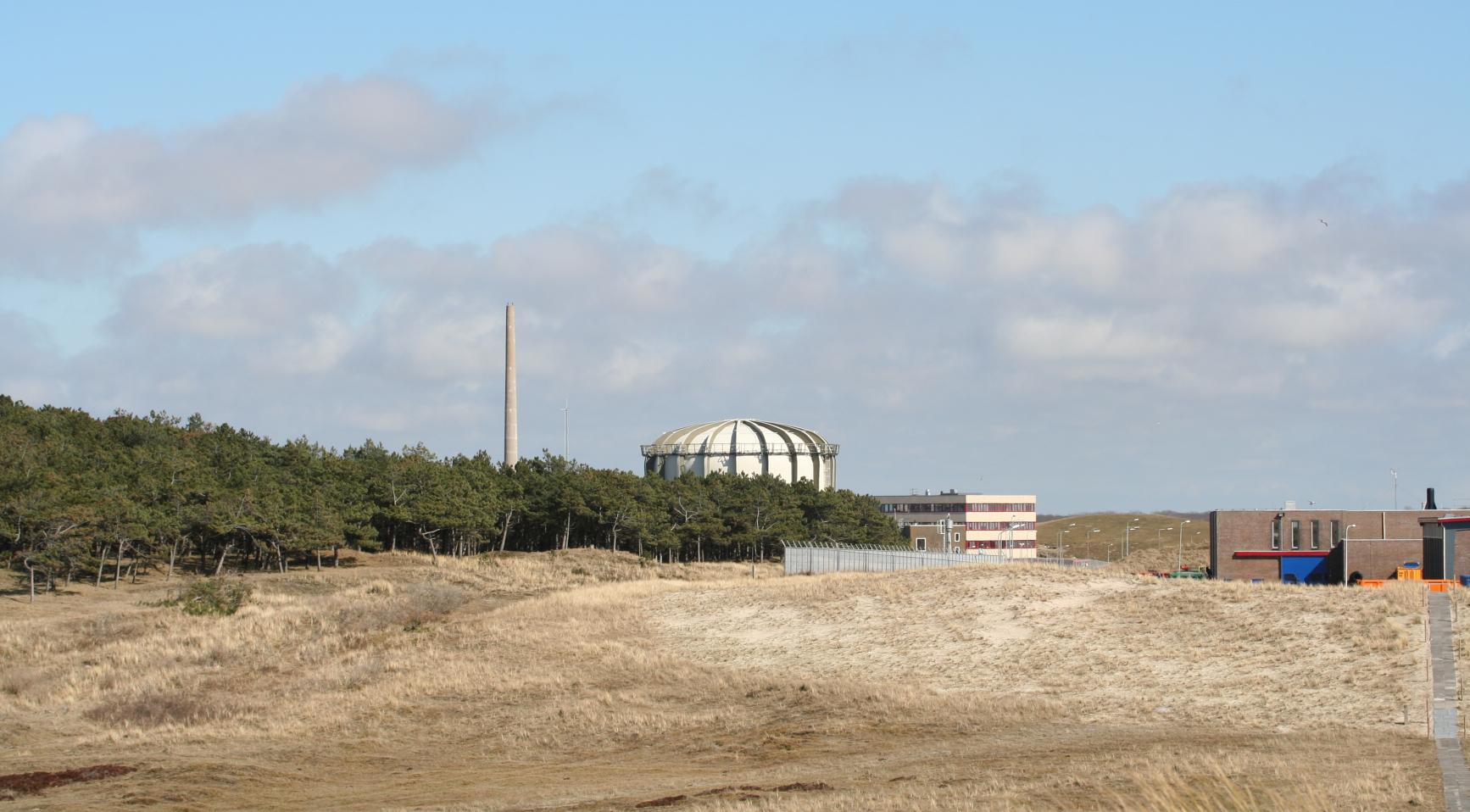
Netherlands grants permit to new nuclear reactor for medical isotopes
The Authority for Nuclear Safety and Radiation Protection (ANVS) has given approval for the construction of a new nuclear reactor to produce medical isotopes in Petten, Noord-Holland. It is the first time in decades that a permit has been granted for the construction of a new nuclear reactor in the Netherlands.
The Pallas reactor will be needed to replace the outdated High Flux Reactor in Petten, and produce medical and industrial isotopes. It will also be used to conduct nuclear technological research. The reactor allows for the production of radioactive substances that are needed when doctors order diagnostic tests and scans of cancer patients, people with cardiovascular disease, and patients with infections. The radioactive isotopes are also used for the irradiation of metastatic cancer.
Infrastructure agency Rijkswaterstaat has also granted a permit. This is necessary because the reactor will use water from the Noordhollandsch Kanaal as cooling water. The cooling water is not radioactive and is discharged into the North Sea. The Pallas reactor requires permits that comply with both the Nuclear Energy Act and the Water Act.
The current test reactor in Petten, which is part of the municipality of Schagen, is about sixty years old. Petten is one of the most important suppliers of medical isotopes in the world. The arrival of the Pallas reactor means that the Netherlands will be able to continue producing these isotopes for at least the next fifty years. The intention is that there will be a transition phase from the High Flux Reactor to Pallas between 2026 and 2030.
"Our licensing authorities and lawyers have worked hard on the assessment of the Pallas license application. Including the preliminary consultations about the license requirements. It was a process of many years. Pallas had to demonstrate extensively that the reactor can run safely if it is built in this way. Now that all the necessary steps, including participation, have been completed, we will grant the construction permit and we will supervise it," said ANVS board member Marco Brugman in a statement.
The Ministry of Health, Welfare and Sport called it "good news, naturally," especially for patients. "We are one step further in the process."
NRG|PALLAS, the organization that intends to build the new nuclear reactor, is "extremely happy" with the permission it received. A spokesperson for the company called it a milestone and "a special moment." Now that the Authority for Nuclear Safety and Radiation Protection (ANVS) has agreed, there are no major obstacles to overcome in terms of permits, she said. "We have always had full confidence in it, but we are still relieved that it worked out."
The Dune Conservation Foundation was thoroughly displeased with the decision. The new reactor, just like the current one, will be located in the middle of a dune area. Director Marc Janssen called it "a missed opportunity to change course." He would have liked to have seen investments in new techniques that produce less radioactive waste. The foundation is also not happy with the location.
"For nature, the decision of the ANSV is another slap in the face. In the middle of a Natura 2000 area, substantial investments are now being made in a polluting industrial development," said Janssen. Dune preservation and other opponents lost a lawsuit in 2020 against the zoning plan that makes the construction possible. They also argued that a new reactor would be better built elsewhere, such as Borssele in Zeeland, where there is already a nuclear power station.
The permits are available for inspection until March 30. Until that date, it is possible to lodge an appeal against these permits with the Council of State. The permit that the ANVS has now granted only allows for the construction of the Pallas reactor. To put the reactor in use in the future, a commissioning permit will still be required. Before that is granted, there will be another period of public participation. This will probably happen in 2028, according to the ANVS.
If the new nuclear reactor for medical isotopes is built, it will save human lives, said Professor Andor Glaudemans, a nuclear medicine doctor at the University Medical Center Groningen (UMCG) and chair. of the Dutch Association for Nuclear Medicine (NVNG). The isotopes produced there are essential for the internal irradiation of tumours.
Doctors expect that by 2040 they will need five times as many isotopes as they do now. "This has to do with the aging population; more people are getting cancer. Moreover, we can detect tumors earlier and earlier, and we are also discovering new ways to apply the isotopes," Glaudemans said. The current reactor can certainly not cope with this increasing demand, but the new reactor can, he said. "It will then help us save lives. But if the new reactor does not come and we get a fivefold increase in demand, then we have to make choices. Then not every patient can count on getting treatment."
There are only six reactors worldwide where the isotopes are made, and Petten is the most important. About 40 percent of all isotopes in the world come from the village in the Noord-Holland dunes. "But the current installation is more than 60 years old and has had more and more problems. Last year there were a few temporary production stops. We notice the consequences a week later, then we have to postpone scans and treatment of patients," said Glaudemans.
In any case, it will take until 2030 before the new reactor is actually put into operation. "Until then, it will continue to walk a tightrope. In the coming years, until the new reactor is operational, production stops will become more frequent."
Reporting by ANP


