Netherlands News in English

Main navigation

  • Top stories
  • Health
  • Crime
  • Politics
  • Business
  • Tech
  • Culture
  • Sports
  • Weird
  • 1-1-2
Image
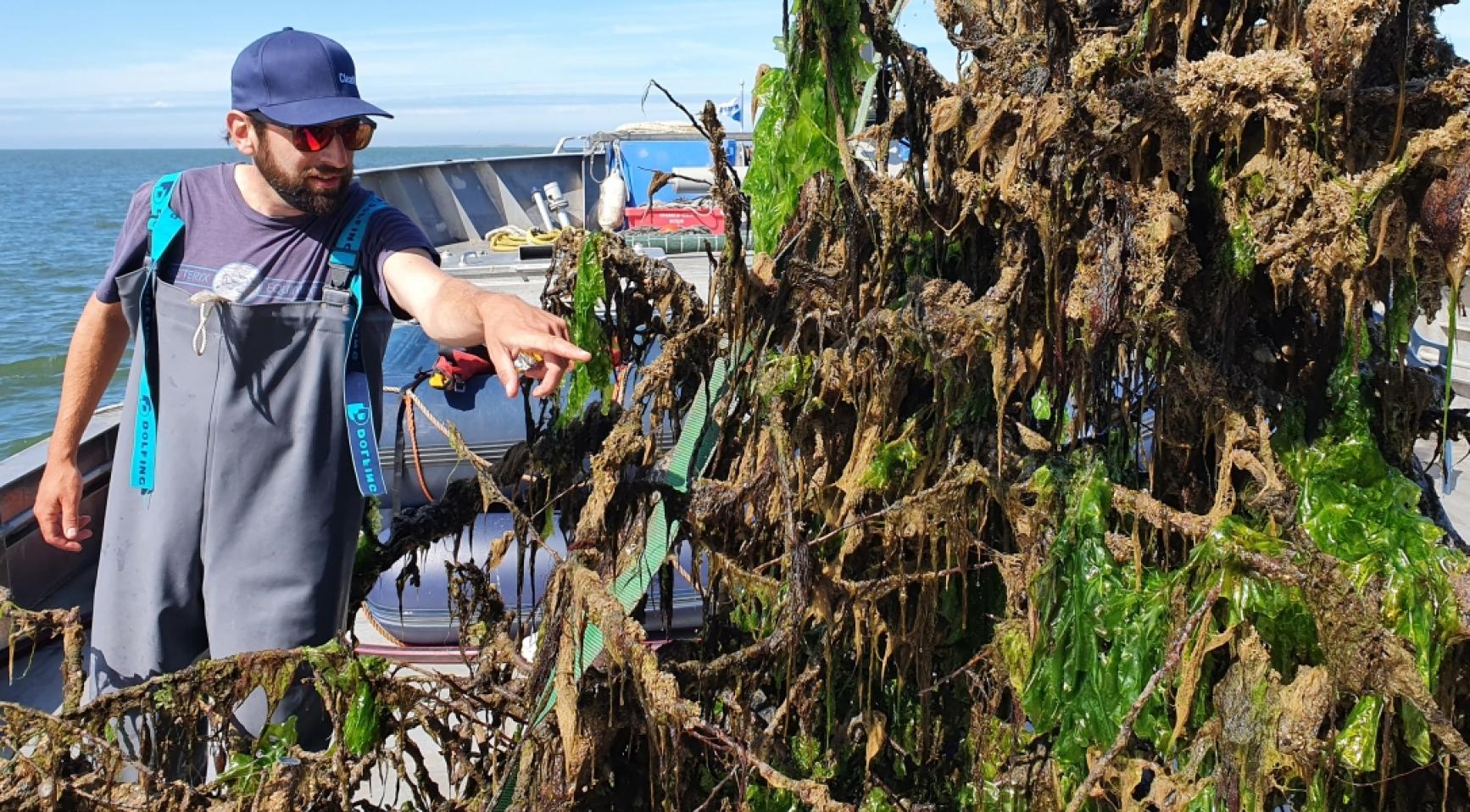
One of the Tree Reefs on deck for sampling and measurements
One of the Tree Reefs on deck for sampling and measurements - Credit: Oscar Franken / NIOZ, RUG - License: All Rights Reserved
Tech
Nature
Science
NIOZ
University of Groningen
Natuurmonumenten
artificial reef
Wadden Sea
pear tree reef
Wadden mosaic project
biodiversity
Wednesday, 16 November 2022 - 15:30

Share this article:

Opens in a new window Opens in a new window Opens in a new window Opens in a new window Opens in a new window Opens in a new window

Video: Artificial reefs from dead pear trees "biodiversity hotspots" in Wadden Sea

Artificial reefs made of dead pear trees installed in the Wadden Sea are doing very well unexpectedly quickly. According to the Netherlands Institute for Sea Research (NIOZ), they have become “biodiversity hotspots” in a very short time.

The reefs were only installed in June, located in the Wadden Sea between Texel and Vlieland. And they are already “bursting with life,” according to the researchers. Because things are going so well, they are now investigating whether installing tree reefs could also be an option for restoring the underwater nature in the North Sea.

Natuurmonumenten, NIOZ, and the University of Groningen are working together on the Wadden mosaic project. The project’s goal is to better understand the underwater nature of the Wadden Sea and possibly develop measures for recovery. Dead trees are proving to be ideal as a breeding ground for marine life.

Mussels, barnacles, sea anemones, bryozoans, and sea squirts have all made their homes in the reefs built of dead pear trees. An average of five times as many fish swim around the reefs, eating the animals on the wood. According to the scientists, the gobies, eels, and whiting are also larger than elsewhere in the sea. The reefs also attract more seals.

More like this

Image
Seals in De Hors, December 2016.
Seals engage in social distancing, probably to prevent diseases
Image
High water levels led to some flooded areas in Lathum, Gelderland, which is bordered by the IJssel River. 6 January 2024
Biodiversity recovery in Dutch fresh water turning back into decline
Image
Two disposable vapes on a blue background
Hundreds of Dutch shops still selling illegal vapes
Image
A dolphin swims near a beach
Video: Second dolphin washes ashore in Frisian village of Wierum in days
Make NL Times your top Google source

Follow us:

Latest stories

  • Man arrested after fight at Ter Apel asylum center following aid groups’ withdrawal
  • Dutch in Kyiv grow increasingly concerned after Russian strikes recently kill about 60
  • Second explosion hits Amsterdam home within a week as police investigate possible link
  • Dozens miss Transavia flights after overnight check-in problems at Schiphol
  • Police seize drugs, illegal medicines in Amsterdam-Noord home and storage unit

Top stories

  • Man severely beaten after Amersfoort Pride; Police probe anti-LGBTQ+ motive
  • Video: Fights break out outside Ter Apel center on first night after aid groups pull out
  • Video: Two injured in Wassenaar shooting; Suspect arrested
  • Netherlands braces for incoming heat wave as temperatures to reach 34°C
  • Dutch workplaces not ready for rising heat, labor union warns

© 2012-2026, NL Times, All rights reserved.

Footer menu

  • Change Privacy Settings
  • Privacy Policy
  • Contact
  • Partner Content