
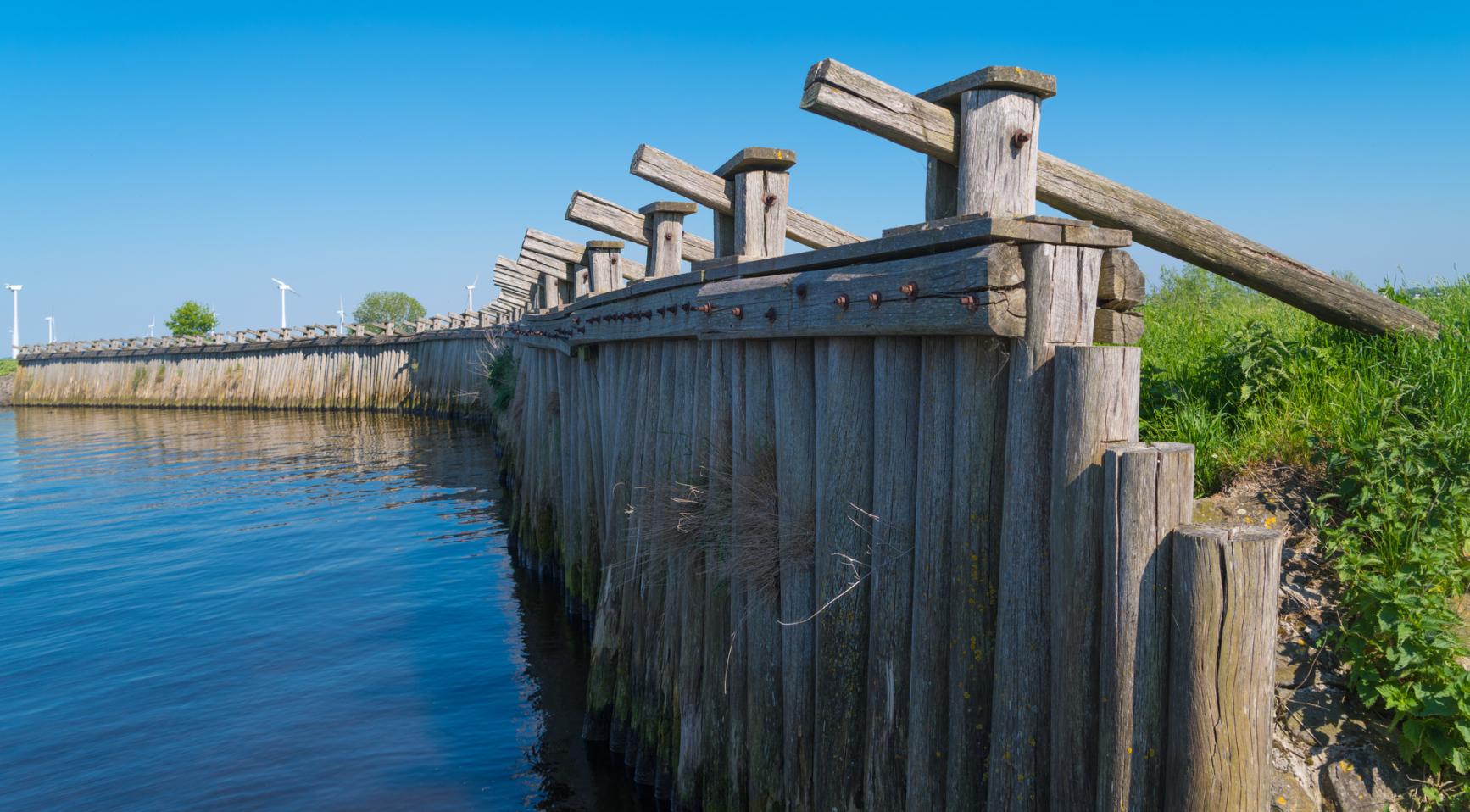
99% of deltas like Netherlands unprotected against rising sea levels
Only 1 percent of the delta areas with dikes, like the Netherlands, are protected against rising sea levels, scientists reported in a new study looking for solutions to prevent river deltas from drowning. The team, which includes geographers, sociologists, and natural scientists, mapped out which good ways of raising delta land already exist.
Sand and mud are the main things needed to raise the areas behind the dikes higher. But the supply of sand and mud from rivers is declining worldwide, according to the research team established by Utrecht University. As a result, they are no longer supplied to the delta areas, "causing flooding and land loss." "Ideas have emerged in several countries to solve this problem, although they only cover a small area," said lead researcher Jana Cox.
But even small solutions can help the land stay dry much better if the sea level rises, said Cox. The researchers looked at solutions that trap sand and mud in the delta areas, causing the land to be raised naturally. The researchers saw these kinds of solutions in, for example, the Netherlands, the United States, China, and Bangladesh. Incidentally, the delta area in the Netherlands is already partly protected against sea level rise by the dikes, depending on how high the sea level becomes.
"The Netherlands has several interesting ways to raise the land," said Cox, originally from Ireland. She has lived in Utrecht for five years and specializes in the area around the Rijn and the Maas rivers. "Here, you have exchange polders, for example. These are two dykes next to each other. If you open the front dyke and let the water in from the river, the city behind it is still protected by the second dyke. After five or ten years, the land raises itself. After that, it can be used again for, for example, animals to graze or for agriculture."
She also saw such a solution in Bangladesh. "The residents there took the lead to solve the problem. They made a hole in the dike themselves, through which the water came in. Now that area can be used for agriculture again because of the sand and mud."
The research was published on Thursday in the scientific journal Global and Planetary Change.
Reporting by ANP


