Netherlands News in English

Main navigation

  • Top stories
  • Health
  • Crime
  • Politics
  • Business
  • Tech
  • Culture
  • Sports
  • Weird
  • 1-1-2
Image
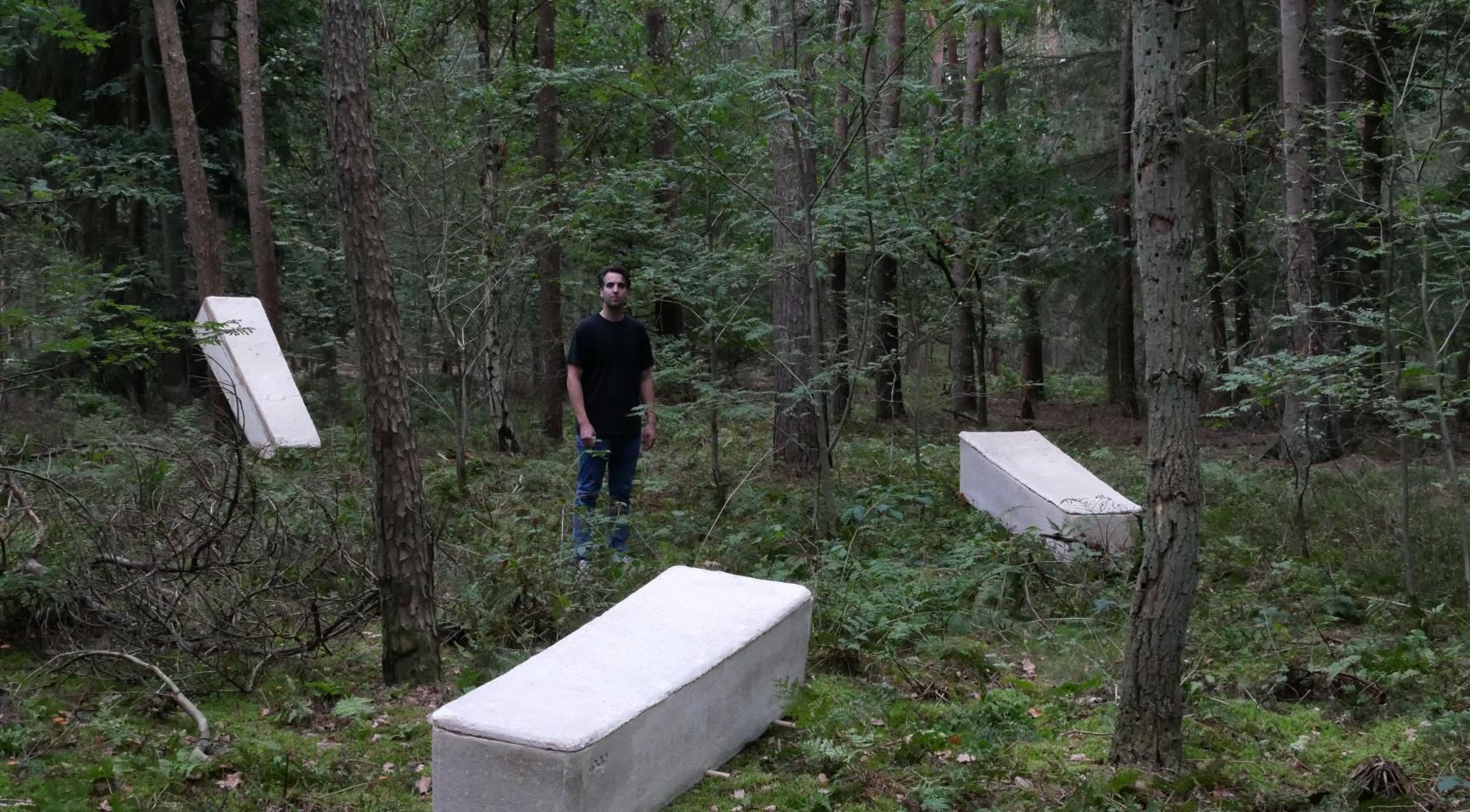
Designer of the Living Cocoon Bob Hendrikx
Designer of the Living Cocoon Bob Hendrikx - Credit: Loop of Life / TU Delft
Tech
Nature
Innovation
living coffin
living cocoom
burial
cemetery
sustainability
human remains
fungi
Sunday, 12 September 2021 - 11:30

Share this article:

Opens in a new window Opens in a new window Opens in a new window Opens in a new window Opens in a new window Opens in a new window

"Living coffin" the latest trend as more people want sustainable burial

One year ago, researchers at the Delft University of Technology (TU Delft) first developed a ‘living coffin’ that helps convert human remains to nutrients. Since then, nearly 100 people have chosen to be buried in the so-called Living Cocoon, NU.nl reported.

“I think it gives people a good feeling to still do something good for the earth, instead of leaving behind a scar”, designer Bob Hendrikx told NU.nl.

Conventional coffins can release substances that contaminate the earth around them over time. The Living Cocoon, on the other hand, is meant to enrich the soil around it, instead of polluting it.

The sustainable coffin created by TU Delft in collaboration with Naturalis is made of the living organism mycelium, a network of several fungi. The fungi look for waste material in their surroundings to convert them into nutrients for the environment. Thus, the Living Coffin contributes to the biodiversity in the soil around it and helps plants grow.

“The coffin is broken down within 45 days and thinks toxins in the ground are really tasty”, Hendrikx said.

The developers have now been working on increased their production capacity to accommodate the large demand for the sustainable coffin. “We have a lack of space in the Netherlands. How nice would it be if you could transform polluted areas into a place where people are converted into forests”, Hendrikx wondered.

Currently, the price of the living coffin lies above the cost of a conventional coffin at 1,495 euros a piece. Once the production process has been automated, Hendrikx hoped that the coffin will become more affordable.

More like this

Image
Pink begonia at a tombstone
Dordrecht seeks to restore graves after 21 bodies secretly moved in cemetery scandal
Image
Cemetery
Most of 124 remains at Almelo convent identified as girls and young women
Image
A KLM Boeing 737-800, with registration PH-BXU, on the ground at Copenhagen Airport in Kastrup, Denmark. The aircraft has the nickname, Albatross. 19 March 2026
Danish court finds KLM guilty of greenwashing; Airline hit with €401,000 fine
Image
Office buildings in Amsterdam Zuidas
Dutch businesses investing less and less in sustainability measures
Make NL Times your top Google source

Follow us:

Latest stories

  • Water levels in Dutch rivers exceptionally low for the time of year
  • Video: Bullet flies through city bus in Rotterdam shooting
  • Trump administration starts campaign to "isolate" ICC for its "war" on U.S.
  • OLVG hospital in Amsterdam starts trial with late abortions
  • One killed in stabbing on Roermond street; Suspect arrested

Top stories

  • OLVG hospital in Amsterdam starts trial with late abortions
  • One killed in stabbing on Roermond street; Suspect arrested
  • Netherlands to start military exercises with Ukraine, help design new air defense system
  • Ter Apel asylum center area declared safety risk zone after recent stabbings, fights
  • Suspect in ABN Amro worker's fatal stabbing also harassed four other women

© 2012-2026, NL Times, All rights reserved.

Footer menu

  • Change Privacy Settings
  • Privacy Policy
  • Contact
  • Partner Content