
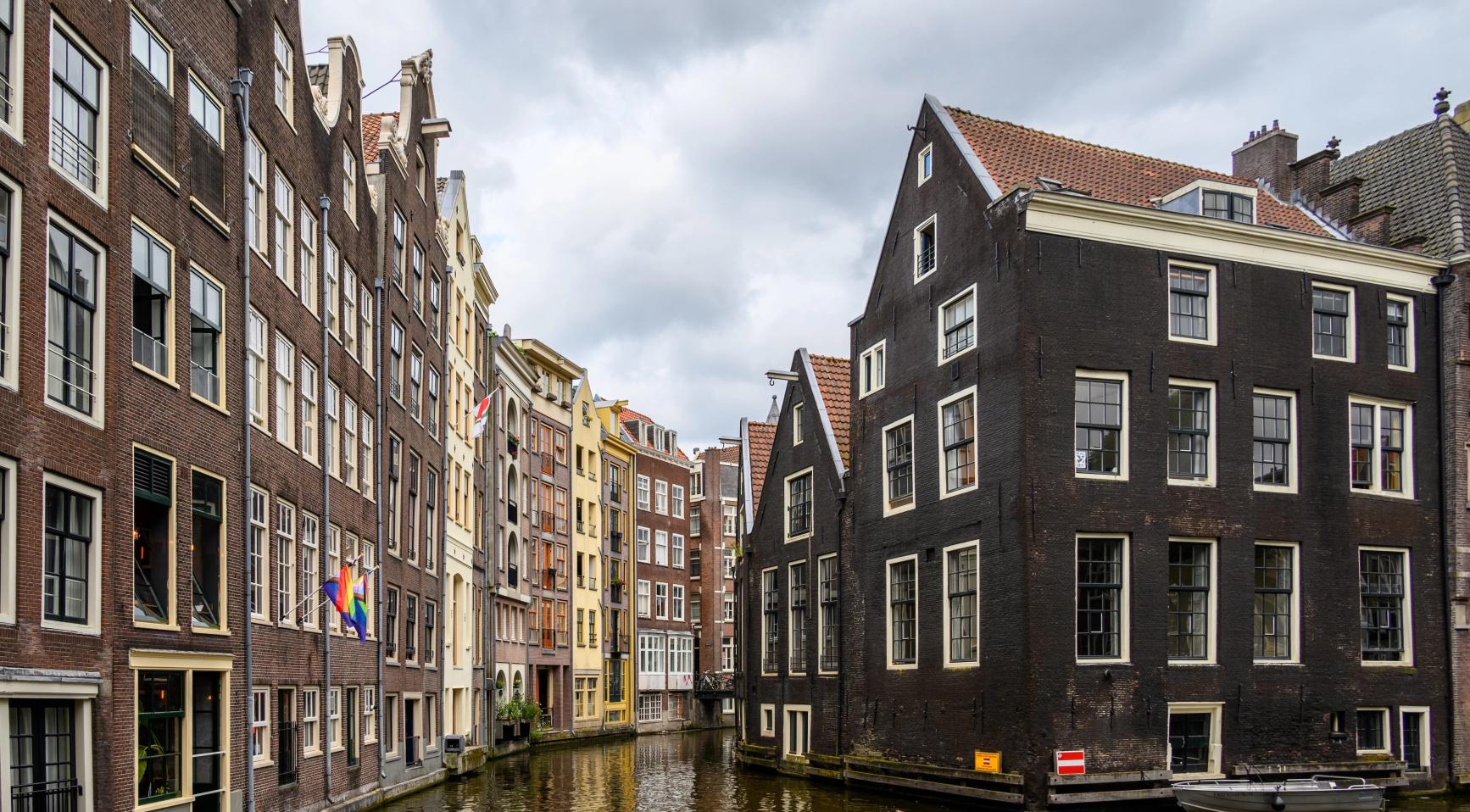
Foundation damage to nearly 425,000 buildings could cost Netherlands €54 billion by 2035
Nearly 500,000 buildings in the Netherlands already have foundation subsidence damage or will develop it by 2035, according to research from the Council for the Living Environment and Infrastructure. More than 120,000 homes have damage severe enough to require repairs. Without intervention, total costs could reach 54 billion euros. That figure covers not only foundation repairs but also lost home values, damage to buildings and infrastructure, and broader economic effects.
Foundation problems weaken a building’s base, reducing its stability and load-bearing capacity. This produces cracks in floors and ceilings, windows and doors that stick, and uneven floors and walls.
Causes include lowered groundwater levels, bacterial decay, drought, nearby construction work, aging and construction errors. In practice, a single cause is almost never identified.
The issues have persisted for more than 20 years without a comprehensive solution. Climate change is expected to worsen them through increased drought and reduced water availability in affected areas.
“The groundwater level has a major influence on foundation problems,” said Mandy Korff, a foundation expert at Delft University of Technology and the knowledge institute Deltares. “If the groundwater drops, whether due to human action or climate change, the soil sinks and the houses without piles sink with it.”
A different approach to land is necessary, Korff said. The properties of water and soil should guide spatial planning and land use. The council also concludes that new construction should primarily occur on soil with adequate load-bearing capacity.
That goal faces constraints because of existing space shortages in plans to build 100,000 homes a year. “But space shortage is also related to the choices we make about accessibility, agriculture and where houses are needed relative to where people want to live,” Korff said.
The problems affect society as a whole, said Tamara Evers of the Stimuleringsfonds Volkshuisvesting Nederlandse Gemeenten foundation. “One can pay for the damage to his house, the other cannot. And the question is whether it is justified to leave this to the individual homeowner, with all the different causes underlying it.”
Foundation damage is sometimes invisible and therefore not always noted in building inspection reports. Since April, appraisers have been required to assess foundations in appraisal reports, a step Evers called positive for greater transparency.
In cases of high risk, further investigation can be required. The real estate association NVM has said insufficient attention has been given to practical implementation, citing shortages of qualified experts and unclear standards for such studies.
Repair costs are usually not covered by insurance, said Elias van Hees of the Association of Insurers. The damage develops gradually from causes outside the homeowner’s control. “That has consequences for mortgage providers. After all, it is the collateral that decreases in value or in the extreme case is ultimately declared uninhabitable.”
Homeowners with sufficient income can obtain loans for repairs. For households lacking borrowing capacity, the Sustainable Foundation Repair Fund was established, with the SVn foundation as fund manager.
“In case of income shortage, you can apply for a loan at that fund for foundation repair. The first three years you then pay no monthly costs at all on that foundation mortgage,” van Hees said.
Evers noted that addressing foundation problems has risen higher on the government agenda. The national government, municipalities, provinces and market parties are collaborating on a National Approach to Foundation Problems. Beyond high costs, the effort requires adequate capacity among contractors and specialized firms.
“The task is too large to leave only to municipalities or individual owners. At the same time, homeowners of course also have their own responsibility,” Evers said.
About 1,000 homes are currently repaired each year. That number is expected to rise to roughly 25,000 annually in coming years. Greater awareness is essential, Korff said.
“The foundation is often invisible, but can have very visible consequences. There is more and more information available, although especially for older houses it may be necessary to dig a little deeper literally and figuratively.”
Cracks in walls and sticking windows or doors are common reasons to inspect foundations, she said. “It is also useful to know what type of foundation is under the house. That information can for example be found on the construction drawings, although those are not available for all houses. Without construction drawing, investigating the foundation costs more time and money, but it is advisable in case of doubt.”
