
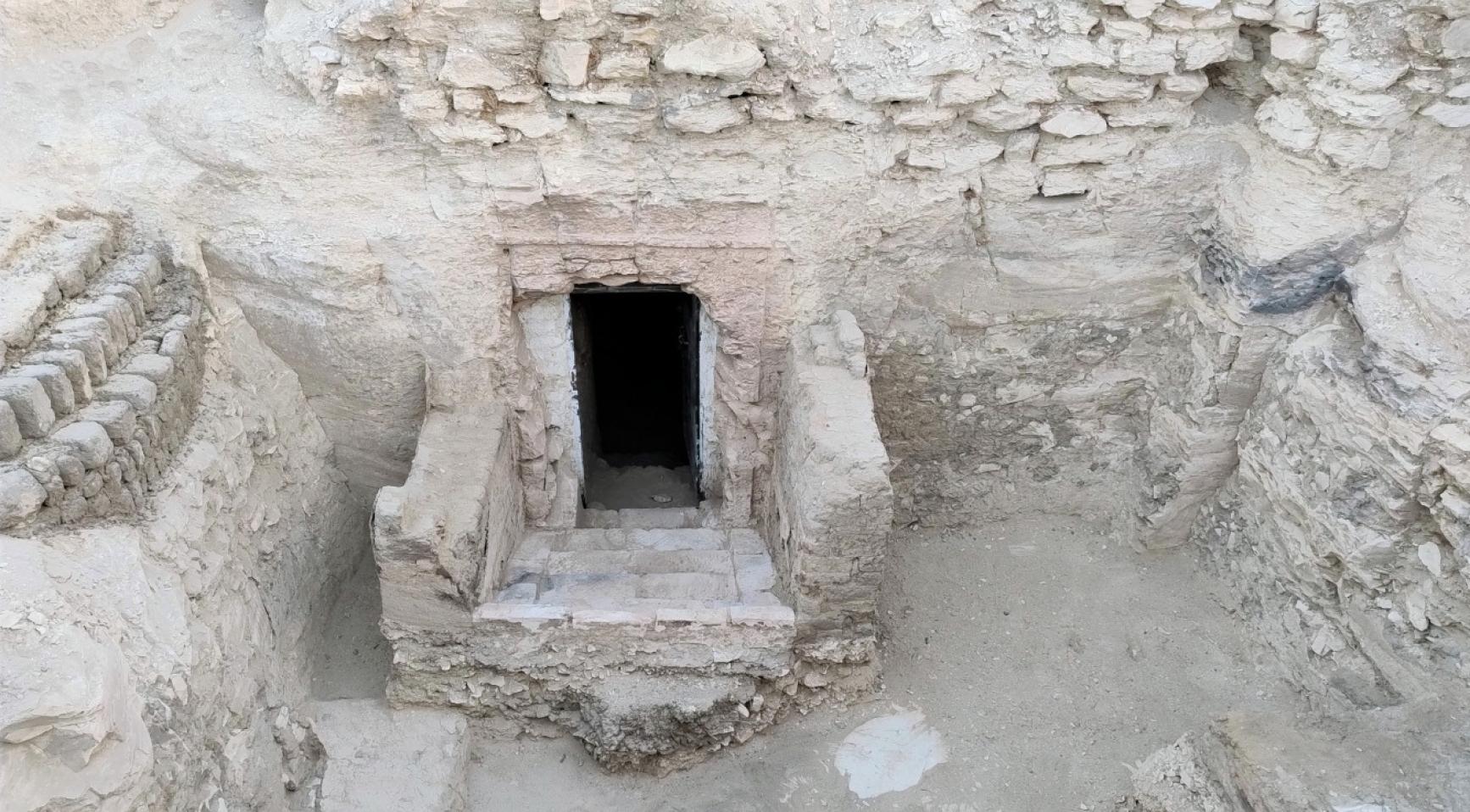
Dutch archeologists discover 3,000-year-old tomb in Egypt
A team of Dutch archeologists has discovered a 3,000-year-old tomb near the Egyptian city of Luxor, the Dutch team confirmed after an official announcement by the Egyptian Ministry of Tourism and Antiquities.
Inscriptions inside the tomb show that it belonged to someone named Paser, a common name at the time. The painted walls inside the tomb show Paser worshipping various deities and Paser and his wife in front of an offering table.
According to the researchers, the iconography and painting style date the tomb to the Ramesside period (circa 1292 to 1069 BC). Its layout is typical of private Theban tombs of the time, consisting of an outer courtyard, a stone-cut chapel in the shape of a converted T, and underground burial chambers.
The wall decorations are currently covered by a thin layer of dirt. The team will clean and reinforce the walls during its next fieldwork season. The team hopes to learn more about the people buried inside the tomb during this future work.
“Furthermore, the tomb will be studied in its broader chronological context, which is expected to reveal deeper insight into how the tombs in this area relate to the surrounding environment and pre-existing monuments,” said the researchers, led by Dr. Carina van den Hoven of Leiden University.
The newly discovered tomb is located in the area of Lower Sheikh ʿAbd el-Qurna, Luxor West Bank. The team of Dutch archeologists has been working in the area with the Egyptian Ministry of Tourism and Antiquities since 2018, aiming to preserve the area for future generations.


