
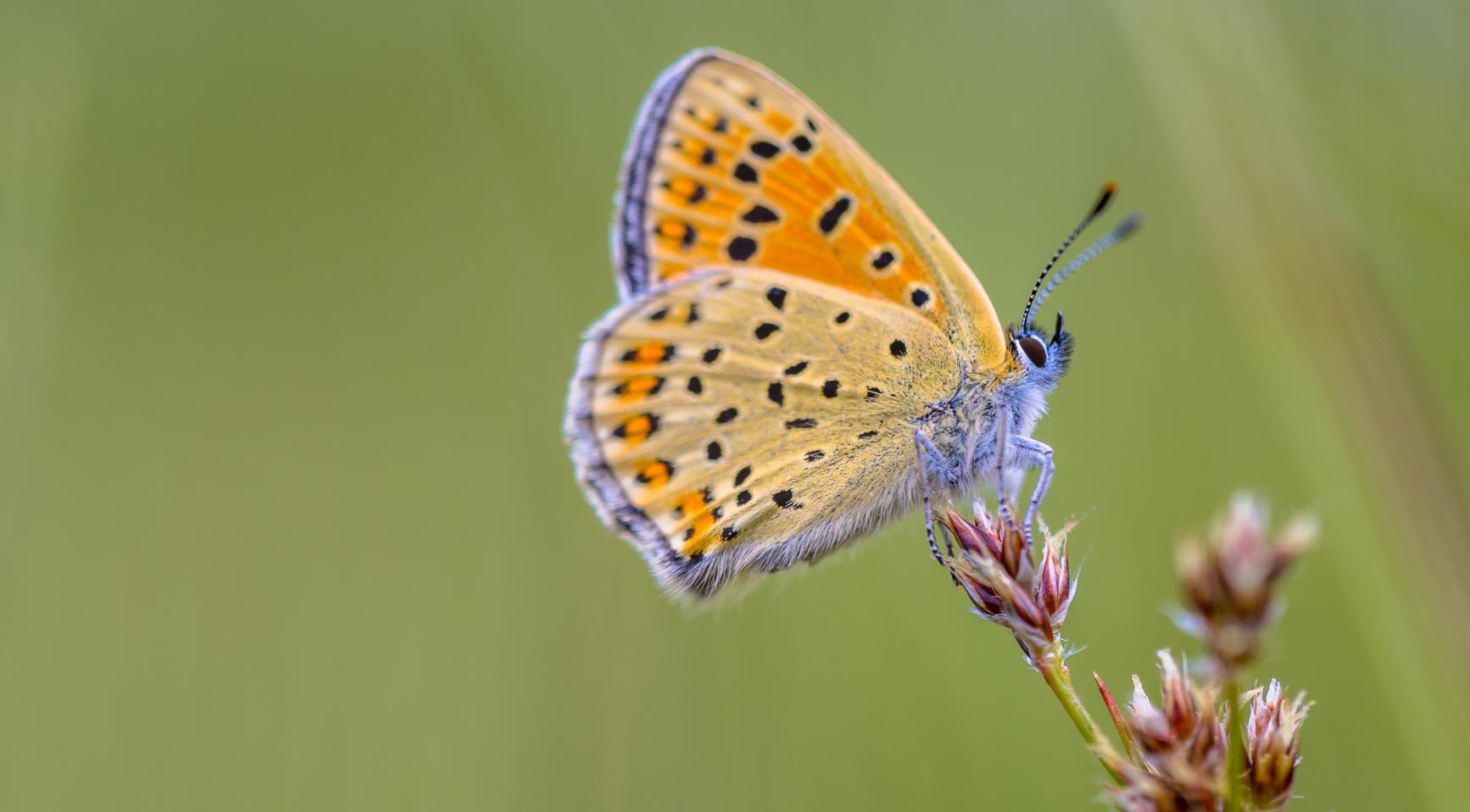
Butterfly populations in the Netherlands dropped 56% in 30 years
“The butterfly population has declined for the tenth year in a row, and in 2024 it reached its lowest level since the start of the counts,” Statistics Netherlands and the Butterfly Foundation reported on Wednesday. Between 1992 and 2024, butterfly populations have declined by an average of 56 percent. Common species are observed less and less. The scarce large blue (Phengaris teleius) seems to have disappeared from the Netherlands.
The statistics office and butterfly foundation have been counting 54 butterfly species on fixed routes every week since 1992. In 2024, the number of butterflies counted was the lowest since the start of the butterfly monitoring network.
Over the entire period, 30 butterfly species declined in number and 12 species increased. Last year, nine of the 54 butterfly species studied had their lowest numbers since 1992. These include the Essex skipper (Thymelicus lineola) and the silver-studded blue (Plebejus argus).
The 15 most common butterflies in the Netherlands have declined by more than 35 percent in the past decade. These common species, including the scarce large blue and the large white (Pieris brassicae), play an essential role in nature due to their high numbers, for example, as pollinators or food sources.
Ten characteristic grassland butterfly species declined by an average of 69 percent compared to 1992. “These ten butterfly species are an important indicator of the quality of grasslands.” The wall brown butterfly (Lasiommata megera) population has declined by more than 98 percent.
The biggest cause of butterfly populations’ decline is the loss and fragmentation of suitable habitats. Habitats are also becoming less and less suitable for butterflies, partly due to nitrogen precipitation, CBS said. In recent years, climate change and more extreme weather conditions have started playing an increasingly big role. Chemical pesticides are also a major cause of the decline in butterflies, the statistics office said.
Some butterfly species have increased in the past three decades. “Particularly species that benefit from more variation in forests and higher temperatures.” These include the small heath butterfly (Coenonympha pamphilus) and the orange-tip (Anthocharis cardamines).


