
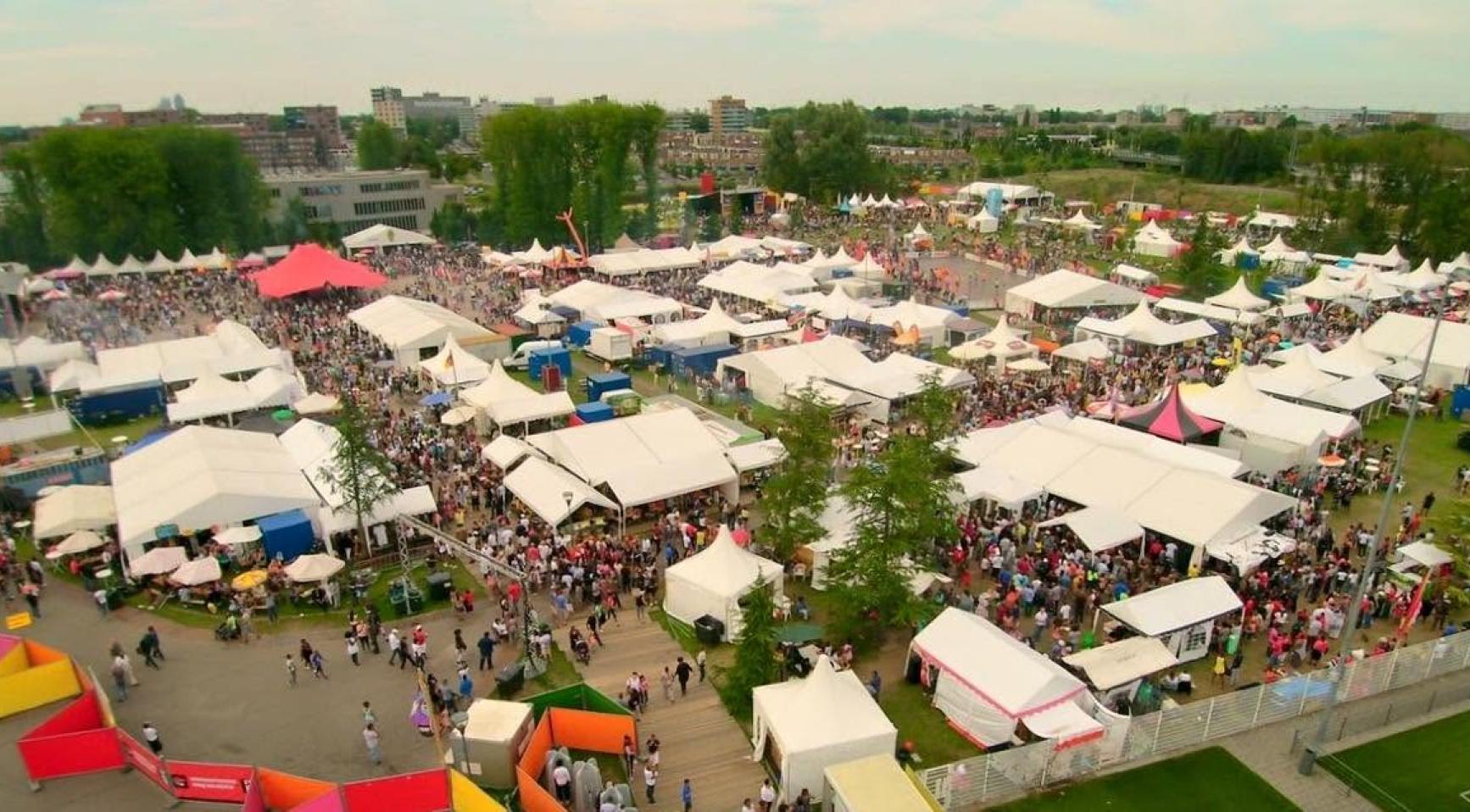
Amsterdam's Kwaku Summer Festival calling it quits after 50 years
This year will be the last edition of the Kwaku Summer Festival, which takes place over several weekends during the summer vacation in the Nelson Mandela Park in Amsterdam Zuidoost, the organization announced early Thursday morning. The organizers can “no longer continue the festival in its current form” due to rising costs and the increasing complexity of organizing it, Kwaku director Ivette Forster said, Parool reports.
“It was not an easy decision. Kwaku is more than a festival - it is a unique social phenomenon that has traditionally meant a great deal to many people,” Forester said. The festival started in 1975 as a small-scale football tournament intended to offer kids and teenagers in Zuidoost who could not go on vacation an enjoyable summer. In the years that followed, it grew into a multifaceted event including football, debates, lectures, dance workshops, beauty pageants, and live performances.
According to the organization, the circumstances for organizing the festival have changed drastically in recent years. “Stricter permit requirements, rising supplier costs, and increasing organizational complexity make it more and more difficult to keep the festival affordable and accessible,” Forster said. “Visitors complain bitterly about the prices. While the festival is intended for the community - we cannot afford the same high prices as a dance festival.”
Forster doesn’t know whether Kwaku will disappear entirely after this year’s edition, which will continue as planned. The organization is working with the Zuidoost district to see whether the festival has a future in a different form, though Forster did not say what new forms the organization was considering.
Forster did stress that this announcement is not meant as a means of pressure on the municipality. “We simply can no longer bear the financial risks. The only way to solve this now is by drastically increasing the entrance fees. But then it is no longer Kwaku. We have our backs against the wall.”
The Kwaku organization informed the exhibitors, suppliers, and people who build the stages that this would be the last edition on Wednesday. “Everyone thought it was terrible,” Forster said. “Some stallholders were here 50 years ago as well; their children took over from them. It has become a way of life, a kind of family.”


