
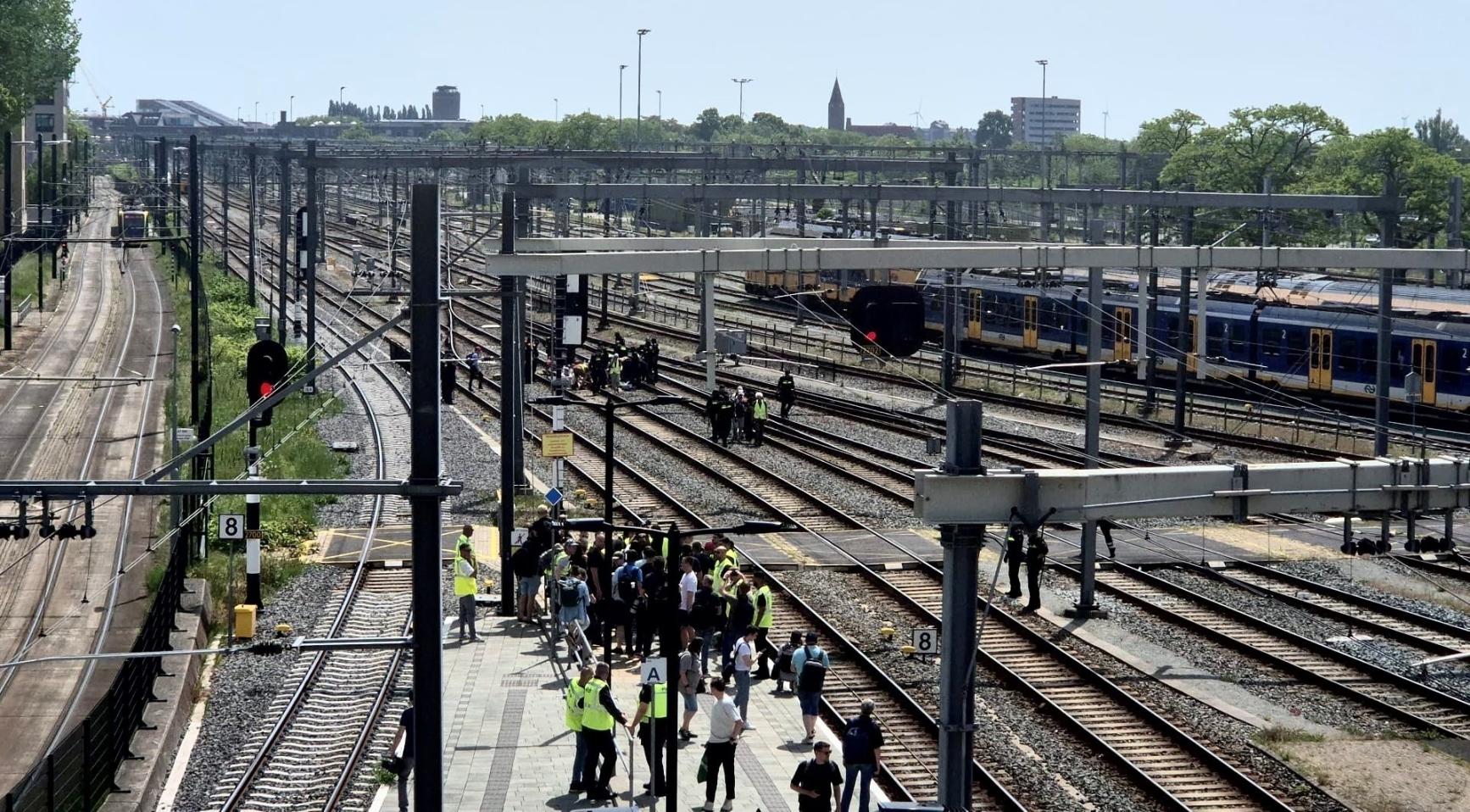
NS files damage claim after activists block tracks at Utrecht Centraal
Dutch rail operator NS said Sunday it plans to seek damages from activists after 27 demonstrators from Extinction Rebellion and pro-Palestinian groups blocked tracks at Utrecht Centraal, disrupting train traffic for more than 2 and a half hours despite a ban, De Telegraaf reports.
Police arrested the activists Saturday afternoon after they entered the tracks, which NS said created a dangerous situation and forced a prolonged shutdown of rail traffic at one of the country’s busiest stations. The protesters spent the night in custody and were released Sunday morning after receiving fines from prosecutors under a penalty order.
The blockade caused canceled trains, rerouted passengers, additional security measures, and operational costs. NS said it is examining which damages can be directly recovered from the protesters or their organizations, potentially leaving them with costs far higher than the fines imposed by prosecutors.
“The entering of railway tracks is a criminal offense under Article 51 of the Railway Act because it obstructs train traffic and creates a risk of injury,” NS spokesperson Willemijn Weinands told De Telegraaf. “In cases like this, we routinely file a police report and also investigate the possibilities for a damages claim.”
Dozens of hired security guards were visible at the station as NS. Rail infrastructure operator ProRail took additional measures to keep travelers away from the tracks and maintain safety.
Berend Roorda, a university associate professor in Groningen specializing in protest law, said the relatively low fines — often no higher than 300 euros — may appear mild but are legally explainable because the incident involved a demonstration.
“The difference between someone simply entering the tracks and what happened Saturday is that this was a protest,” Roorda told De Telegraaf. He said demonstrations are a fundamental right and that Dutch courts and the European Court of Human Rights require authorities to respond proportionally. “That means punishments cannot be so severe that people are discouraged from protesting.”
Still, Roorda said protesters are not exempt from criminal law. Dijksma had explicitly banned the rail blockade based on three legal criteria: traffic interests, protection of public health and prevention of disorder. “Demonstrating is never a free pass to commit criminal offenses,” Roorda told the newspaper. “You cannot simply block railway traffic.”


