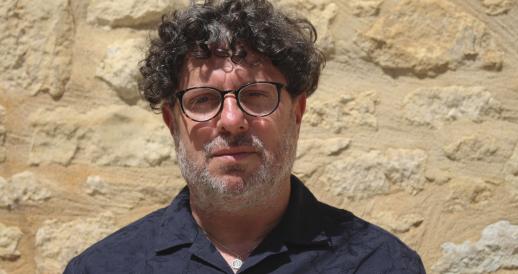
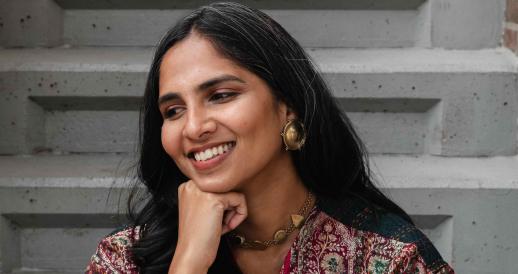
Kiriko Mechanicus bringing her film on Atlanta sex work killer, ethnic fetishism to SXSW
When news of the 2021 Atlanta massage parlor shootings reached Amsterdam, filmmaker Kiriko Mechanicus felt a chilling connection that transcended geography. "I realized when I had read about this incident that it somehow also felt as if I was part of his sick desire," the Dutch-Japanese filmmaker explains. While most would find it impossible to humanize a mass murderer, she spent time writing letters to Robert Aaron Long, now on death row for the Atlanta killings, for her new documentary, How to Catch a Butterfly. The film will debut at South by Southwest (SXSW) in Austin, Texas, next month, and will be screened elsewhere in the U.S. and the Netherlands.
Through this attempt at correspondence, she seeks "not demonize him in what he did, but more demonize the whole idea how we as people look at Asian women". She argues that in a culture steeped in ethnic fetishization, Asian women are often "reduced to this one thing, which is a butterfly that needs to be caught".
In a candid conversation with host Zack Newmark on the latest episode of the Dam Yankee podcast, Mechanicus delves into the uncomfortable intersection of her personal life and the motives behind the shooting. She admits that her approach—connecting a horrific mass murder to her own dating history—might seem "radical" or even "kind of cuckoo" to some.
When he was 21, Long shot nine people, killing eight. Four of those killed were ethnically Korean women, two were women of Chinese heritage, and the other victims were a white woman and white man. A Guatemalan man was wounded in the massage parlor attacks.
Mechanicus believes the violence in Atlanta was a symptom of a larger cultural issue, possibly linked to the "psychosis" she believes Long may have experienced. For years, she realized she had been navigating a world that commodified her heritage.
"So as a teenager, I would really make myself 'most wanted' as an Asian woman by doing everything I could to fit this ideal," she tells Newmark, describing the pressure to be the submissive, exoticized "butterfly" that Western desire apparently demands. "Then I think around when I was 21, 22, I figured out, 'Wait, I'm holding up a standard that is not mine.'"
This willingness to confront such heavy, controversial subject matter stems from Mechanicus’s fundamental philosophy of "saying yes." During the interview, she explains that she thrives on the unknown and the uncomfortable. "I say yes to everything. And then I have to think about how I'm going to do it," she says. This mindset has led her from studying culinary history in Rome to filming undocumented migrant workers in Italian tomato plantations. By leaning into new challenges without hesitation, she avoids the stagnation of staying within a single artistic lane.
Her "yes" is not just about professional opportunities, but about a way of experiencing the world. "I think that's the best way to live life," she reflects on Dam Yankee. This adventurous spirit was what drove her to travel across Italy in a van to sneakily obtain phone numbers of plantation workers for her award-winning film, A Tomato Tragedy. Whether she is writing for Vice or creating video installations for the Dutch public broadcaster VPRO, she treats every project as a chance to explore the "manufacturability of life" and what it means to be human in a world that often tries to categorize us.
This fearless creativity is deeply rooted in her upbringing. Mechanicus credits her parents for providing the foundation of her artistic identity. Born to a Japanese mother and a Dutch father in Amsterdam, she grew up in a household where art was the primary language. "I think my parents are a very essential part of that," she says of her influences. "My father was a photographer and writer and my mother is a pianist and performance artist." Growing up in such an environment made the pursuit of an artistic career feel "very normal," and she views her background as "the greatest privilege" she possesses.
As she prepares for the SXSW premiere of How to Catch a Butterfly, Mechanicus is bracing for the reactions her "radical" film will inevitably provoke. By examining the "external factors" that shaped a killer’s "sick desire," she is forcing a conversation about ethnic fetishization that many would rather avoid. For Mechanicus, the film is not just about a crime in Georgia; it is a way to find personal peace and reclaim her identity from the tropes that have sought to catch her.
How to Catch a Butterfly will be screened in various film festivals in the Netherlands and the U.S. in March and April. Screenings of the film, and updates on Kiriko Mechanicus, are posted on her website, and she regularly shares thoughts on Instagram. Listen to this entire episode of Dam Yankee on all major podcast platforms, or watch the full videos on YouTube.