
Measles clusters are not connected; number of infections dropped compared to last week
The measles virus is still circulating in various places in the Netherlands, but the clusters are not connected. The National Institute for Public Health and the Environment (RIVM) has reported that the virus “clearly varies per cluster.” That means that the virus “keeps popping up in a different place in the Netherlands.” The institute received 34 new reports of measles infections in the last week. This is a little less than a week earlier, when 42 infections were registered.
Dozens of people were infected by the virus while they were abroad. Thus far, 26 patients have reportedly been infected with measles in Morocco and three people picked up the virus in Romania. “There are large measles epidemics in those countries,” the RIVM said.
A total of 285 people have been infected with measles in the Netherlands this year. This is the highest number of infections since the national outbreak in 2013. Children under the age of 10 are most at risk of being infected with measles. Several of the infected children were treated in hospital.
The RIVM emphasized that there is no national outbreak. The number of infections has stayed at a stable level for weeks. But the institute will continue to monitor the situation closely, mainly because this period of the year has many holidays with gatherings of people. Another factor is the May vacation period, which begins on Friday.
Most children have been vaccinated against measles for decades. The virus spreads more easily at schools with low vaccination rates. The clusters are at public, islamic, and anthroposophical in the GGD regions of Amsterdam, Rotterdam-Rijnmond, and Flevoland.
A small cluster has also been detected at a child day care in in Hollands Midden region, which Leiden and Gouda fall under. The regions Haaglanden and Brabant-Zuidoost are seeing a decrease in the number of cases, the RIVM has stated. "These clusters are slowly fading away."
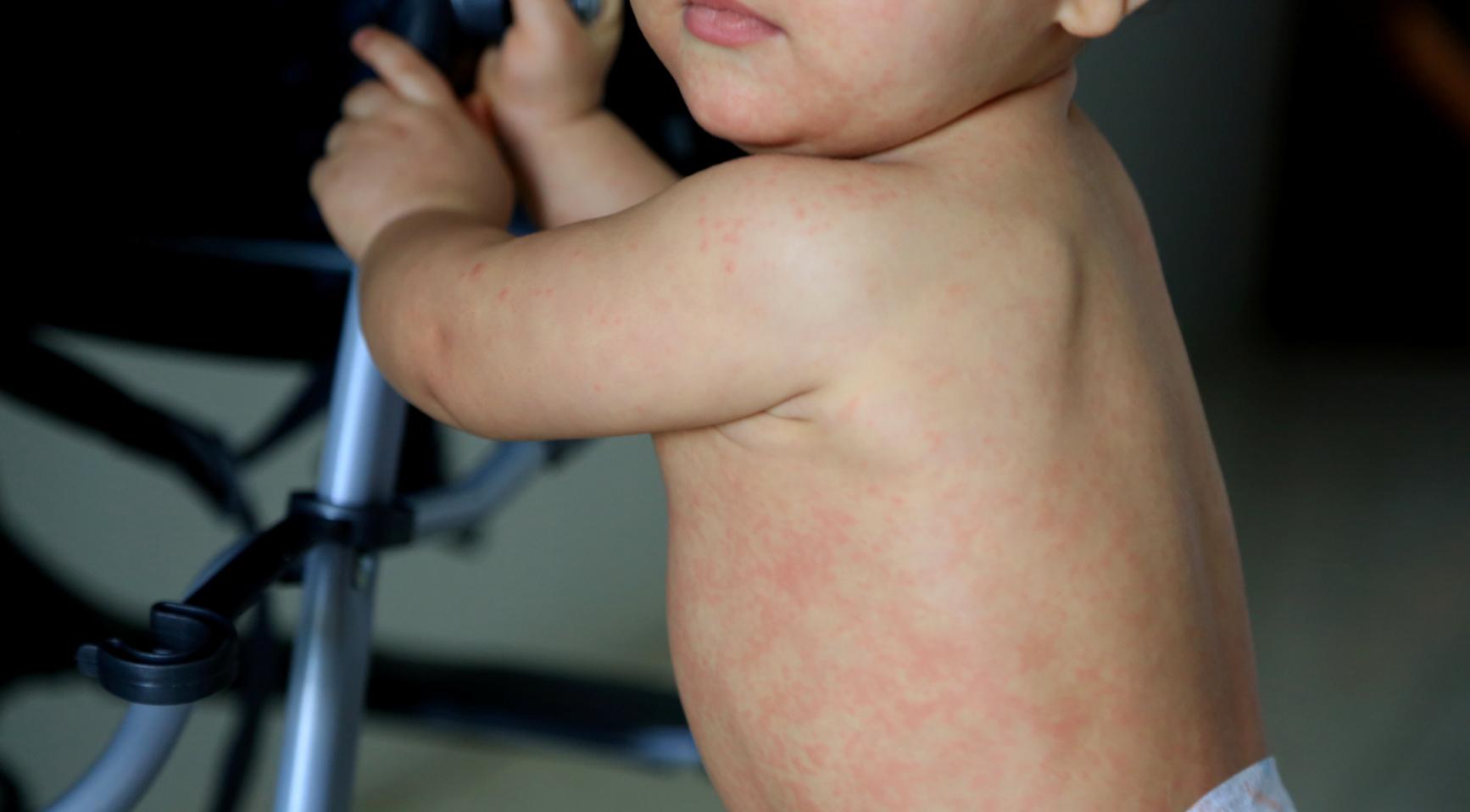
The disease causes spots on the skin and infected eyes. People usually recover on their own, but in rare cases, serious complications can occur, such as pneumonia or meningitis.
Reporting by ANP


