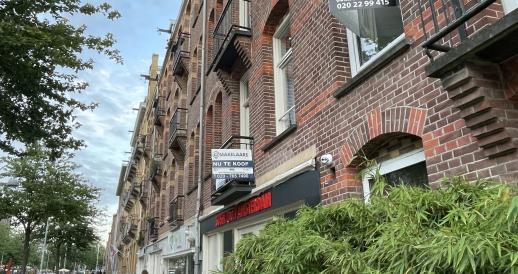
Dutch home prices up 9.7% annualy; Fifth of sales involved former rentals
In the first quarter, the average Dutch home sold for 473,000 euros, a small decrease of 1.8 percent compared ot the previous quarter but 9.7 percent more than a year earlier. Home prices were pressured a bit by the influx of former rental homes entering the owner-occupied market. About 20 percent of the homes sold in the first quarter were former rentals, the Dutch realtors’ association NVM reported on Thursday.
Landlords are ditching their rental properties due to a combination of fiscal and legislative changes that made renting out homes less profitable. In the four largest Dutch cities - Amsterdam, Rotterdam, The Hague, and Utrecht - together, about 40 percent of homes sold last quarter were former rentals. These properties are typically on the smaller and simpler side, which means they dampen prices.
NVM realtors sold almost 34,000 homes in the first quarter, a 13 percent increase compared to the first quarter of 2024. In particular, more apartments were sold, largely due to landlords selling off their rental properties.
Home prices decreased from 485,000 euros on average in Q4 of 2024 to an average of 473,000 euros in Q1 of 2025 (-1.8 percent). According ot the NVM, a small decrease is not unusual for the first quarter. On an annual basis, home prices increased by 9.7 percent.
“The larger supply of homes for sale, often cheaper apartments, is putting pressure on the price development,” NVM said. The average transaction price for former rentals was 404,000 euros. If these properties were left out of consideration, the average transaction price nationwide would be 9,000 euros higher at 482,000 euros, almost completely canceling out the slight price decrease compared to Q4.
The supply of existing owner-occupied homes via NVM brokers rose by 15 percent in the first quarter to almost 26,000 homes available, largely thanks to the influx of former rental properties. Despite this increase, the housing market is still very tight, and overbidding is still the norm. On average, homes sold at 4.4 percent above asking price in the first quarter of the year.
In the first quarter, 6,740 newly-constructed homes were sold, comparable to a year earlier. “The growth of the past year is therefore leveling off,” the NVM said. “However, the sentiment among real estate agents is very positive about the saleability of newly built homes.”
Lana Goutsmits-Gerssen, chairman of the NVM Housing department, called it “encouraging” that the housing market is picking up with more sales and a wider supply. “A large part of these are affordable former rental properties, which offer space for first-time buyers in particular to enter the owner-occupied market,” she said. “For starters, on the rental market, on the other hand, the situation is becoming increasingly dire.”
The NVM again stressed that the only way to solve the Netherlands’ housing shortage is by building more affordable homes. “Few building permits are being issued, and the supply of ground-level homes continues to decline. This leads to an imbalance between supply, affordability, and the needs of buyers,” she said. “At the same time, the number of registrations for new construction projects is increasing, which shows that many consumers are interested in a newly built home.”