
Rare book dealers fear tech firms are destroying obscure editions to train AI models
Secondhand booksellers across Europe, including in the Netherlands, are raising concerns over AI companies buying large numbers of obscure and often rare books. The alleged intent behind such shopping is to scan and destroy them for AI training.
Dutch booksellers have also received requests from abroad, according to a survey by BNR. Pieter de Vries of antiquarian bookstore De Vries & De Vries in Haarlem recently received an email from a person identifying herself as Nataly from Singapore-based company 2077AI. In the message, seen by BNR, she wrote that the company was participating in “a new project focused on collecting books in multiple languages, currently mainly in English.”
“We have compiled a very extensive list of editions that we are currently trying to acquire, and we plan to place a fairly large order. The list is attached,” the email said.
The attachment contained 3,000 English-language titles organized by ISBN number, including books such as Distinct Element Modelling in Geomechanics by K.R. Saxena (1999); Barrett's Traditional Fairy Tales (2021), an academic study of Irish folklore; and Laser Shock Peening of Advanced Ceramics by Pratik Shukla (2018).
De Vries was not the only Dutch bookseller to receive the request. Many recipients reportedly initially dismissed it as spam. However, similar reports have emerged in Switzerland, Spain, and Germany. Media outlets in those countries report that secondhand booksellers have recently received nearly identical requests. One German antiquarian bookseller reported a surge of orders between 3 a.m. and 5 a.m. every night beginning in early May. The orders came from Canadian company Zoom Books and targeted unrelated, highly specialized titles.
Booksellers said the purchases appeared unrelated to collecting or resale because many of the books were too obscure to generate a profit. Instead, they concluded the books were being acquired to train AI systems.
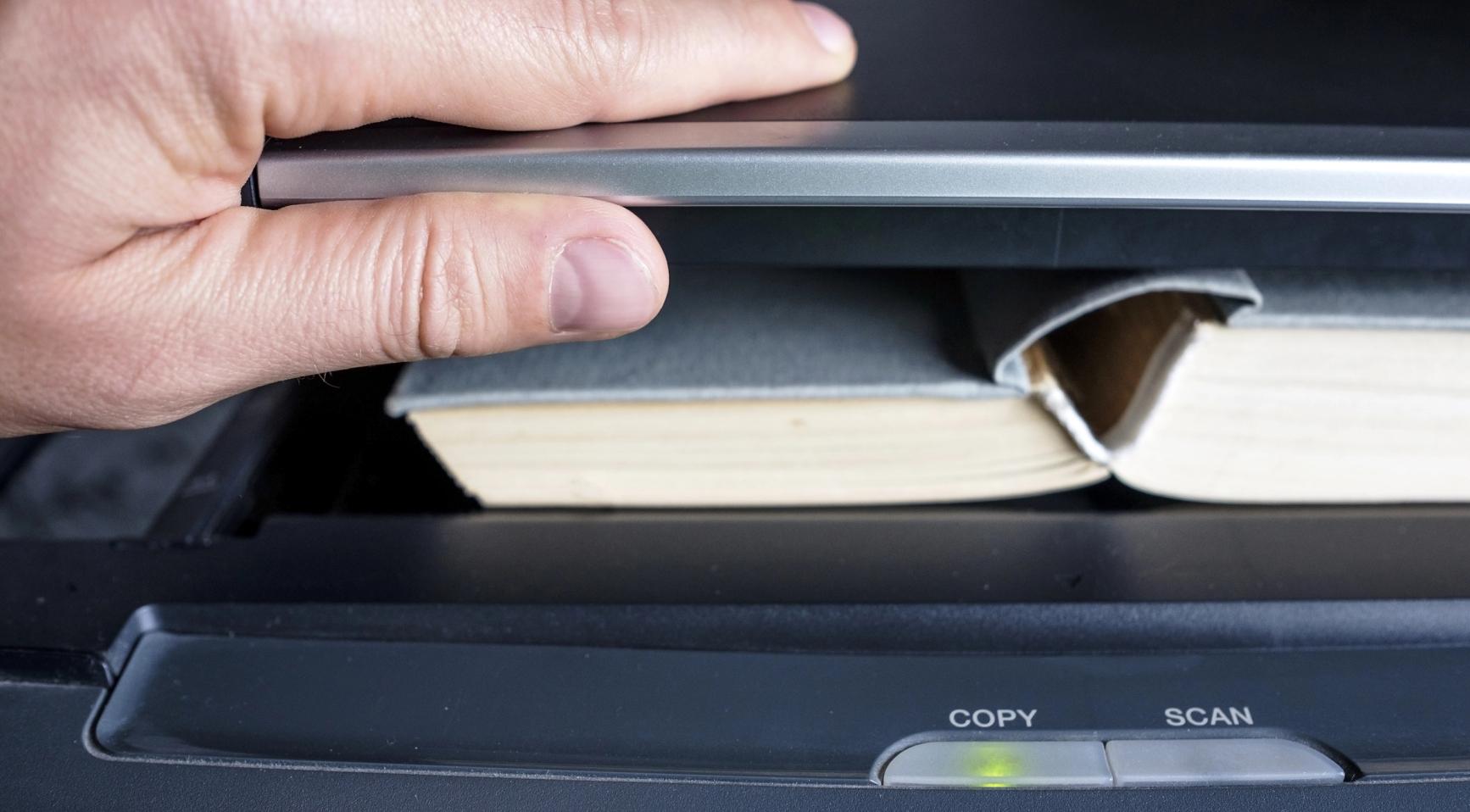
The practice gained wider attention through revelations about Anthropic’s “Project Panama.” Beginning in early 2024, the company reportedly spent millions of dollars purchasing books for what internal documents described as “destructive scanning." That refers to a process in which book spines are cut apart so individual pages can be scanned mechanically and then discarded.
The practice became public in June 2025 during a U.S. copyright lawsuit against Anthropic. Although the company behind chatbot Claude settled the case, booksellers say the proceedings established a troubling precedent: a U.S. court found that destroying purchased books for scanning purposes falls under fair use, provided the company legally owns the physical copies.
That ruling is seen as a key reason AI firms are seeking older European books, which booksellers suspect are being shipped to the United States in large quantities.
The demand reportedly reflects a broad search for new training material as developers of AI systems exhaust much of the language already available online. Companies are increasingly seeking texts that are older, less digitized, and harder to find on the internet.
Zoom Books responded to reports by saying the purchases were part of a “regular recycling and trading model,” according to Swiss broadcaster SRF. Booksellers reacted skeptically, saying that antique buyers typically purchase one title at a time or several books on a related subject. They said the orders described were different, consisting of seemingly random ISBN-based lists circulated by companies such as 2077AI.


