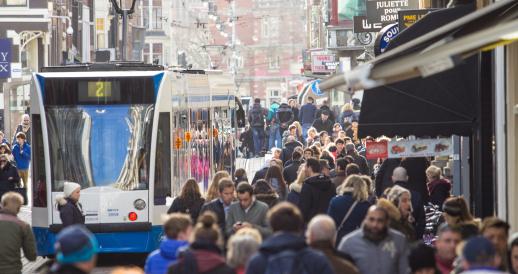
City center overwhelmed as Amsterdam welcomes record day-trippers
Amsterdam welcomed a record-breaking 15.1 million day-trippers in 2024, with the majority still flocking to the city center despite years of efforts to alleviate the burden on the historic core. New research, commissioned by the municipality of Amsterdam and conducted by Onderzoek & Statistiek (O&S), reveals that the canals, the Red Light District, and the vibrant street life continue to draw both Dutch and international tourists in large numbers.
The report confirms that foreign day-trippers engage in a broader range of activities than their Dutch counterparts. While a majority—80 percent—of international visitors walked along the canals, they also visited museums (55 percent), went shopping (58 percent), and experienced the Red Light District (42 percent). Although only 40 percent of international tourists cited coffeeshops as a primary reason for visiting, many still frequented them during their stay. This is in contrast to Dutch visitors, who tend to spend shorter amounts of time in the city and focus more narrowly on specific activities, such as shopping (53 percent) or canal walking (47 percent).
The economic impact of tourism in Amsterdam remains concentrated in the city center. Data from card transactions indicates that 59 percent of international tourist spending takes place in central areas, even though only 35 percent of the city’s hotel beds are located there. Spending on food and beverages is especially concentrated in the city center, while retail spending is more evenly distributed across the city.
A significant portion of foreign tourists visiting Amsterdam also cited "walking" as their primary activity. However, this term is often synonymous with experiencing the city's most iconic tourist spots, like the canal belt and the Red Light District, rather than exploring quieter areas such as Vondelpark or the Van der Pekbuurt, Het Parool wrote.
The research also showed that a large portion of day-trippers come from within the Netherlands. Approximately 24 percent of those surveyed hailed from the Amsterdam Metropolitan Region, and another 41 percent traveled from other parts of the country. International visitors made up 35 percent of respondents, with 13 percent traveling directly to the city from abroad. A small percentage of tourists were in transit, using long layovers at Schiphol Airport or Amsterdam Centraal as an opportunity to briefly explore the city.
Wethouder Sofyan Mbarki, responsible for the city’s economic affairs, acknowledged the continued strain on the historic center. "Our city center will remain a busy and lively place, accompanied by the associated challenges of crowds, nuisance, waste, and tourist monoculture," he said in a letter to the city council. Mbarki noted that the diversity of visitors, including both domestic and foreign tourists, makes it difficult to effectively manage tourism flows.
Mbarki also pointed to potential opportunities for redirecting tourist activity to other areas of the city. Districts like the Zuidas, Sloterdijk, and around the Johan Cruijff Arena already attract some visitor spending, especially in retail. If developed with a mix of housing, shops, and cultural venues, these areas could serve as more balanced tourist hubs, contributing to a more sustainable visitor economy.
The study further highlighted the economic role of Amsterdam’s hotel industry. Hotel workers earn an average of 16 euros per hour, higher than employees in the restaurant and café sectors. However, only 6 percent of hotel employees live in the neighborhoods where their hotels are located. This reportedly points to a growing disparity between the benefits of tourism and its impact on local residents.