Netherlands News in English

Main navigation

  • Top stories
  • Health
  • Crime
  • Politics
  • Business
  • Tech
  • Culture
  • Sports
  • Weird
  • 1-1-2
Image
Cylinders for nitrous oxide or laughing gas on the streets in the Netherlands.
Cylinders for nitrous oxide or laughing gas on the streets in the Netherlands. - Credit: cakifoto / DepositPhotos - License: DepositPhotos
1-1-2
Politics
laughing gas
Laughing gas ban
Amsterdam
Amsterdam city council
Thursday, 29 April 2021 - 15:29

Share this article:

Opens in a new window Opens in a new window Opens in a new window Opens in a new window Opens in a new window Opens in a new window

Amsterdam lawmakers vote to restrict sale of laughing gas

A majority of politicians in the Amsterdam city council have voiced their support for a ban on the sale of laughing gas by catering and hospitality businesses, and also at events. The measure did not get the support of council members from GroenLinks, D66 and BIJ1, who voted against the proposal, ANP reported on Wednesday.

The ban was initiated by Sofyan Mbarki of PvdA, and ChristenUnie politician Gerjan van den Heuvel. They argued that there was growing evidence the abuse of the substance was causing serious negative health consequences among its younger users.

Laughing gas, the common name for nitrous oxide, causes a variety of health problems, like nausea, headache, dizziness, chest pain, impaired vision, confusion and anxiety. Some have reported a sense of tingling or numbness in the arms and legs. In the most serious cases, the drug has been tied to heart attacks and spinal cord problems. Additionally, it can cause a reduction in pain sensitivity, which can lead to more serious injuries.

"Nitrous oxide is ruining the lives of far too many young people. As a municipality, we must therefore set a standard. Nitrous oxide is like poison and poison should not be sold in Amsterdam,” said Sofyan Mbaraki.

There has also been a sharp rise in the number of traffic incidents linked to the drug. This stood at 130 in 2017, then it nearly tripled the following year, and rose even higher to 1,390 in 2019

Nitrous oxide slows down the body's reaction time upon inhalation, resulting in feelings of calmness or euphoria, often accompanied by uncontrollable laughter.

In 2019, the Cabinet said that it wanted to prohibit the recreational use of laughing gas. It was recently announced that a national ban will probably take at least another year because it was requiring a lot of extra work. Earlier in April, a motion to ban laughing gas was submitted in Eindhoven.

Sale of the drug was severely limited in Rotterdam in 2019.

More like this

Image
A woman sells laughing gas on King's Day in Amsterdam in 2018.
Netherlands sees rise in laughing gas poisonings despite 2023 recreational ban
Image
Woman selling laughing gas in Amsterdam
Amsterdam’s “laughing gas king” wanted for tax fraud
Image
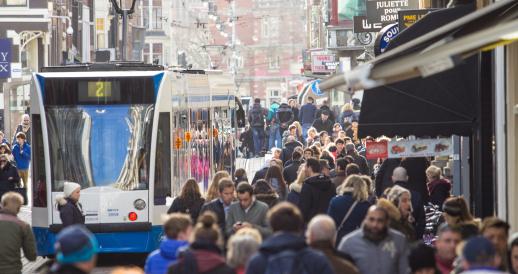
A crowded Leidsestraat in Amsterdam
More than half of Amsterdam residents lack confidence in city government
Image
A birthday cake to kick off the start of Amsterdam's year-long celebration of its 750th anniversary, 27 October 2024
All 280,000 tickets for Amsterdam's A10 ring road birthday festival fully allocated
Make NL Times your top Google source

Follow us:

Latest stories

  • Childhood friend of convicted crime boss Taghi gets 13 years for two 2014 murders
  • Council of State strongly opposes plan to scrap asylum distribution law
  • Video: Escaped monkey from Beekse Bergen still on the loose after nearly a month
  • Dutch U.S. ambassador sends Venezuelan opposition leader’s plane back during the flight
  • No free water at Arnhem festival where high heat injured five; Water cost over €14/liter

Top stories

  • Ter Apel asylum center area declared safety risk zone after recent stabbings, fights
  • Suspect in ABN Amro worker's fatal stabbing also harassed four other women
  • New public transport strikes looming as contract talks stall
  • Explosion at apartment complex in Woerden; Dozens of homes evacuated
  • Dutch SMEs investing less due to high costs and inconsistent gov't policy: study

© 2012-2026, NL Times, All rights reserved.

Footer menu

  • Change Privacy Settings
  • Privacy Policy
  • Contact
  • Partner Content