
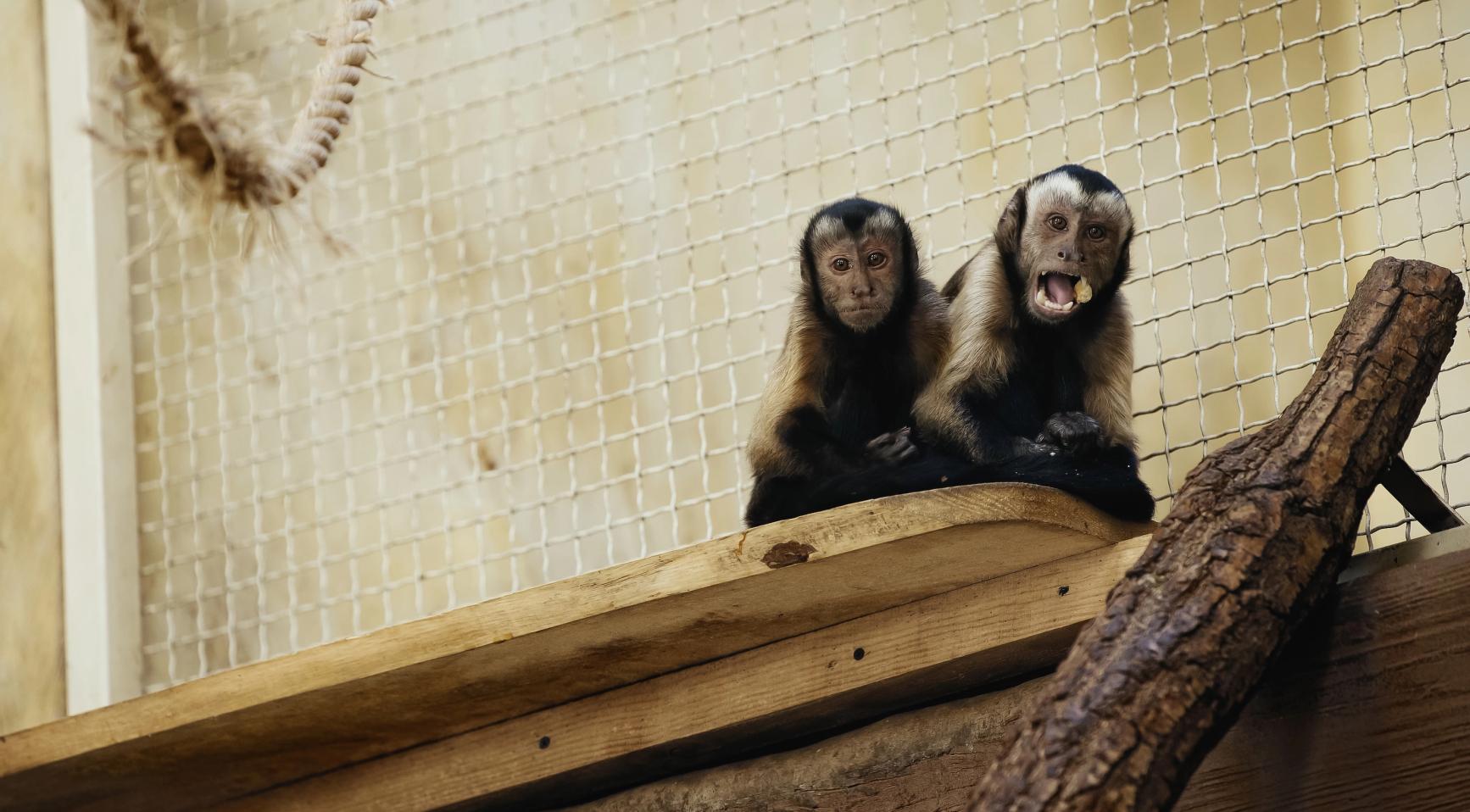
The Netherlands will continue to allow testing on monkeys for at least the time being
The Dutch government will continue allowing monkey research in the Netherlands. It argues that such research remains necessary for developing treatments for life-threatening and infectious diseases. It also required the country's primate research center in Rijswijk to increase investment in animal-free research, RTL reports.
Education, Culture, and Science Minister Rianne Letschert said ending the practice now would be premature despite her preference to do so.
"I would have liked to say it is no longer necessary. But stopping now is not responsible. It concerns people's health, particularly life-threatening diseases. At the moment, unfortunately, it cannot yet be done without it."
The government will allow the Rijswijk facility to conduct up to 120 to 150 monkey experiments each year. Around 70 to 80 monkeys are used annually from a colony of nearly 1,000 animals. Because individual monkeys can take part in more than one study, the number of experiments exceeds the number of monkeys.
Most monkeys involved in research are eventually euthanized. Many of the animals housed at the center are kept to maintain the breeding colony rather than for experiments.
Center director Merel Langelaar said studies range from blood sampling and PET scans to vaccine testing. In research on serious infectious diseases, monkeys may also be deliberately infected.
The decision preserves the policy of the previous government. That is despite a vote by a parliamentary majority last year backing a proposal from the Partij voor de Dieren to gradually redirect all government funding for the center to animal-free alternatives. That decision was reversed this spring after a proposal from the VVD, allowing public funding for monkey research to continue.
Partij voor de Dieren lawmaker Ines Kostić criticized the move. "There was strong opposition to our proposal, even though it was reasonable to ensure that within five years no taxpayer money would go to those terrible monkey experiments."
The government will require the Rijswijk center to increase the share of its annual subsidy spent on animal-free research from 17 percent to 30 percent by 2030. It said reducing monkey research remains the long-term objective, but only when scientifically feasible.
Letschert also said maintaining a European primate research facility has become more important because of geopolitical developments. Ending monkey research in the Netherlands, she said, would leave the country more dependent on research conducted outside Europe.
The minister said an independent review will be conducted in 2030 to determine whether monkey research can be reduced further without undermining studies into life-threatening and infectious diseases. The Rijswijk center must also submit a plan early next year to the Senate and the Tweede Kamer detailing how it will expand animal-free research through 2030.
In 2024 reporting based on 2022 data, Dutch laboratories carried out 492,380 animal experiments. That is despite the fact that the Rutte II Cabinet said around 12 years ago that animal testing should be outlawed in a year.
“There are alternative methods that are more predictive, faster, and cheaper," Merel Ritskes-Hotinga, a professor on animal testing alternatives at Utrecht University, told NOS at the time. “But the legislation is not being adjusted because the entire system is built around animals.”


