
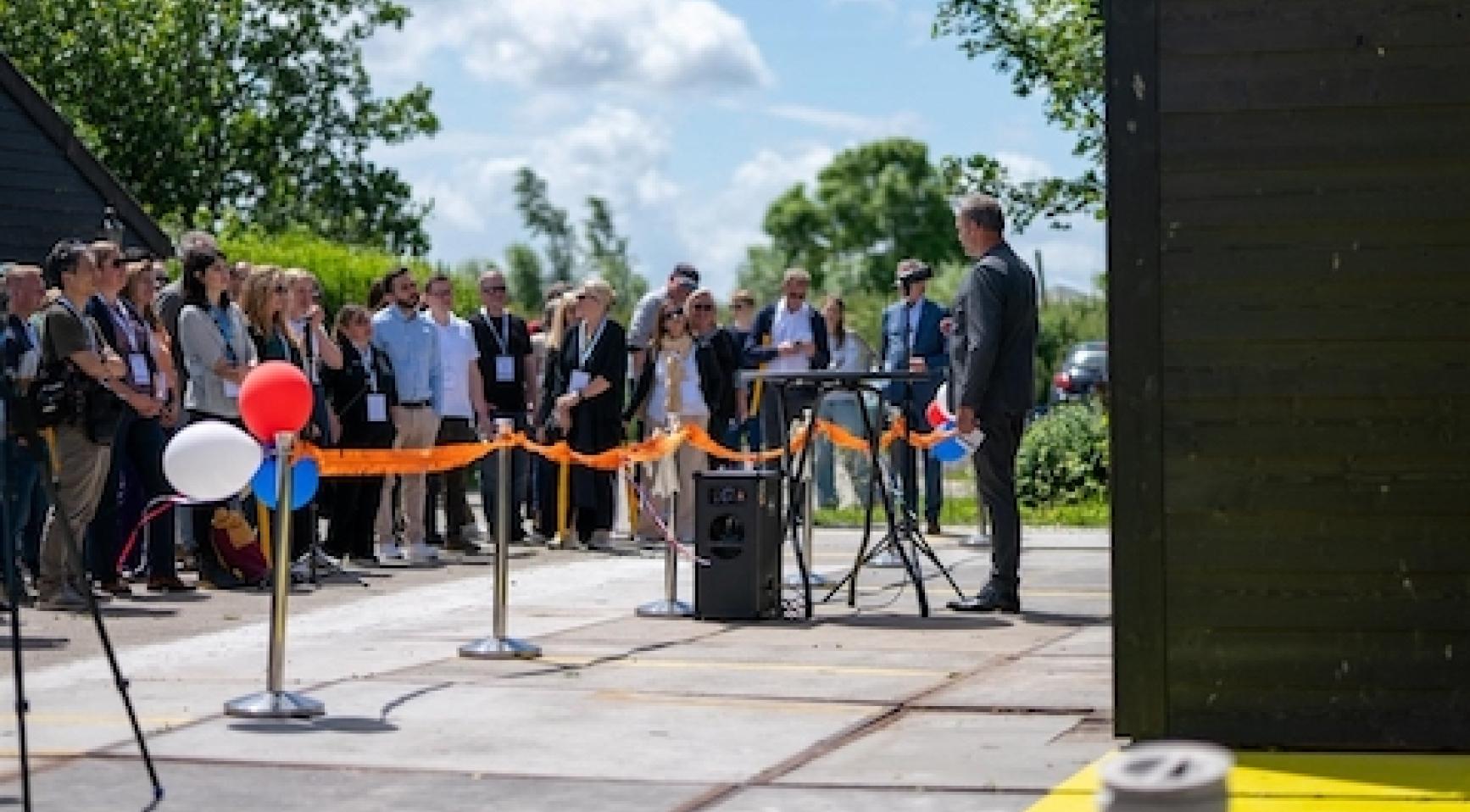
Schipluiden opens world’s first farm growing meat from cells without animal slaughter
A dairy farm in Schipluiden has opened the world’s first cultivated meat farm on Friday, a pilot facility where meat is grown from animal cells in bioreactors without slaughter, the province of Zuid-Holland announced.
The system relies on bioreactors—controlled tanks in which a small sample of animal tissue is used to grow meat cells under regulated conditions, including temperature, nutrients, and oxygen. The facility is designed for testing rather than commercial production.
The province of Zuid-Holland is investing 500,000 euros in the project to support knowledge exchange, public information, and the experience center. It is also working with EIT Food to leverage additional European funding. Cultivated meat is not yet approved for commercial sale in the European Union.
The project is based on a family farm where Corné van Leeuwen’s father previously installed the Netherlands’ first milk robot. Van Leeuwen, now a dairy farmer and cheesemaker, is adding cultivated meat as an additional activity rather than replacing traditional livestock farming.
The initiative is connected to RespectFarms and builds on the work of Dutch scientist Willem van Eelen, who conceived the idea shortly after World War II of producing meat from animal cells without slaughter.
He obtained a patent, but production costs prevented development during his lifetime. His daughter, Ira van Eelen, is now the leading figure in the initiative.
Testing at the Schipluiden site will use bioreactors ranging from 20 to 200 liters. The aim is to learn what works at farm scale, what it costs, and what it produces. A fully operational pilot farm is expected by 2028.
Aad Straathof, provincial deputy for agriculture and fisheries, said the project depends on cooperation across sectors.
“I would like to see more initiatives like this in Schipluiden, where agriculture and technology strengthen each other. That is why we included high-tech agriculture as a separate track in the implementation agenda. What is happening here is only possible because of cooperation between farmers, researchers, companies, and governments. That cooperation allows us to take real steps forward at a time when the agricultural sector demands a lot from us,” Straathof said.
An experience center is also opening on the farm this year, allowing farmers, students, and visitors to observe cultivated meat production and serving as a meeting point for researchers, food companies, students, and policymakers.
Meindert Stolk, provincial deputy for economy and innovation, said the project reflects a long tradition of agricultural innovation in the Netherlands.
“With our support, we are making room for innovation. Innovation made Dutch agriculture great, and that is still true today. Progress happens when entrepreneurs, science, and government invest together in new ideas,” Stolk said.


