
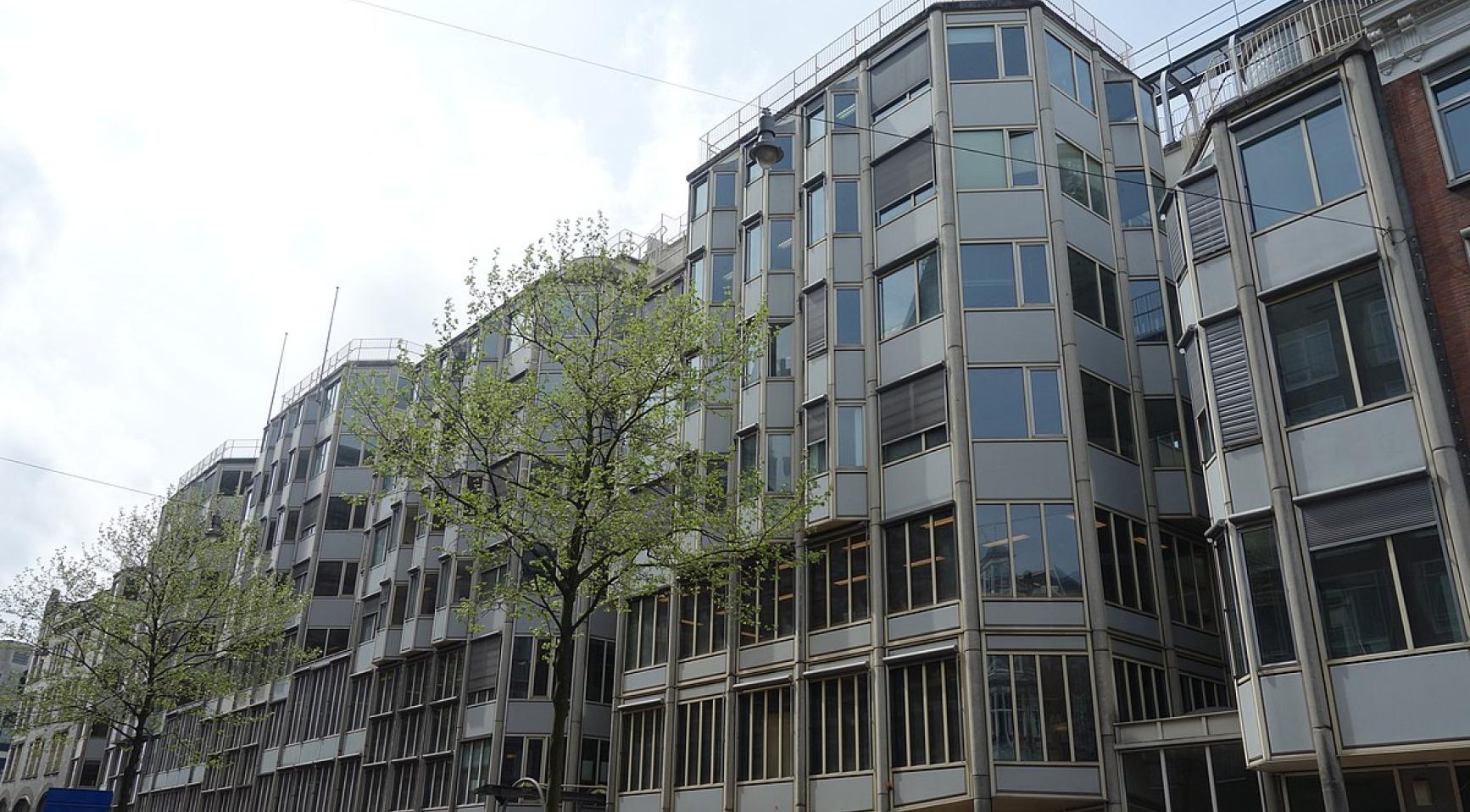
University of Amsterdam will soon offer courses in Ukrainian
The University of Amsterdam (UvA) will be offering two courses in the field of Ukrainian language and culture starting from September 2023. The teaching will be given by linguist Oksana Kononchuk, who fled from Kyiv to Amsterdam last year and is now a guest researcher affiliated with the Russian and Slavic Studies department at the UvA.
Ellen Rutten, the head of the department offering these courses, told NL Times that the idea came before 2022. However, she admitted that it was financially challenging to get funds. The urgency for these courses became more evident following Russia's full-scale invasion of Ukraine on February 24, 2022. "We understood it was no longer just a good idea, but also very urgent," she said.
The Professor of Slavic Literature and Cultures explained that the main goal is not political but societal. The goal is to address the pressing demand for Ukrainian language proficiency that has surged since February 2022. The flow of Ukrainian refugees in Europe, as well as humanitarian help, media reporting, international diplomacy, and the rebuilding of the country, require a knowledge of the language.
Rutten pointed out that there is currently a high number of Ukrainian refugees in the Netherlands requiring assistance. Although many Ukrainian refugees are able to communicate in Russian – a language more widely spoken in the Netherlands than Ukrainian – it has become "emotionally difficult" for some to use it. “To offer help, it helps to speak the language,” she remarked.
These courses can contribute to a more comprehensive approach in Slavic studies, shifting the focus away from a predominantly Russia-centric view to a more inclusive, transnational perspective. As Rutten pointed out, many issues are still seen through a Russian lens or analyzed in relation to Russia. Following the full-scale invasion, many scholars in Slavic studies are reassessing their field, advocating for more "trans-slavic developments," she said. The introduction of these two courses could be interpreted as a response to these calls.
However, Rutten stressed that this does not equate to a "Russian boycott." Courses focused on Russian literature and language will continue, as will collaborations with Russian scholars. “They remain a very important part of the program,” she emphasized, adding that it was also important “to find a new balance.”
The courses are partly designed for students in Slavic studies and Eastern European studies who wish to broaden their knowledge base. However, as Rutten noted, they are also available to students from other programs who may find the content beneficial for their studies or potential career paths.
A limited number of positions are also available for non-examination students from outside the university, allowing them to participate in course activities but not earn credits. This is particularly suitable for professionals working in relevant fields, such as refugee aid workers, journalists, or policy-makers, Rutten explained.
Rutten warned that students should not expect to become fluent in Ukrainian upon course completion. "Ukrainian is a difficult language to learn," the professor remarked, "it's not like learning German for a Dutch person." Students who complete the courses can expect to be able to read short texts and engage in basic conversations in Ukrainian.
Rutten expressed her belief that these courses might aid in deepening understanding of the situation in Ukraine. “A lot is already happening,” she noted, referring to the "excellent coverage" of events in Ukraine. However, she argued that public discussions and news reports should not always frame Ukraine "in relation to Russia," but rather as a "country of its own."
“This is what we can do better,” she added.


