
Take claims of nuclear fusion breakthroughs with a grain of salt, Dutch expert says
Marco de Baar, director of the Dutch institute for energy research DIFFER, is not sure about the claims of researchers in the United States who said they managed to achieve energy gains using nuclear fusion, which is a major scientific breakthrough. The details were announced on Tuesday, though news had leaked out in recent days.
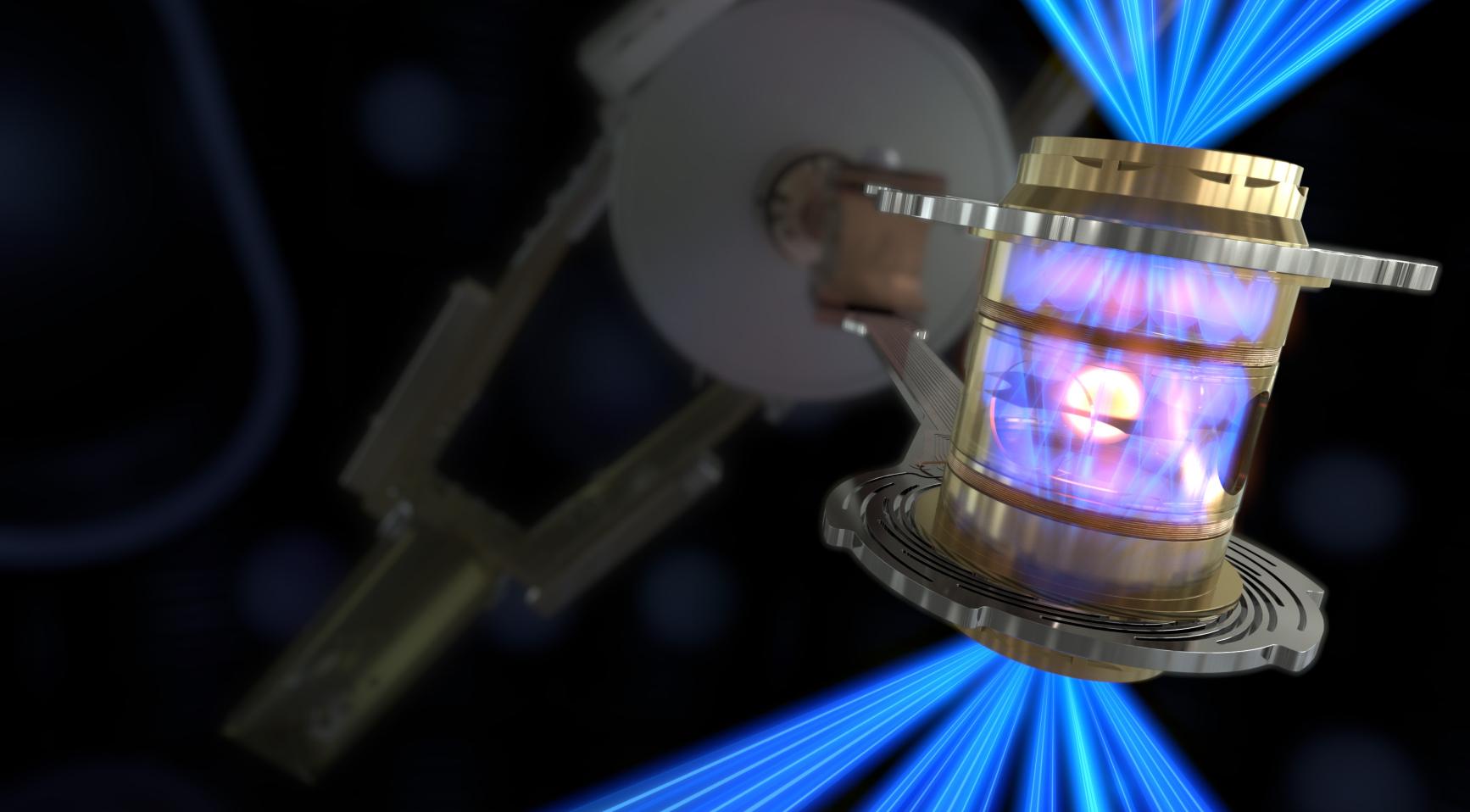
A unit of the Lawrence Livermore National Laboratory (LLNL) conducted the test last week, where 192 laser beams were fired at hydrogen. It was exposed to 2.05 megajoules of energy for a fraction of a second, which is roughly equivalent to how much electricity a vacuum cleaner consumes in 45 minutes. It resulted in 3.15 mega joules of energy being released. However, it was still a net loss, as it took 300 megajoules of energy to heat up the lasers. The researchers said it was a small test though, and on a bigger scale it may result in a net energy gain.
Atoms are fused together in nuclear fusion, which releases energy but without waste or carbon emissions. This happens continuously in the core of stars, and has been experimented with in laboratories for about a century. On Earth, it could theoretically become a very environmentally friendly source of energy, but fusing the atoms thus far requires intense lasers, which cost energy. It could be decades before there is a power station that uses nuclear fusion. There are still many commercial and technical hurdles, emphasized Kim Budel, the director of the LLNL
“Take every hyped claim about a breakthrough with a grain of salt. This really is a long-term development. Nuclear fusion is a complicated puzzle, and we don’t even have a puzzle here yet. Then it’s easy to make claims,” said De Baar, who has been skeptical. “It’s about the ratio between the energy shot into the capsule and the energy released. But for that fusion process, you also have to feed the lasers. You also need electrical energy for that. If you consider that, the ratio drops from a small profit to huge losses. The relevance of energy research is very limited. It sounds a bit like an urban legend,” he said before the formal announcement.
Nuclear fusion is also still in its infancy. With the Americans’ method, according to De Baar, “there is still no concept of what such a nuclear reactor would look like. But even if there is, it is not the case that we will have ten power plants in 20 years. An industry that can build the reactors doesn’t exist yet.”
Heat is one of the significant problems with nuclear fusion. In the core of the reactor, the temperature can rise to almost 2 million degrees Celsius, and on the walls, about 9,700 degrees. “Still hot enough to do damage. You have to design it to spread out the heat.”
De Baar expects nuclear fusion to really play a role only after 2050. It will then be necessary to provide the growing world population with clean electricity.
Nuclear power plants currently generate electricity through nuclear fission. An atomic nucleus is broken into two or more parts, releasing energy. The problem is that it leaves radioactive waste behind, which can continue emitting radioactive radiation for hundreds of thousands of years.
Nuclear fusion is not dangerous for the population, De Baar stressed. “If you don’t do something right, you damage the reactor, and it’s the end of the exercise. Then everything comes to a standstill. Then you can drink coffee and wonder what happened. But nothing is going to explode.”
Reporting by ANP


