
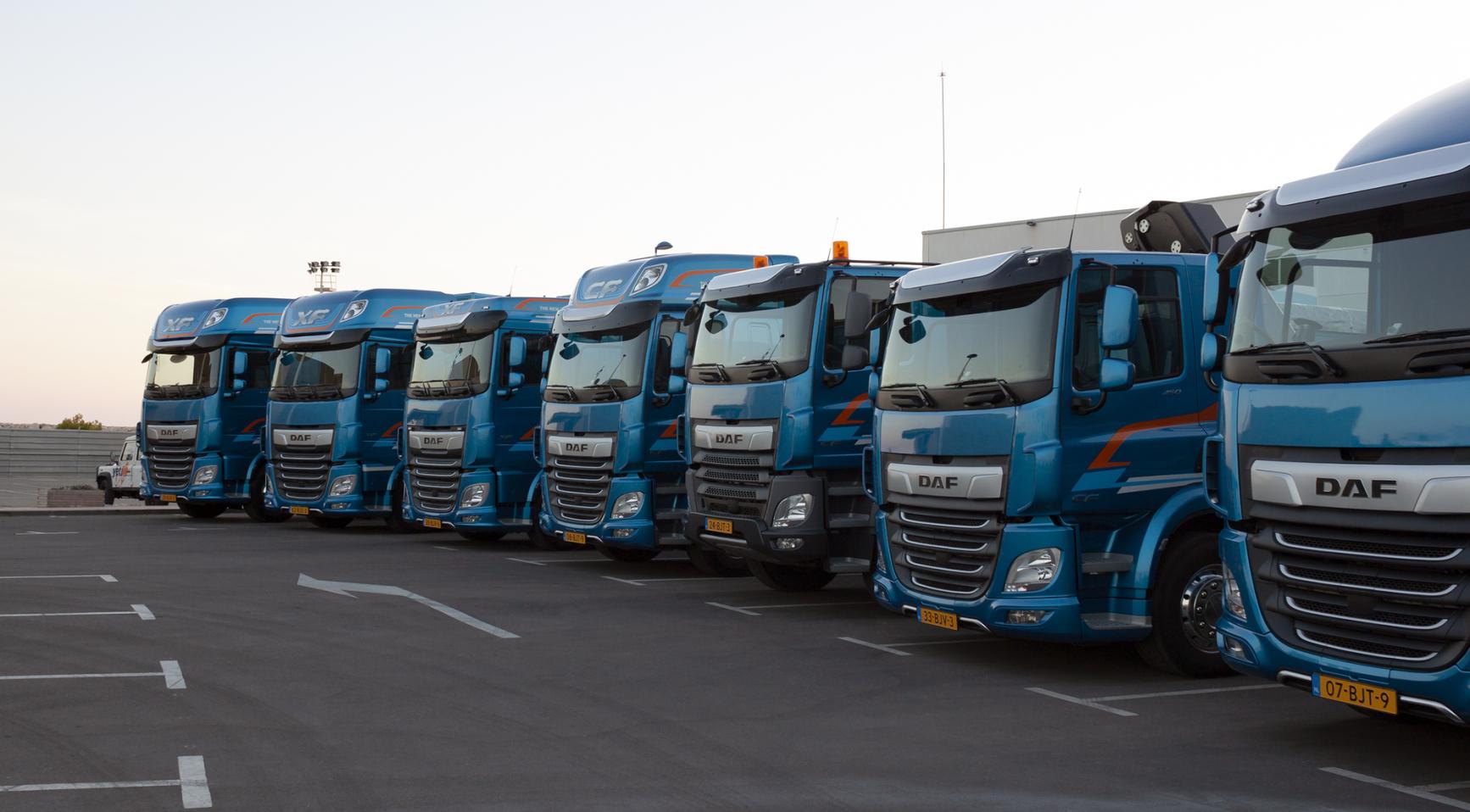
Truck drivers face constant parking shortages as deficit reaches 4,400 spaces
Truck drivers in the Netherlands are increasingly unable to find parking at night, as a shortage of roughly 4,400 truck parking spaces along highways already forces drivers to continue driving or violate rest rules. The deficit is expected to grow to about 7,000 spaces by 2040, according to transport organizations and labor unions.
The problem is especially visible in Noord-Brabant, Gelderland, and Limburg, where heavy freight flows run daily along key corridors between the Port of Rotterdam and inland Europe, according to AD. Major routes such as the A16, A58, and A4 toward Belgium and Germany are part of a near-constant stream of cargo traffic.
Transport and Logistics Netherlands (TLN) and unions FNV and CNV say the issue has been neglected for years. Falco Lievaart, policy adviser at TLN, said, “There were occasional efforts, but far from sufficient.” He added, “The problem has been pushed forward for years, while pressure on the road network and the logistics sector has only increased.”
Lievaart said the shortage has become structural. Linda Slagter, a transport sector official at FNV, said, “The sector grows every year, but the facilities do not grow with it.”
To address the issue, TLN and the unions jointly presented an improvement plan last year. Lievaart said there is now some political movement. “Recently, 43 million euros have become available for improvements, and motions have been adopted in the House of Representatives to address the problem concretely. You notice that the urgency is now truly being felt.”
He cautioned, however, that expectations should be tempered because building new truck parking facilities takes time, money, and space—resources that are increasingly scarce as municipalities balance housing, business development, nature, and infrastructure needs.
Slagter described the direct impact on drivers: “With a bit of bad luck, they have to keep driving because there is no space, and then they receive a fine for exceeding their driving time.”
Both TLN and unions argue that solutions must go beyond government action. Private companies and transport firms are also being urged to contribute, including by converting unused land into parking space. They also call for more large-scale, secure truck parking sites like those at Hazeldonk, Venlo, and the Maasvlakte. Lievaart said, “Those locations are truly part of the solution: there you have security, sanitation, and facilities.” “Drivers work days of fifteen hours. Then you at least want them to be able to rest properly,” Slagter stressed.


