
Dutch researcher invents “compass” to help people with dementia find their way home
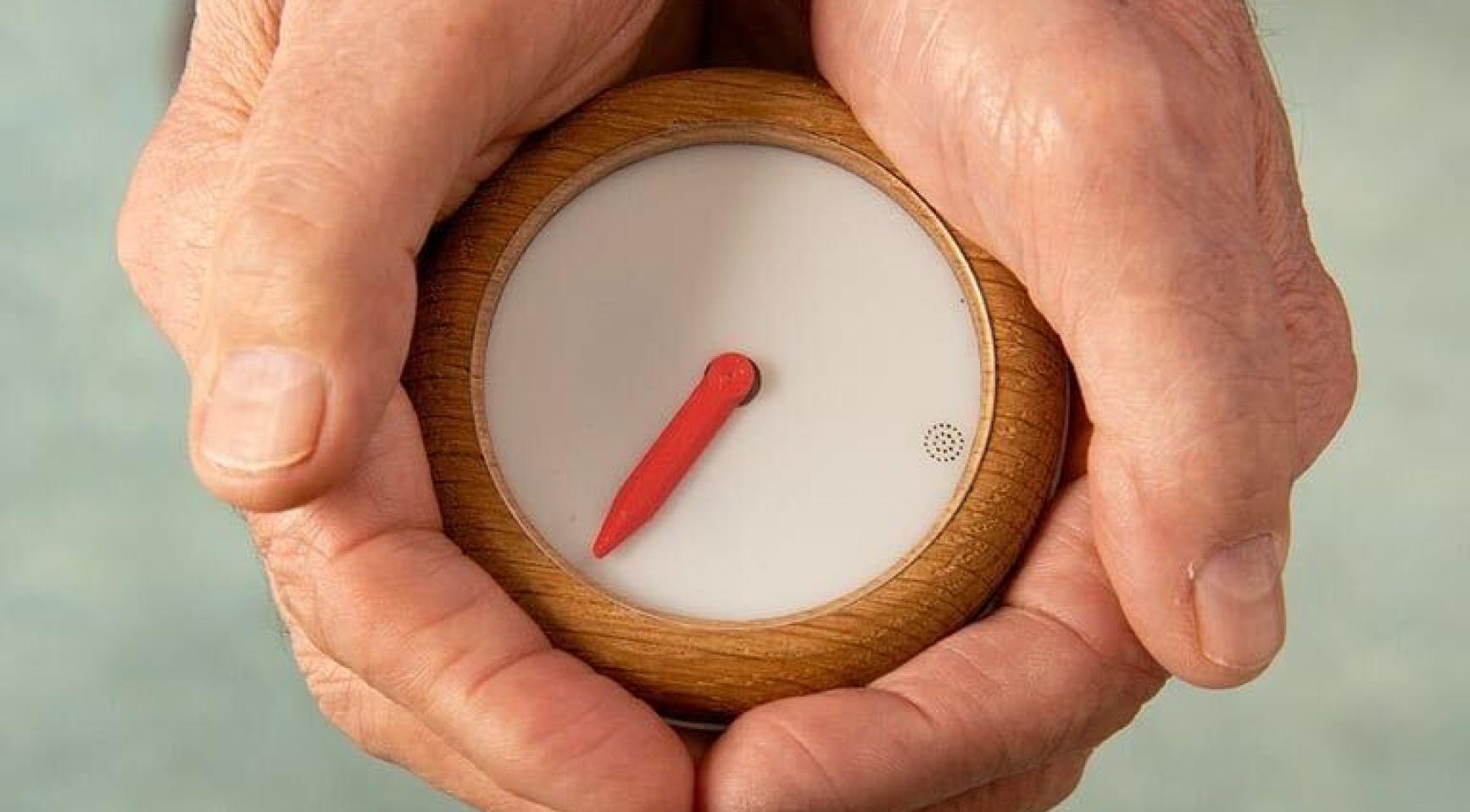
A new device developed by Dutch industrial designer Rens Brankaert aims to help people with dementia navigate safely back to their homes. The “well-being compass” is designed to be simple, intuitive, and require no buttons or complicated instructions.
The device combines a GPS sensor with a nine-degree-of-freedom sensor to detect its orientation. After a caregiver sets the “home” location—typically the front door—once, the compass always points users in that direction. “The device is simple, straightforward, and intuitive. There’s no button to operate. You just look at it, and the arrow points the right way,” Brankaert told Het Parool.
Brankaert, 37, created the device inspired by his grandfather, who increasingly became lost during bike rides. He developed the compass during the final phase of his industrial design studies and continued refining it during his Ph.D. at Eindhoven University of Technology.
Dementia affects one in five people in the Netherlands, making it the country’s most common illness. “When someone in your family has it, the impact is even greater," Brankaert said. "You see daily how it shapes life, how heavy informal caregiving is, and it’s both a societal and social disease. Meanwhile, we have too few care professionals and strained budgets. That’s why we need alternative solutions, for example, in technology.”
About 25 people with dementia tested the prototype. “The users were very happy with it. Some even wanted to keep it after testing because it was so helpful. Sometimes people with dementia are afraid to go outside or feel embarrassed. This small compass encourages them to go out and stay active,” Brankaert told the newspaper.
Brankaert highlighted that simplicity was critical. “Making simple technology is very difficult because so much is possible. Our goal was a general intuitive design that anyone can understand.”
Brankaert plans to launch the product next summer through a start-up called Aumens, which he co-founded with two former students, Vincent and Rick Eurlings, and Eindhoven University of Technology.


