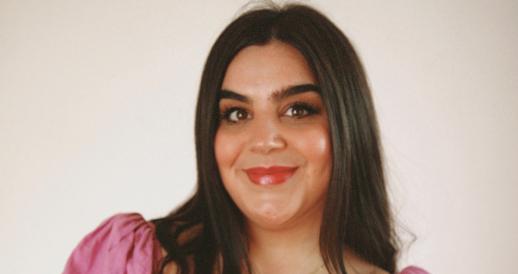
Musician Charlotte Jacobs composes sound sculptures with modern dance
New York-based vocalist, composer, and producer Charlotte Jacobs released her debut album, Atlas, six months ago with her label, New Amsterdam Records. In its review, the Volkskrant said, “Belgian Charlotte Jacobs composes caressingly soft sound sculptures rather than pop songs.” She is currently on tour, and will bring her unique style to the stage in Utrecht, where she will perform at Club Nine in TivoliVredenberg this Saturday, where tickets start at 19 euros.
Jacobs spoke about her musical influences, and how modern dance interacts with her creative process in a wide-ranging conversation with Zack Newmark of the Dam Yankee podcast, in partnership with NL Times.
Dam Yankee: Björk is one of the first artists that comes to mind when listening to your work.
Charlotte Jacobs: Yeah, absolutely. She is also somebody that reinvents herself every time and pushes a lot of boundaries including genre boundaries. She makes pop music, also experimental music, super electronic sometimes, then she writes a string arrangement. She's kind of a mother of many of the things that I do and a big inspiration.
She said the computer is an instrument. But I would also think that a person like Anne Clark is a big inspiration too, which is more spoken words on electronic music. She's more like a poet. But what she did in the 80s also really influenced this record specifically.
DY: How does modern dance fit into your work?
CJ: I guess I always wanted to become a dancer when I was in my teenage years. Then somehow it morphed into music. But I always felt very connected to dancing and to moving on music. It’s a big translator of how you experience music in your body. The ultimate experience of music is moving on it and the connection to it.
And then I think because I write very imaginary or very visually triggered music, I like to work with dancers to see how they are inclined to move on the music. I don't tell them what or how to dance in the videos. Dance is a perfect translation of the music visually. And then in New York, we started working with some choreographers and then working the other way around really putting music to an existing choreography or dance routine.
This was a really nice experience because as musicians and as dancers, you think really differently about the same material sometimes or about the same questions. And it was really interesting to see how that connected.
DY: The themes in your music are so philosophical and mythological. Where does that come from?
CJ: It’s a way of transforming yourself into something new. And I think it's nice to make something different than you did last time. I already know that the next record that I'm working on right now is going to sound different than Atlas, but I think the main thread of all the things I do is my voice because my voice has a specific texture and sound to it that glues it all together because that is my instrument.
It's in every song that I make. My songs are very vocally heavy. It would always start from the voice and carry through the entire musical experience. It does not matter what may hit in between, if it's an acoustic drum or a techno sequencer.
I also like to challenge listeners with an unexpected turn. I think it's nice to open up a world sometimes out of the blue.
Jacobs goes on to discuss expatriating to the United States and singing in both Dutch and English, her earlier work with other artists, and what she expects from her upcoming show at TivoliVredenberg in Utrecht on March 22.
Listen to this entire episode of Dam Yankee wherever you get your podcasts, or watch the full videos on YouTube.