
Aid groups halt services at asylum center after incidents linked to small group of men
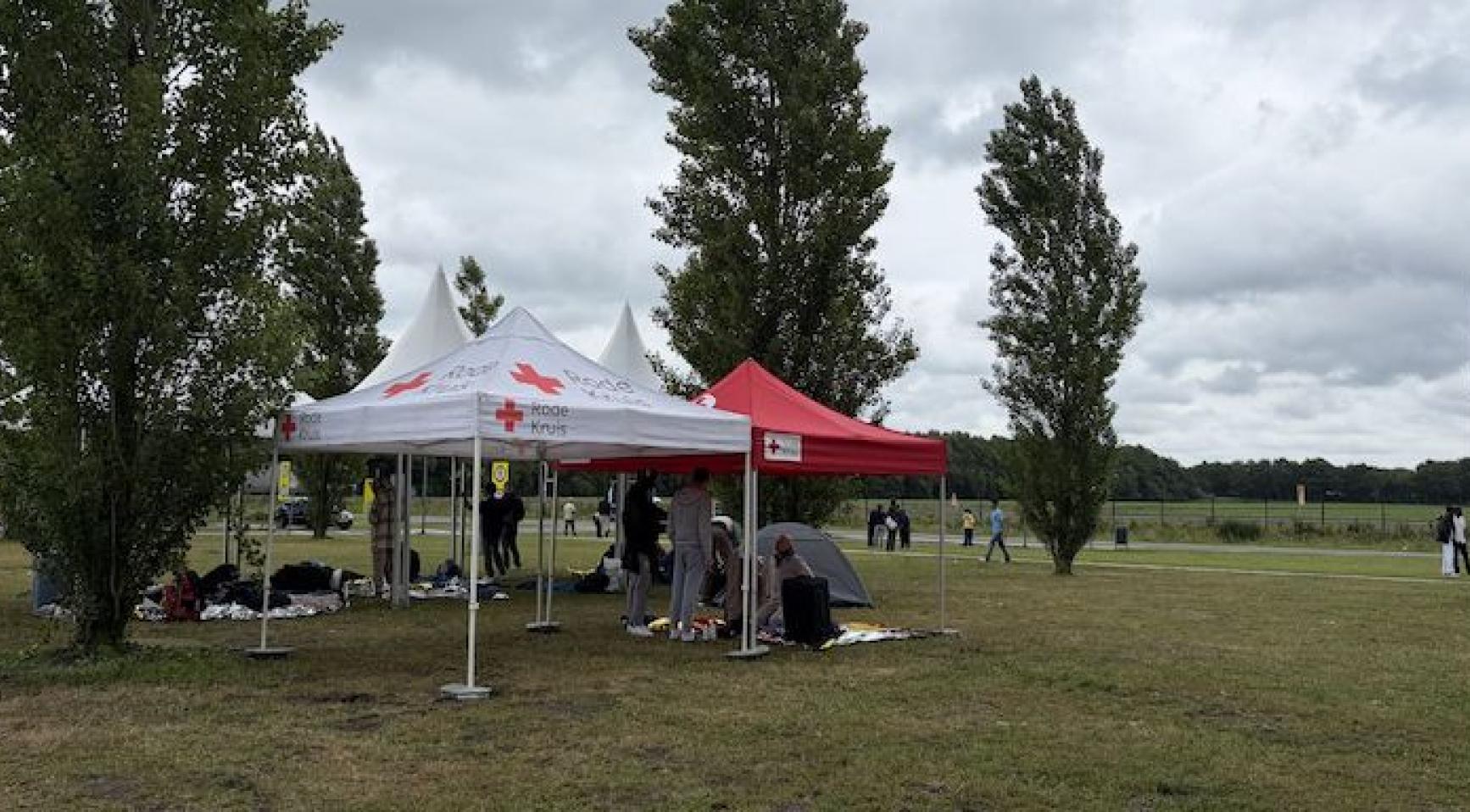
The Red Cross and VluchtelingenWerk Netherlands reported that they will stop providing services on the grass field outside the asylum center in Ter Apel from Saturday because they can no longer guarantee the safety of their employees and volunteers. The decision follows several incidents in recent weeks linked to a “small group of men.” The municipality of Westerwolde, where Ter Apel is located, said it recognizes the unsafe situation and added that the number of incidents has increased.
The two aid organizations announced their decision Friday evening. Since May 20, they had been assisting asylum seekers staying on the center’s grounds because of a shortage of available shelter places inside. The groups have regularly distributed food to those unable to fit inside the center.
According to VluchtelingenWerk, the problems are mainly caused by a small group of people who have little chance of receiving asylum in the Netherlands. The Red Cross similarly described the group as “a small group of men who are generally not among the people seeking assistance.”
“The aid workers feel unsafe, and the situation on the site cannot be controlled,” the Red Cross added.
VluchtelingenWerk said it has “great concerns” about asylum seekers in Ter Apel who will be affected by the withdrawal of services. Its chairman, Frank Candel, warned that "vulnerable people, such as children, pregnant women, and the sick, risk disappearing from view."
Red Cross director Harm Goossens called the decision extremely difficult. “This is a very intense decision,” Goossens said. “We realize what this means for the people we provide assistance to.”
VluchtelingenWerk said the situation had been expected since the Central Agency for the Reception of Asylum Seekers (COA) was no longer able to handle the number of arrivals. The organization called the developments a direct result of the “stalled asylum system.”
Both organizations also urged municipalities to quickly establish more reception locations so asylum seekers no longer have to stay on the grass in front of the center.
The municipality of Westerwolde said it shares the concerns raised by the aid organizations. “The number of incidents has increased in recent weeks,” the municipality said. It added that deploying additional enforcement officers and police is not a long-term solution.
“A real solution lies in urgently creating enough reception places spread across the country,” Westerwolde stated.
The municipality added that it has repeatedly raised concerns about the unsafe situation with the Ministry of Justice and Security.
“I understand the powerlessness of the aid organizations,” Asylum Minister Bart van den Brink said. “I will continue talking with the parties about the situation.”
“I am grateful to municipalities that have already offered emergency reception locations,” Van den Brink added. “I once again call on other municipalities to take their responsibility and show solidarity with Ter Apel.”
The Asylum Distribution Act, which came into force in 2024, gives the Dutch government the power to require municipalities to provide asylum reception places. The law was introduced to spread responsibility for asylum accommodation more evenly across the country, with each municipality assigned a target number of places based on factors including population size. Municipalities are expected to meet these targets by the end of 2026.
As many local governments have yet to meet their obligations, Minister of Asylum and Migration Bart van den Brink is preparing to summon municipalities that are providing too few reception places to explain why they have not complied with the law. Only 92 of the Netherlands’ 342 municipalities currently meet their assigned targets, while around 250 municipalities remain below their required numbers or have not created any places. In total, municipalities still need to provide more than 40,000 additional reception places.


