
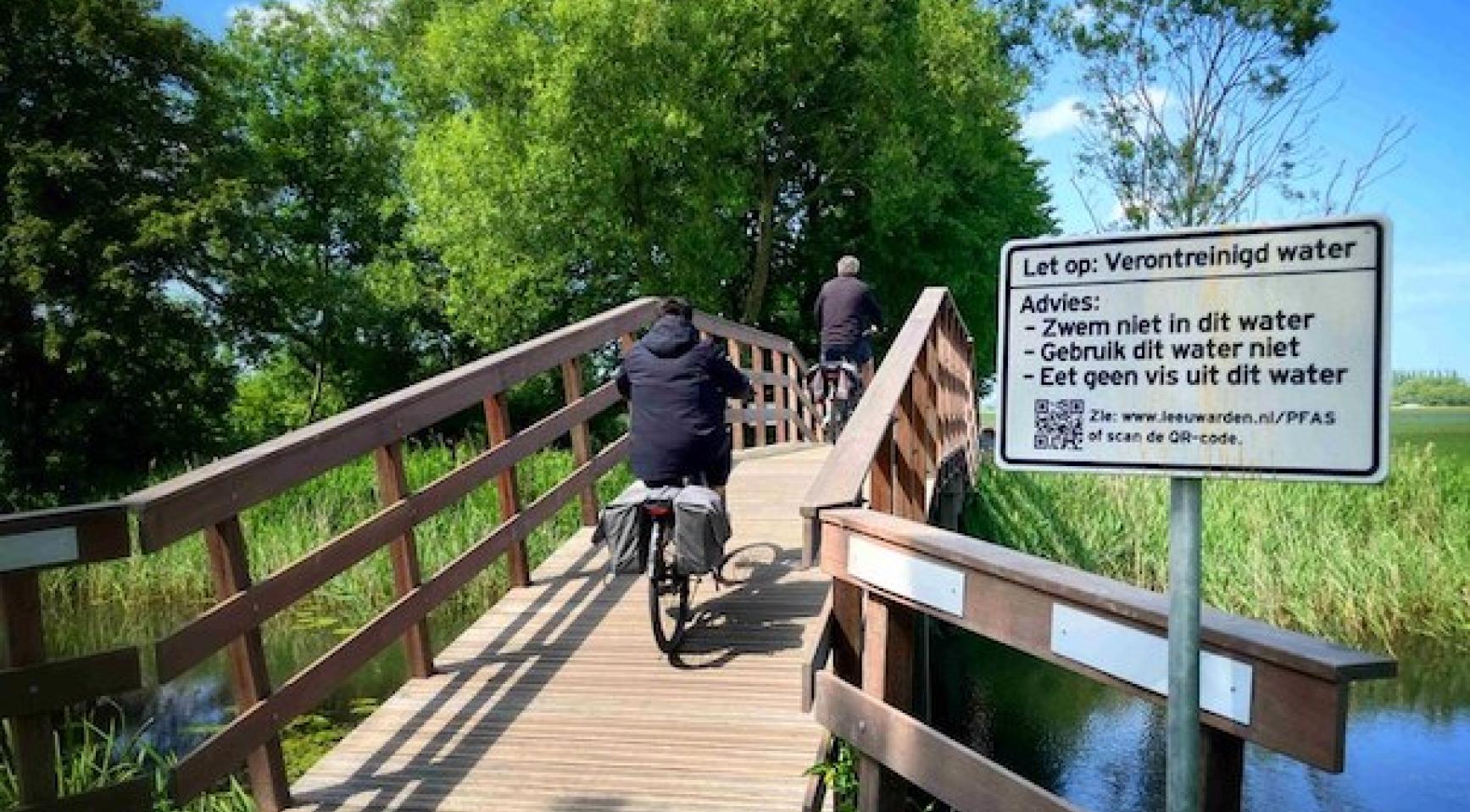
PFAS found in all Friesland water bodies
PFAS has been detected in every tested body of water in Friesland, according to Wetterskip Fryslân, the regional water authority. The new findings come from research conducted in 2024 and last year across the province.
Wetterskip Fryslân said the contamination is widespread and consistently above regulatory thresholds. “The results are clear: PFAS is found in all examined waters and exceeds the existing standards. This applies to both large water bodies and polder ditches,” the authority wrote.
According to the agency, since 2024 its laboratory has been able to measure more than 30 commonly occurring PFAS compounds. "Also, elsewhere in Fryslân, the picture is concerning,” it said. “In all examined larger waters, the values exceed the standards by a factor between 1 and 10. In almost all polder ditches, the concentration of PFOS (a form of PFAS) is above the standard. PFAS was also found in groundwater.”
PFAS is a group of man-made chemicals that do not break down easily in the environment. They are associated with potential harm to the immune system, fertility, unborn children, and organs such as the liver and thyroid and have also been linked to cancer.
The latest provincial-scale findings follow earlier reports from 2024 that identified the area around the military air base in Leeuwarden as one of the most heavily contaminated PFAS sites in the Netherlands. Measurements there showed levels in surrounding waters reaching up to 900 times above the standard.
Wetterskip Fryslân is calling for stronger action from national and European authorities. The organization says an EU-wide total ban on PFAS is necessary, a position also supported for some time by the Unie van Waterschappen.
A broader inventory from the Ministry of Infrastructure and Water Management found that about 60 locations in the Netherlands are so heavily contaminated with PFAS that immediate cleanup is required.
An EU report estimates that PFAS contamination could cost European countries about 440 billion euros in the coming years if current policies do not change.


