
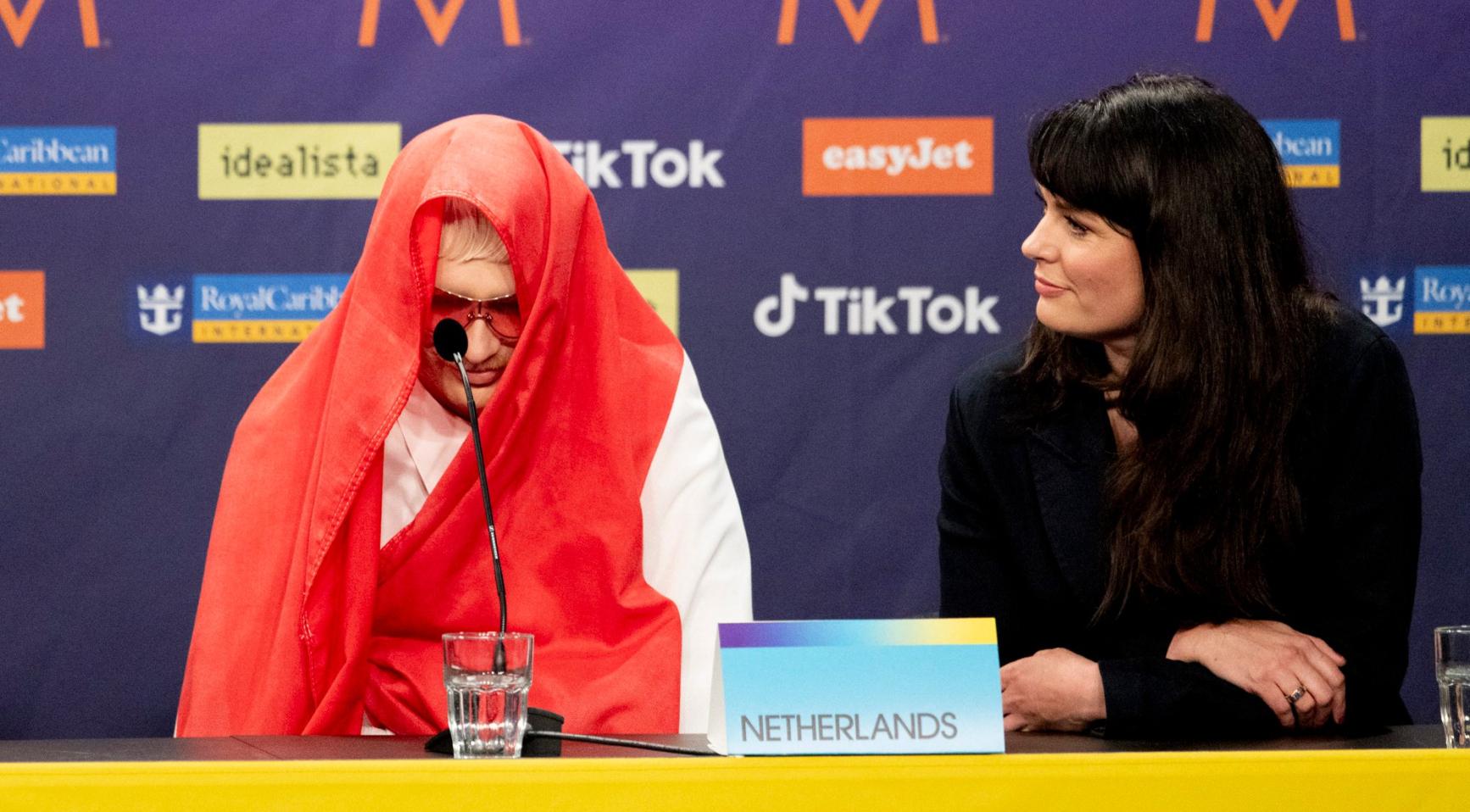
Netherlands might skip next year's Eurovision after Joost Klein controversy
The broadcaster which manages Dutch participation in the Eurovision Song Contest said the Netherlands might skip the event next year. While AvroTros has not made a final decision, the broadcaster was still angry about how Eurovision and event organizer European Broadcasting Union (EBU) handled a backstage incident involving Dutch performer Joost Klein last month, which led to his disqualification.
"Until AvroTros has confidence that structural adjustments will be made to focus on the artists and their musical message again, we will continue to deliberate over participation in the Eurovision Song Contest," the broadcaster wrote in a statement on Thursday. "AvroTros believes that a broader, in-depth and truly independent investigation is needed to address structural problems."
The organization specifically called for a detailed and independent look at rules, regulations, procedures "and appeal options in case of complaints and the increased pressure on the artists and delegations in the run-up to, and during, the Eurovision Song Contest." Even before the backstage incident, the broadcaster had complained that the backstage and green room atmosphere was unsafe, too demanding, and forced entertainers to take political stances. Last year's Dutch entrant, S10, reported a similar issue.
Previously, AvroTros also said that an agreement had been made that Klein would not be hounded by cameras immediately after his performance. This led to the controversy behind the scenes moments after Klein's second semi-final round performance, when the singer was pursued by Eurovision crew members backstage, including a camerawoman. An altercation between the two took place, but accounts of the incident vary. Initial reports suggested it became physical, and that the woman's camera was damaged, though police in Malmö, Sweden, said they could not find evidence of that clime.
"In recent weeks, a lot has happened behind the scenes at AvroTros in the aftermath of the disappointing outcome of the Eurovision Song Contest for the Netherlands. We will try to share what is possible and at the same time ask for understanding for the fact that not everything can (yet) be made public," the broadcaster stated. As the case remains under investigation with Sweden's prosecution service, the broadcaster declined to comment on specific details about the case.
"We can say that based on the information we have then and now, we still believe that the disqualification was unnecessary and disproportionate," the broadcaster continued. Klein was initially suspended, and was not allowed to take part in the crucial jury show performance. During that time, AvroTros said they supported Klein even though he made a "threatening gesture" because they saw no evidence of an escalation or physical contact.
Police affirmed that their investigation was focused on whether Klein made criminally punishable threats, and said it was not a case of assault. Even though the case remained under investigation, the EBU kicked Klein out of the competition just before the final started.
AvroTros was livid, saying the EBU blew the situation out of proportion. "The Eurovision Song Contest was founded to connect countries and peoples through music and to encourage mutual brotherhood. This should be the starting point for the organizers and all participating countries."


