
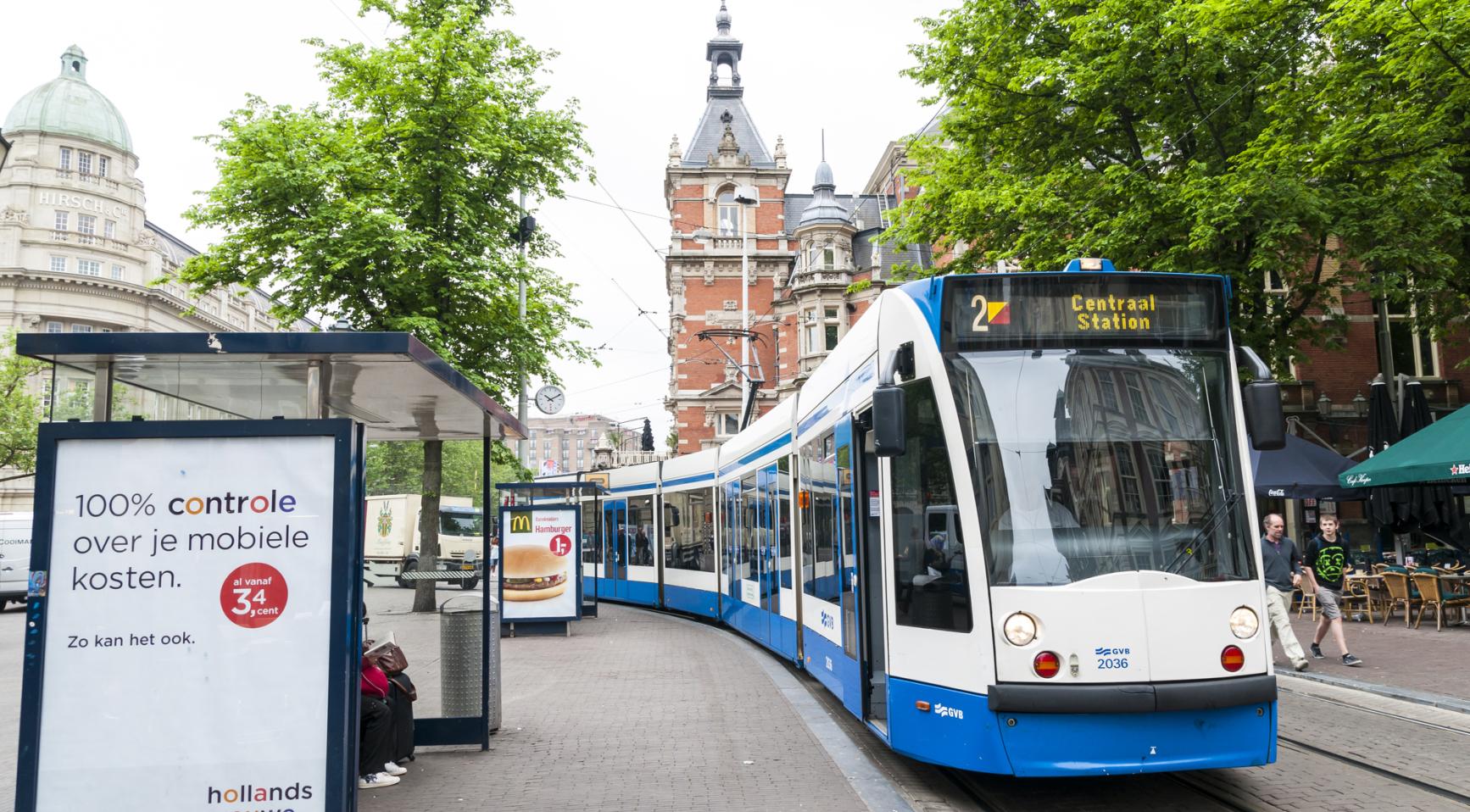
Funding for Amsterdam's public transport expansion plans uncertain
The Amsterdam Transport Region has big plans for new public transport lines, better cycling routes, and connections to neighborhoods where many homes will be built in the coming years. But the funding of these plans is highly uncertain, partly due to a lack of clarity from the national government, Parool reports.
The transport region recently presented its draft budget for 2027 to 2030, which the Amsterdam city council will debate on Wednesday. In the budget, the region warns that funding from the national government is uncertain. The national government has threatened to cut its annual contribution by 10 percent starting in 2028, amounting to €60 million per year. But whether that will actually happen remains unclear.
Uncertainty about funds from the central government is a recurring issue for Amsterdam politicians, PRO council member Mohamed Belkasmi told Parool. “The central government’s wavering policy means that important investments, such as the bridges over the IJ and the completion of the inner ring road, are plagued by uncertainty and a lack of clarity.”
The Oostbrug over the IJ, for example, will cost between €650 million and €850 million, depending on the variant chosen. Amsterdam has €209 million available for the bridge, and the Transport Region is contributing €312.5 million. That leaves a deficit of between €100 million and €300 million, with a massive question mark of who will cover that bill.
Belkasmi described the always looming budget cuts from the central government as a “sword of Damocles” hanging over public transport. “Particularly problematic, precisely at a time when we want to see public transport grow as an alternative to the car and in neighborhoods that need it most.”
Due to budget cuts, the Transport Region has already had to dip into its Public Transport Development Fund, intended to expand public transport, to maintain the existing service in 2027. The Transport Region stressed that this came at the expense of new lines “that are also necessary” with the growing population and increased demand for public transport amid sustainability concerns and increasing fuel prices.


