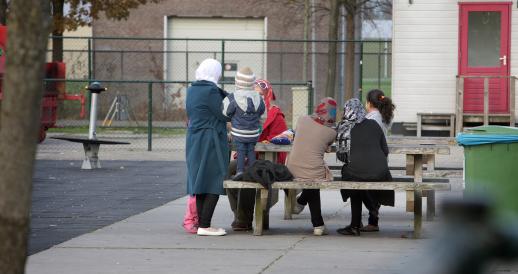
Dutch lawmakers push for detention of problem asylum seekers near Ter Apel
A majority in the Tweede Kamer is demanding that asylum seekers who cause disturbances near Ter Apel be detained around the clock. Minister of Justice and Security Marjolein Faber has until March 1 to establish a so-called "procesbeschikbaarheidslocatie" (pbl), according to a coalition of four ruling parties and opposition groups CDA, JA21, D66, and SGP.
During a debate in the Tweede Kamer, Faber said she supports the plan but faces legal challenges. The situation in Ter Apel has been a point of contention for months. In January, the Justice and Security Inspectorate urged Faber to take swift action, warning that conditions at the asylum reception center were unsafe for both residents and staff.
Many of the disturbances reportedly stem from asylum seekers who have little chance of obtaining residency in the Netherlands. Until last spring, authorities detained such individuals under strict supervision at a pbl facility. However, Faber’s predecessor, Eric van der Burg, was forced to close it following a court ruling.
Faber has recently introduced a new approach aimed at asylum seekers from "safe countries" who cause disturbances in Ter Apel. Under this plan, they are required to check in twice daily. Those who fail to comply are moved to a "verscherpt toezichtslocatie" (vtl), a location with tighter supervision. While these individuals are restricted from entering other parts of the reception center, they remain free to move about outside. Participation in a street intervention program designed to keep them occupied is voluntary.
Faber defended her approach during the debate, stating that she had believed this was the maximum legally feasible option. However, lawmakers across party lines criticized her for a lack of results.
CDA leader Henri Bontenbal accused Faber of making bold statements without taking meaningful action. "She barks loudly but doesn’t bite," he said. D66 lawmaker Anne-Marijke Podt suggested that even PVV leader Geert Wilders would likely consider Faber’s policy weak.
Faced with mounting pressure, Faber proposed implementing a curfew at the reception center. "If the Tweede Kamer supports this, I am open to considering stricter measures," she said, noting that most disturbances occur at night. However, she stated it would take approximately two months to assess the legal feasibility of such a measure.
Despite Faber’s reservations, lawmakers insist there is a legal basis for detaining problem asylum seekers. VVD lawmaker Bente Becker argued that the Dutch Aliens Act provides sufficient grounds for reopening the pbl facility. Under pressure, Faber acknowledged that she had only recently learned of possible legal avenues to reinstate the detention site. "Since last week, I have come to understand that reopening the pbl might be an option," she admitted.