
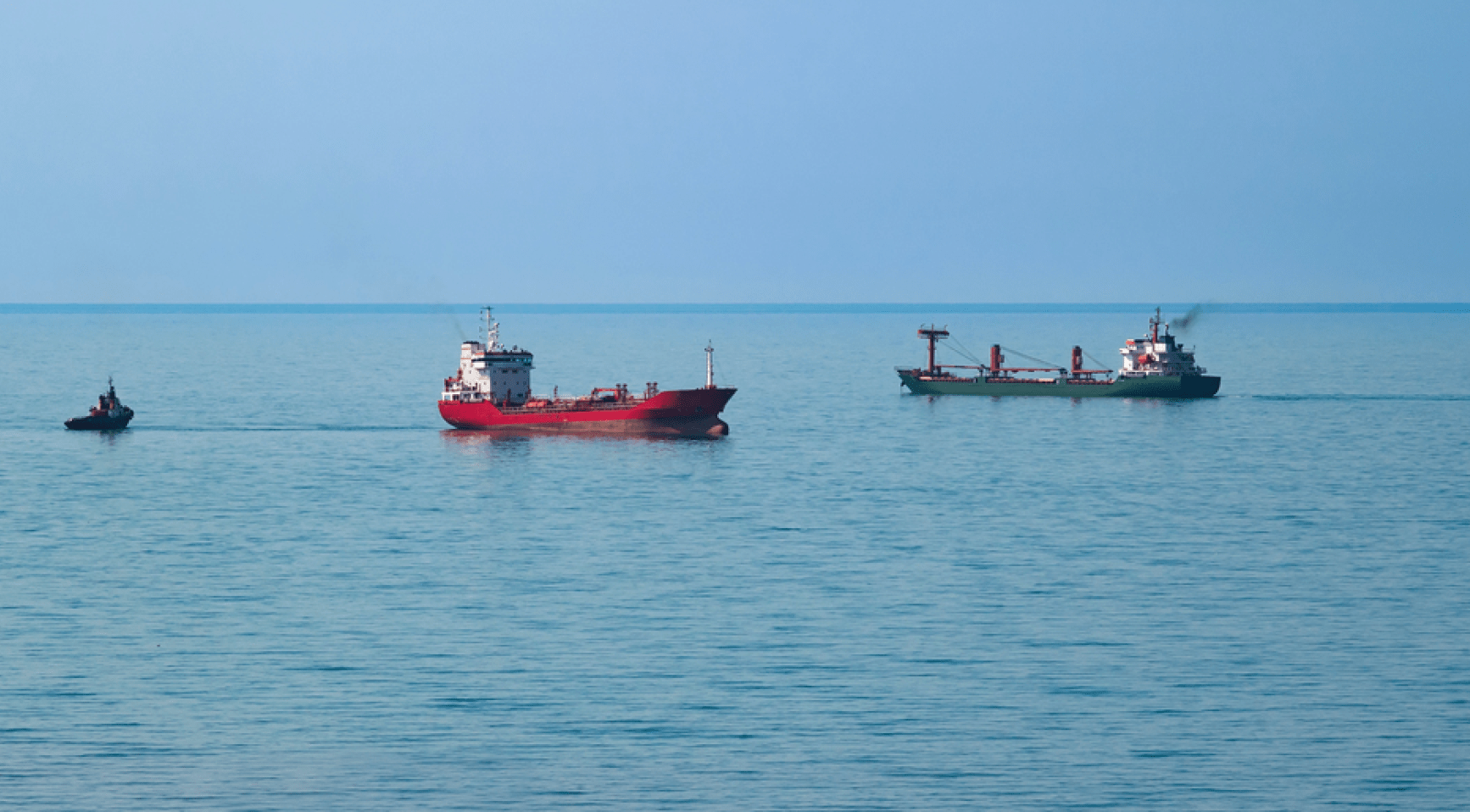
Old Russian oil tankers risking environmental disaster off Dutch coast
Old, poorly insured tankers full of Russian oil sail along the Dutch coast several times per day, risking an environmental disaster. Russia is using the old tankers to circumvent European sanctions on its oil. If they do cause an environmental disaster in Dutch waters, the Netherlands will have to cover the cleanup because the tankers aren’t well insured, Follow the Money reports based on its own research.
By combining a list from the Kyiv School of Economics Institute of all tankers that transport Russian oil without adequate insurance and public shipping routes data from Global Fishing Watch, FTM concluded that 410 old, often decrepit tankers sailed through Dutch waters at least 1,300 times in 2023 and 2024. That means one passes the Netherlands two or three times a day.
They also sometimes carry out dangerous operations in the Dutch part of the North Sea, such as transferring oil from one tanker to another in the middle of the sea. In September, such a ship-to-ship transfer went wrong in Kuwait and spilled over 5,000 barrels of oil into the sea.
These tankers are all fast approaching the end of their lifetime and many should already have been scrapped. Incidental inspection reports in Russia, China, and India have identified many defects in these tankers, which mainly sail under the flag of African countries or obscure island states that aren’t very strict with international safety regulations.
“It’s a matter of time before a major accident happens. So far we have been lucky,” Benjamin Hilgenstock of the Kyiv School of Economics (KSE) Institute told FTM.
When disaster strikes, the clean-up costs will be borne by the country in whose waters the disaster happened. Because all these ships have either no or inadequate insurance, according to FTM.
“Western authorities say that ships without proper insurance should not be allowed to sail through the Baltic Sea [and the North Sea], but no one has been able to figure out a way to enforce that,” Hilgenstock said.
According to Craig Kennedy, a Harvard historian working on a book about Russia and the former Soviet Union’s oil industry, this fleet of decrepit tankers is the direct result of European sanctions on Russian oil. Europe capped the price per barrel of Russian oil because the country uses the oil money to fund the war in Ukraine.
“The West had a lot of leverage over Russia because it owned most of the oil tankers that Russia used,” Kennedy told FTM. “Russia quickly realized it needed to build its own fleet of oil tankers that were not dependent on Western owners or insurers. They did this by buying old tankers that the regular fleets no longer wanted. They then canceled the oil spill insurance that was provided by trusted parties, and now we don’t know if the tankers are adequately insured.”


