
1 commanding officer, not 2, authorized Hawija airstrike that killed 85 civilians: report
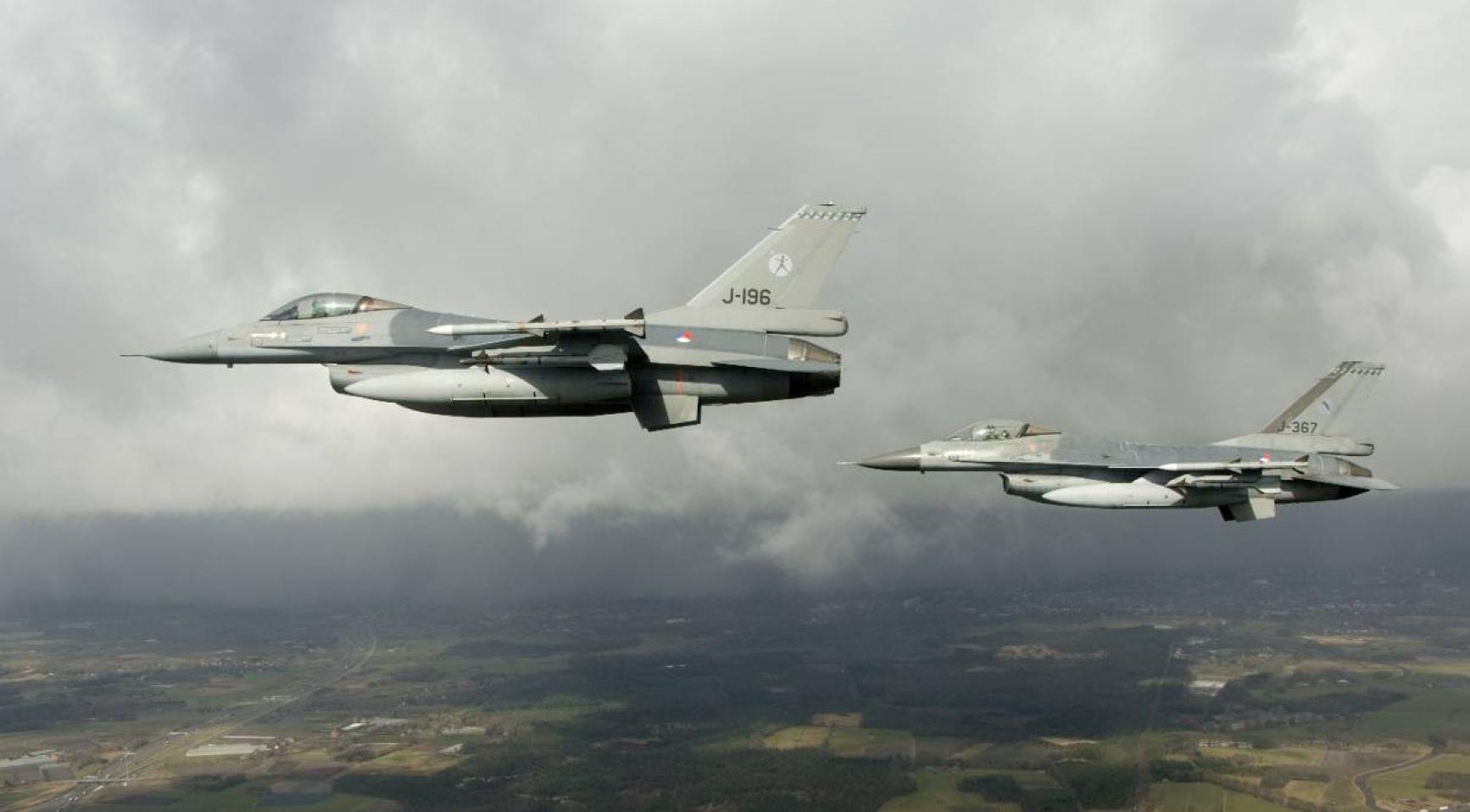
One commanding officer authorized an air strike by Dutch F-16 fighter jets on an ISIS bomb factory in the Iraqi city of Hawija in June 2015. Former Defense Minister Ank Bijleveld and Commander of the Armed Forces Onno Eichelsheim repeatedly reported in 2019 and 2020 that two different officers carried out supervision and execution of the bombings, which killed 85 civilians. Survivors and victims’ loved ones will appear in the court in The Hague on Tuesday, demanding compensation from the Dutch government, NRC reports.
Documents that the State Attorney submitted to the court show that, unlike what Biljeveld and Eichelsheim claimed, the commander of the detachment that bombed ISIS targets did both the supervision and execution of the bombings. He checked himself.
The Hawija bombing killed 85 civilians, including almost 50 women and children. It also destroyed or badly damaged hundreds of buildings, shops, and homes in the area.
The lawyers representing the 11 claimants in court on Tuesday, Liesbeth Zegveld and Thomas van der Sommen, will argue that the attack was unlawful. The Netherlands did not know in advance how many explosives were stored in the targeted bomb factory, and informants from the American intelligence service CIA had explicitly warned that there were many civilians living in the area. “The State has taken an unacceptable risk of disproportionate damage to civilians and objects,” the lawyers said.
They also argue that the preparation for the bombing was less careful than the Ministry of Defense claimed in 2019 and 2020. That is shown by the fact that the supervision and execution of the bombing were not divided between two different people but were carried out by one and the same commander.
The State’s lawyers, Wemmeke Wisman and Erik Koppe, will argue that the attack during the early hours of 3 June 2015 was legitimate. The bomb factory was an important military target. ISIS terrorists could have made “approximately 5,000 to 10,000 improvised explosive devices or 50 to 100 car bombs of the highest category” with the tens of thousands of kilograms of explosive materials stored in the factory. They confirm that the anti-ISIS coalition didn’t know how much explosives were stored in the factory, but that was almost always the case, they argue. The quantity of explosives stored in Hawija was “without precedent,” according to the State’s lawyers.
The State Attorney will also argue that the procedures to limit risks were carefully completed. However, the State Attorney did distance itself from politicians’ claim that a separate supervisory authority - a Red Card Holder (RCH) - checked in advance whether the air strike was justified. The documents submitted to the court contradict “the suggestion” in “letters to parliament” that the supervisor was a separate person in Qatar. The RHC was “with the detachment in Jordan” at that time, the documents state. In fact, the RHC was the same person who led the military unit in Jordan that carried out the bombing. Supervision and implementation were in one hand, though the commander involved did get advise from a legal advisor and several liaison officers.
Lawyer Zegveld called the new information about the Red Card Holder an important indication that the preparations were less careful than claimed. “You would wish there to be a separate supervisor, given his important and time-consuming work. But there wasn’t one. The advance supervision was just one of the many tasks of the detachment commander. Moreover, the liaison officers in Qatar who assisted him were probably less senior in rank than the commander. That makes a difference when requesting sensitive information from allies in Qatar.”
On Monday evening, current Defense Minister Kajsa Ollongren sent a note to parliament on the subject. She wrote that Bijleveld “did not clarify” the image of the Red Card Holder in Qatar in the debates about the air raid in Hawija. According to Ollongren, “the detachment commander worked closely with (...) the soldier who was in Qatar to support the RCH task.” That situation ended in 2018, and the tasks were separated into implementation in Jordan and RCH in Qatar, Ollongren wrote.


