Netherlands News in English

Main navigation

  • Top stories
  • Health
  • Crime
  • Politics
  • Business
  • Tech
  • Culture
  • Sports
  • Weird
  • 1-1-2
Image
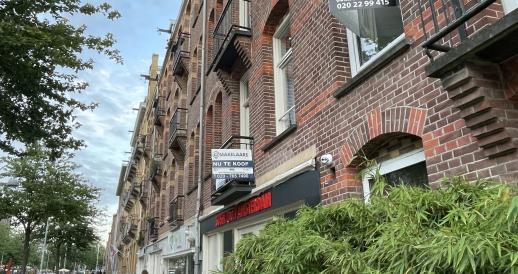
Home for sale on Sumatrastraat in Amsterdam-Oost, 11 November 2021
Home for sale on Sumatrastraat in Amsterdam-Oost, 11 November 2021 - Credit: NL Times / NL Times - License: All Rights Reserved
Business
recession
mortgage interest rates
Hypotheekshop
interest rate
housing market
Thursday, 29 September 2022 - 14:00

Share this article:

Fear of recession pushing mortgage interest rates higher again

After a short break in July and August, mortgage interest rates will continue to increase at full speed from September, according to the Hypotheekshop. Interest rate hikes by the ECB and Fed central banks sparked by recession concerns, the depreciation of the British pound, and the likely sabotage of the Nordstream pipeline are pushing capital market interest rates, which is the benchmark for mortgage interest.

This week, the 40 active money lenders in the Netherlands announced mortgage interest increases of as much as 0.4 to 0.7 percent, especially in the short and medium-term, the 5 to 10-year rates. Halfway through the week, with more announcements expected on Friday and Saturday, the Hypotheekshop recorded a record 55 mortgage interest increases, with some institutions increasing multiple times in the week.

“This week looks set to end with an interest rate above 4.4 percent. Last week the total average was still 4.10 percent,” the mortgage advisor said. “Incidentally, this week a year ago, the interest rate was at the lowest level ever at 1.42 percent.”

Because the medium-term mortgage rates are rising faster than the long-term rates, the differences between the two are getting smaller. At two lenders, the medium-term rates are now even higher than the long-term ones. Some economists believe that such an inverse interest rate structure is a harbinger of a recession, the Hypotheekshop said.

Usually, lenders charge a higher interest rate if they lend money for longer because the risk that inflation will affect the amount lent is greater with a longer interest period. The inverse interest rate shows that lenders expect the current high inflation to continue foursome time, and they, therefore, see a more significant risk of devaluation in the shorter term.
More like this

Image
mortgage application form
Mortgages more expensive as 15 Dutch lenders hike interest rates this week
Image
Housing construction in Urk, March 2020
Housing construction dip: Only 82,000 new homes created last year
Image
Street with new built classic style homes in Rotterdam
Home prices in the Netherlands increased 11.4 percent in September
Image
A sign advertising an apartment for sale in Amsterdam. 23 May 2023
Home prices up 10.6 percent; Housing market overheated again
Make NL Times your top Google source

Follow us:

Latest stories

  • Wasteful Oranje punished as Algeria snatch late victory in World Cup warm-up
  • Dutch State buys medieval ring found with metal detector for €83,150
  • Rotterdam shooting suspect arrested in Spain within days of fleeing
  • Nearly 90% of Dutch dermatologists link TikTok skincare trends to patient skin problems
  • Dogs falling ill, dying after swimming in the IJmeer near Amsterdam & Almere

Top stories

  • Court rules Ye can remain in Netherlands for Arnhem performances this week
  • New A'dam coalition planning parking +tourist tax hike, free public transport for kids
  • European Commission tells Netherlands to stop extra border controls
  • Pregnant woman thrown to ground at Zeist asylum shelter was trying to ask cop a question
  • Senior Dutch virologist, colleague accused of smuggling inactive Mpox into United States

© 2012-2026, NL Times, All rights reserved.

Footer menu

  • Change Privacy Settings
  • Privacy Policy
  • Contact
  • Partner Content